Showing posts with label Rants. Show all posts

Wednesday, January 12, 2011

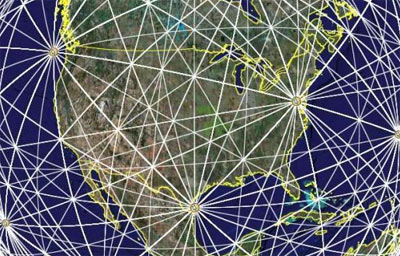
Oh! It's Ley Lines!

Smug and self-assured, she replied ley lines were responsible for the recent mysterious spate of bird and fish deaths around the world, including the Arkansas blackbird incident. What are ley lines? I didn't know at the time, but I was reasonably certain it had to be nonsense after listening to her. You can read about them in detail on Wikipedia, but here's a short definition from the Skeptic's Dictionary:

"Ley lines are alleged alignments of ancient sites or holy places, such as stone circles, standing stones, cairns, and churches."


Wackadoodle alert!

From Archaeological Theory: An Introduction - Matthew Johnson (2010):

"Ley lines do not exist. This was shown by Tom Williamson and Liz Bellamy in Ley Lines in Question (1983), which analyzed such lines statistically and showed that the density of archaeological sites in the British landscape is so great that a line drawn through virtually anywhere will 'clip' a number of sites. It took Williamson and Bellamy a book's worth of effort and statistical sophistication to prove this, however."

Originally 'discovered' by Alfred Watkins in 1920, psychics, new age spiritualists, and other charlatans claim an energy complex re-discovered with divining rods proved ley lines exist and began ascribing mystical powers to them. Naturally, no modern scientific instrument can detect these asserted energy fields. This is both troubling and annoying because wildlife pathologists and biology technicians are diligently working with limited funds on finding real causes behind animal mortality events and population declines.

Claims without evidence that attempt to explain animal mortality events with mystical causes fail to offer any practical solutions. What would psychics and new agers have us do? Should we walk around with divining rods and point them at birds or something? Should we sprinkle pixie dust in our yards? Or maybe we can just think positively and the law of attraction will make bird populations rebound because we merely want them to. How insipidly moronic and arrogant! These non-experts think they know more about the nature of things than people who have been studying biology and ecology for most of their adult lives.

Bunk like this devalues the efforts of our professional scientists at a time when nature's critters need our help more than ever. By embracing this nonsense, why would such an individual feel inclined to back scientists with their money or vote? After all, they must believe scientists are simply wasting time on something futile because they know they're on wrong track. So, what's killing bats? Ley lines! It's ley lines, all the way down, and not geomyces destructans! Damn you and your science! I dare these wackaloons to call the Madison lab and tell them that.

People who attribute ley lines to animal deaths are so fail because they're counting hits but ignoring misses (confirmation bias). Why are there mass animal mortality events where there aren't any ley lines? Why are animals thriving where there are? They also fail to understand that a correlation is not necessarily causation. They probably believe ley lines explain other things, too, like car accidents, birth defects, mental illness, crop failures, etc. What can be asserted without evidence can be dismissed without evidence. Fortunately for the reality-based community, there's plenty of empirical evidence to help us explain what's going on with these unrelated animal mortality incidents. It just takes time and effort to get to the truth.

"That which is lacking in the present world is a profound knowledge of the nature of things; the fundamental truths are always there, but they do not impose themselves because they cannot impose themselves on those unwilling to listen."

~ Frithjof Schuon

Wednesday, September 22, 2010

Birdwatching is not a crime!


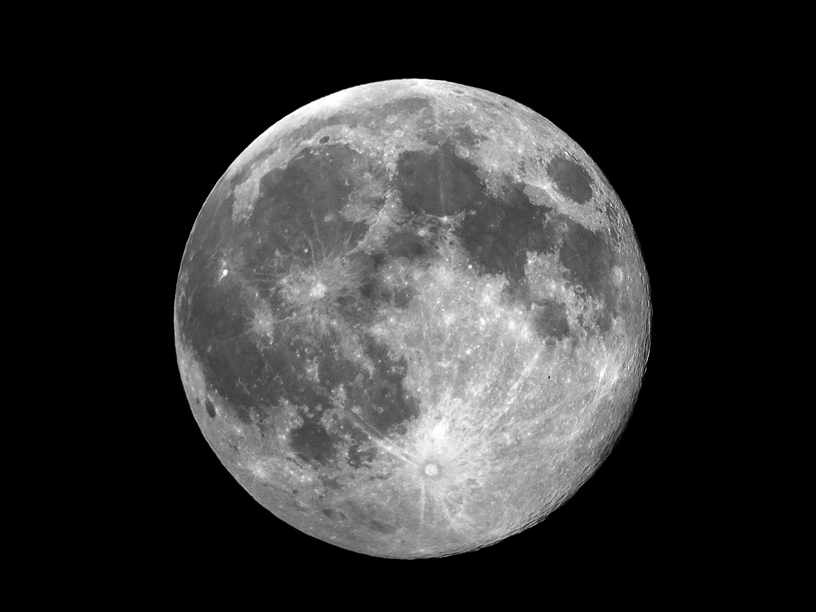
Full Moon - August 24th, 2010. Can you spot the bird?

A neighbor that moved into my building early July discovered I own a bunch of binoculars when she came to my apartment (uninvited) on two separate occasions. The first time, July 18th, she apologized for having a having a loud party that went past midnight. The only other time, August 2nd, she pitched a Charter WI-FI deal to me. It all seemed completely innocent to me at the time.

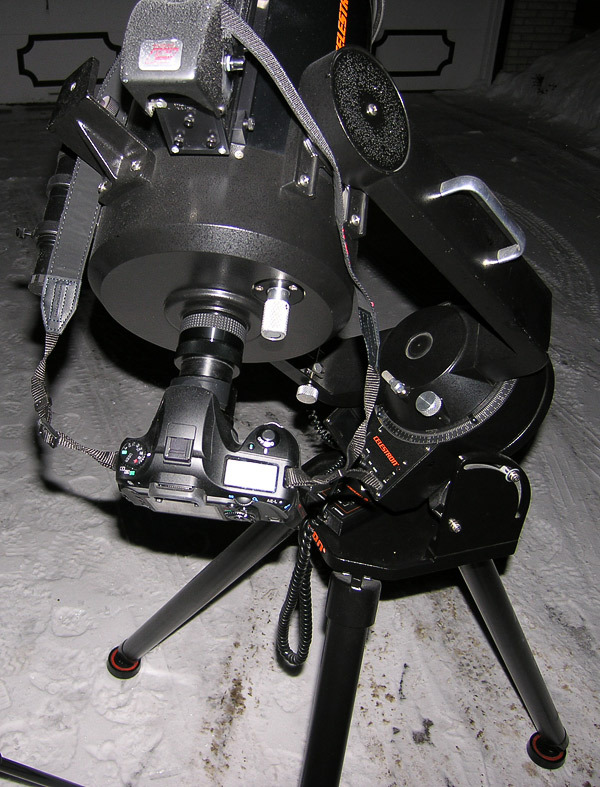
However, on the night of August 24th she observed me in the parking lot with my Celestron 8” SCT telescope while I was moonwatch birding and attempting to photograph migrating birds transiting across the full moon's face. She erroneously thought this activity had something to do with her, but I didn't even notice she was watching me. Overcome with fear for the next few weeks, on September 13th she broke her lease, hired a moving company, and filed a Temporary Restraining Order (TRO) against me. I had no idea any of this was going on until a deputy sheriff came to my apartment to serve me the petition.

Her accusations were ridiculous and totally unbelievable. According to the TRO, she wrote I was responsible for breaking into the apartment building mailboxes. She accused me of stealing money from her desk where she works. She also claimed I attempted to break in to her apartment during the night when she was there. In the petition she was skeptical that I was even a birder: "He claims to be a birdwatcher..." She felt fearful of me because, in her words, "He has a lot of binoculars in his apartment, especially near the windows." She asserted that the apartment courtyard didn't offer a "particularly special vantage point to see birds" and that "watching birds that come to the feeders on his balcony does not require the use of binoculars."

The next day I hired a defense attorney to represent me at the injunction hearing on September 22nd. Shocked, baffled, outraged, and totally stressed, I lost 4 nights of sleep, missed a few days of work, paid a hefty attorney fee, and missed out on nearly a week's worth of eBird data at Pheasant Branch Conservancy during the peak of fall migration. Sadly, it was all for nothing because the judge dismissed the case immediately after hearing her pathetic testimony. At one point the judge said, “So he has a bunch of binoculars ... so what!?” I'm sure she probably still believes I did something wrong, but owning and using cool optics for birding is not a crime. Get a life!


Full Moon © 2010 Mike McDowell
Monday, August 2, 2010

They did not need to die.


"They did not need to die."

Neytiri - Avatar

After making a jot of notation, Rick continued, turning to the eighth question of the Voight-Kampff profile scale. "You have a little boy and he shows you his butterfly collection, including his killing jar."

"I'd take him to the doctor." Rachael's voice was low but firm.

Blade Runner - Philip K. Dick


Nearly all North American bird species are federally protected under the Migratory Bird Treaty Act of 1918, which makes it unlawful to take migratory birds, their eggs, feathers, or nests. "Take" is defined to include by any means or in any manner, any attempt at hunting, wounding, killing possessing, or transporting any migratory bird, nest, egg, or part thereof.

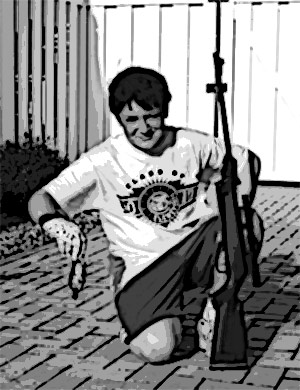
About a year ago I discovered several YouTube videos of kids shooting and killing songbirds (nuthatches, chickadees, sparrows, catbirds, robins, jays, woodpeckers, wrens, warblers, flycatchers, and more) with BB guns, pellet guns, and even arrows. It's quite despicable and sad for a birder to watch. It's apparent these kids don't realize they're breaking the law; some even emulate the style and enthusiasm of professional hunting shows found on television.

Are these kids merely honing their hunting skills? Will they evolve into ethical wildlife stewards and protectors of habitat by contributing to land conservation as licensed hunters? Did you shoot songbirds with a BB or pellet gun when you were a kid? The videos offer plenty to think about.


Keeping this in somewhat of a perspective, of all threats to migratory birds, habitat loss and fragmentation is the primary cause of steady population declines. Other human causes of mortality (tens of millions of birds annually) include pesticides, feral cats, and collisions with buildings, windows, and automobiles. Fairly low on the list you'll find hunting. Because it's managed by federal and state agencies, hunting birds legally is not considered a threat to the population of any North American bird.

So, what about the illegal hunting of birds? There really isn't much data out there, but apparently over 3 million BB and pellet guns are sold each year. This doesn't tell us much. How many of these videos are on YouTube? The more I searched the more I found, and the list at the end of this post is a mere sampling of what's out there.

For a long time I kept knowledge of these videos to myself. However, I decided to forward one in particular to the US Fish & Wildlife Service because it showed a visible license plate on a vehicle in the background. I thought it would be an easy case for them to investigate and potentially prosecute. Weeks passed, but nothing ever became of my inquiry. Finally, I decided to share the videos with Sharon Stiteler of Birdchick Blog. Repulsed by them, she also reached out to USF&WS and here is the reply she received and recently shared with me:

"Here is our law enforcement's response [below]. Unfortunately, the reality is that juveniles are involved and not enough badged men to go around, so anything you wish to take into your own hands education-wise is up to you."

USFWS, Reg. 3, Migratory Bird Permit Office

"Two of the three, and possibly all three of these videos show only evidence of children shooting birds. The Federal government does not prosecute juveniles, except for the most heinous of crimes. Lot's of these types videos floating around the web and not enough agents. Took us several months and hundreds of investigative hours (including numerous interrogations and lab work) to catch the whooping crane shooter, only to discover DOJ would not prosecute the juvenile shooter (he was 17). Some of our agents do pursue these types of investigations when time allows."

U.S. Fish and Wildlife Service - Midwest Region

The kids know not what they do, but I dare you to tell them that. If you leave a comment on a video citing its unlawfulness you'll be met with the most extreme and juvenile vitriol. You know, because they're just kids. So, what now? Contact YouTube? They're unlikely to police it. In fact, I couldn't find anything specifically prohibiting the posting of these types of videos in their Terms of Service or Community Guidelines except possibly this:

"Don't post videos showing bad stuff like animal abuse, drug abuse, under-age drinking and smoking, or bomb making."

Do you think this constitutes animal abuse? From an animal rights perspective, are these songbird killing videos depicting anything worse than legal duck, turkey, and pheasant hunting? I would like your thoughts and ideas. For now, the best it seems I (we) can do is to flag the videos:

YouTube: We Enforce These Guidelines

"YouTube staff review flagged videos 24 hours a day, seven days a week to determine whether they violate our Community Guidelines. When they do, we remove them. Sometimes a video doesn't violate our Community Guidelines, but may not be appropriate for everyone. These videos may be age-restricted. Accounts are penalized for Community Guidelines violations and serious or repeated violations can lead to account termination."

YouTube, LLC
901 Cherry Ave.
San Bruno, CA 94066
Phone: +1 650-253-0000
Fax: +1 650-253-0001

WARNING: The following videos show unlawful killing of songbirds; some are extremely graphic and will likely upset anyone who admires songbirds.

Yellow-rumped Warbler (Removed!)

White-throated Sparrow

Northern Mockingbird

American Robin #1

American Robin #2

Gray Catbird

Tufted Titmouse

Eastern Phoebe

Brown Thrasher

Carolina Wren

Northern Cardinal

Blue Jay (Removed!)

Yellow-bellied Sapsucker

Multiple Songbirds #1

Multiple Songbirds #2

Multiple Songbirds #3

Monday, June 7, 2010

Limitless Beauty


It's always been my intent to share nature at her very best. On occasion I have photographed a dead animal only when I thought such an image might be used to achieve some greater good for the benefit of other critters, but I seldom post them on my blog. Some who love and respect nature are so repulsed by the photographs of oil covered birds (and other animals) that they can't look at them.


I know there are certain things I do not need to see or experience to sense its emotional potency, but sometimes we need to take our collective medicine in order to gain proper understanding which will hopefully motivate us to action. Even so, the damage in the gulf is so huge it's difficult to even wrap our minds around it. If this heartbreaking fiasco doesn't serve as a catalyst to reduce our addiction to oil, then nothing ever will. What will it say about our legacy as a species if we fail to become better stewards of the Earth?

"Who ever sees dead birds in anything like the huge numbers stipulated by the certainty of the death of all birds? A dead bird is an incongruity, more startling than the unexpected live bird, sure evidence to the human mind that something has gone wrong. Birds do their dying off somewhere, behind things, under things, never on the wing."

-- Lewis Thomas, Death in the Open


Nature offers her limitless beauty and generosity. You can find such places no further than a local conservancy or natural area, perhaps your own backyard. Where we still allow the wild to be wild, the processes of nature unfold as they have for millions of years; in any given day we're witnessing a minuscule part of this grand story.


There is significance to be discovered even in what seems like insignificant parcels of time. Careful observation during a casual stroll through a prairie or a quiet walk through the woods will reveal living treasure. From the diminutive to the extraordinary, our experiences in nature leave us with cherished memories and lessons that resonate with us for the remainder of our lives; this is how we come to love and respect nature.


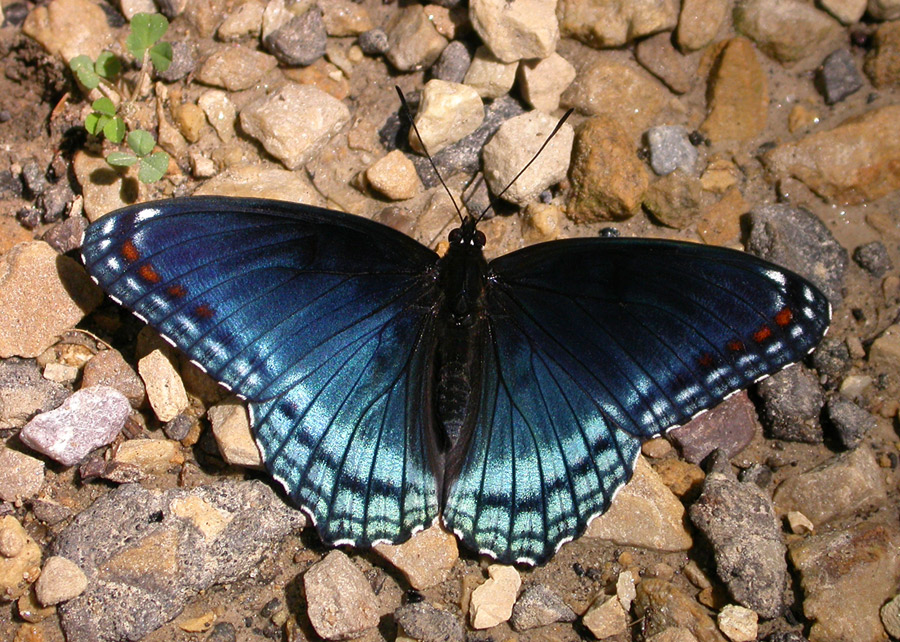
It's early June and already Chicory is starting to bloom along roadsides and bike trails. Despite the fact that it's an introduced invasive wildflower, I still find it rather attractive in color and shape. Yesterday I watched squadrons of Red-Spotted Purple Butterflies (subspecies of the White Admiral) darting around damp gravel in search of the perfect spot to extract a bit of moisture. Personally, I don't think there's another butterfly species found in Wisconsin that rivals it.


© 2010 Mike McDowell

Wednesday, March 10, 2010

Bird Mortality and Science Denialism


An article was published yesterday on the Mother Nature Network re: bird collisions with windows by Nature Conservancy bird expert Dave Mehlman. While the tragic number cited in the article isn't new to avian enthusiasts, it's disheartening to read comments posted by the incredulous and ignorant.  Apparently, they would like to know where the scientist got his data from other than his own gluteus maximus. It's not enough to be skeptical that one billion birds may be killed in North America each year from colliding into windows, I guess it's also proper form to be exceedingly mean-spirited. Notice I said "may" in the preceding sentence because if one were to do a little digging, this staggering number comes from a US Fish & Wildlife fact sheet where it states "may account for … deaths each year."

Check out some of the comments (some have been deleted):

"A billion birds! LOL That would be....well no math skills here but that would be like hundreds of birds hitting windows every *second* ....that would be like a scene out of Hitchcock with literally stacks of birds that we'd have to push aside from our doors to get to work."

"The billion number is completely asinine not to mention the incredibly wide range of '100 million and 1 billion.' a 1 to 10 ratio? let's say the # is true...that would be a billion more birds in the air if we try to save some with these tips...how many more plane crashes via jet engines, how much more bird crap on newly washed cars."

"It has been my observation most of the birds that hit my picture window do so around the time of the vernal or autumnal equinox. Maybe it has something to do with the angle of the sun at this of the year. My picture window faces the north and doesn't usually have shades down the way that the other windows do."

"This guy obviously learned math at the school of Numbers I Just Pulled Out Of My A**. This might be believable if there were dump trucks of dead birds being piled up with nowhere to put them. I thought science was supposed to be objective."

"OH GOD EVERYONE RUN FOR YOUR LIVES THERE ARE DEAD BIRDS EVERYWHERE JUST MASSIVE PILES OH MY GOD THE HORROR THERE IS BIRD BLOOD RUNNING IN THE GUTTERS THE PESTILENCE BROUGHT ON BY THESE BILLIONS OF DYING BIRDS IS SURE TO INFECT US ALL THIS IS THE NEW BLACK DEATH."

"Aren't there around 300 million people in America? So wouldn't that mean that every single one of them would have over three birds a year killed at a window close to them? A family of four would have 14 birds EVERY year killed at a window on their home? What kind of idiot compiles these statistics? Certainly not a math major. Worse, who gives these people credibility?"

"All this time I thought it was the wind turbines generating electricity that were killing the birds. Sounds like another environmentalist wacko who won't be happy until we are all living like it's 1800. If a bird is too stupid to avoid a window, then Darwin was right."

"Oddly, at the age of 46, in my entire life I have yet to see a single bird actually killed by a window collision - barring windshields, of course. I've lived in rural, suburban and urban settings. I have witnessed a grand total of *perhaps* 6 window v bird instances in that 46 years, and in every one of them the bird simply flew away afterward, albeit a bit less enthusiastically. Since Mr. Klem and the author of this piece of reporting seem so convinced, I would certainly like to see how Klem came to his number totals. Did he personally see a billion birds kamakazi into windows and expire, or did he perhaps see one or two and multiply them by a random figure he pulled dripping out of his nether orifice? Inquiring minds want to know."

"I'm not ankle deep in dead birds here in a major city. OK so there are some birds that fly into glass. Boo hoo. Who counted all these dead birds? And how many of the dead birds are simply pigeons that had been poisoned? I walk down city streets among tall buildings and I don't see a bird on the sidewalk or street. WTF kind of idiot writes this stuff? And WHO TF is the idiot that gives this any publicity at all, even on the internet? How about I write an article about Martians kidnapping my canary?"
What a bunch of fallacious piffle!


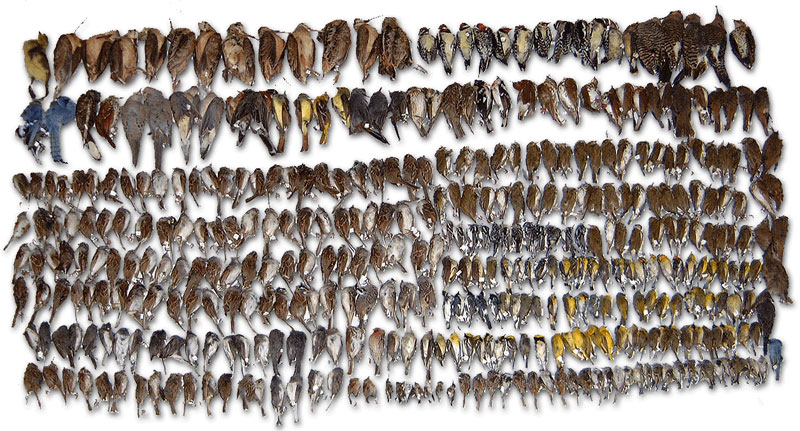
Dead birds collected from Toronto during migration (flap.org)

It's an irrefutable fact birds die from window collisions, especially during spring and fall migration when tens of millions of birds are on the move during the night. The question we would like answered is just how many perish this way. Since there's no conceivable way to collect every single bird that dies, we have to rely on making a reasonable estimate and perform data modeling in order to discern the scope of the problem. This has already been done. If these impish critics were to have actually followed references cited by the author, they might have found this paper (complete with its own references) by Dr. Daniel Klem's on his website stating:

"Researchers differ in their evaluations of the magnitude of the toll that glass exacts on individual species and bird populations overall. Before much was known, annual deaths attributable to windows were hypothesized to be 3.5 million in the 1970s. Since then, extensive studies over the past three decades have been used to estimate the annual toll to be between 97 million to 975 million birds in the U.S. alone. The wide-ranging difference among these figures attests to the complexity of attempting to determine accurate amounts from a source in which every individual bird is a potential victim and sheet glass of every size is a potential killing site in the environment. The roughly 100 million to 1 billion toll is based on the assumption that 1-10 birds are killed at one building in the U.S. each year. Another independent study produced similar results, and evaluated this current range of annual mortality figures to be reasonable. This confirming study examined records of 5,500 volunteers who optionally recorded bird strikes at windows while they counted visitors to feeding stations at their homes. To put these numbers in perspective, annual U.S. bird populations are estimated to be 20 billion in the fall, and annual glass kills are estimated to be 0.5 to 5.0% of this figure."

An independent confirming study with empirical data!  How about that?  It's a fact that North American songbirds are experiencing steep population declines. We can choose to ignore window collisions as a prominent cause of bird mortality, but then risk making a mistake when trying to put these population declines into proper context with the other causes. I guess we can't assume Americans actually care about the future of wild birds in our country.  Science denialists come in a variety of forms, all of which are devoid of credibility and virtue. Clearly, there's a lot of sarcasm, apathy, and general mistrust of the scientific community out there, especially when it comes to environmental issues.  Where does that come from, I wonder?

Monday, March 8, 2010

Trolls


Anonymous wrote:

"Disappointed that you would drive this far to see a bird. I hope you understand how this kind of behavior is what contributes to the destruction of these same birds."

Was it something I said or something I did?
Did my words not come out right?
Though I tried not to hurt you, though I tried
But I guess that's why they say...
Every blog has its trolls
Just like every night has it's dawn
Just like every cowboy sings his sad, sad song
Every blog has its trolls


Yeah it does.

Sunday, November 29, 2009

Not for the Prairie


A visit to the prairie on Saturday revealed Dark-eyed Juncos, American Tree Sparrows, Fox Sparrows, Sandhill Cranes, American Goldfinches, one Red-winged Blackbird, a few Blue Jays, and American Crows. It was chilly, but the warming sun combined with a lack of wind rendered it a gorgeous morning to be outside. I love the calmness that allows every subtle sound to be heard; wing beats of nearby songbirds, and the geese flying overhead.

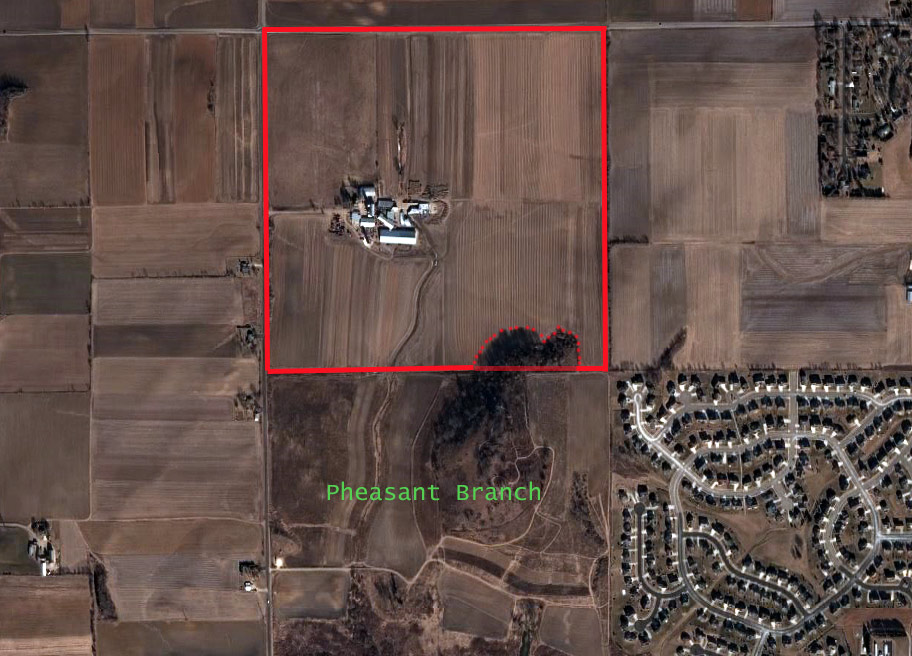
As Dottie Johnson and I walked our usual route around the main field, we pondered what the scenery might look like in a few years. I learned through the grapevine that the Ackers are not at all interested in selling their farmland (shown boxed in red below) to Dane County Parks for the purpose of increasing the size of Pheasant Branch Conservancy's prairie. What will likely become of this parcel? Have a look to the lower-right to get an idea. There's more money to be made in development. But more houses mean more window collisions during nocturnal bird migration, and more roaming cats.


I don't think one could place a housing development at a worse location, so near where tens of thousands of songbirds stage throughout spring and fall. From the heart of my anguish, I suppose I ought to just be thankful there's even any conservancy at all. What presently feels like an expanse will seem more enclosed and encroached upon. Some will say I'm rebelling against change, and that change is a constant in our world. Others will call me selfish. Whatever my motives are, I want to know why it remains so intensely difficult and time consuming to teach even just one person the value of a songbird's life.


It will also ruin the view looking north!

"Where is the power of our error? We find it was after all not in the city, but in ourselves."

--Thomas Merton

© 2009 Mike McDowell
Monday, September 14, 2009

"Too little, too late"

This sign is going to be removed, too.

"A group of Middleton and Madison residents spoke out at the Tuesday, Sept. 1 Middleton City Council meeting, hoping to prevent the city from paving a trail running through conservancy lands between Century Avenue and Parmenter Street."

Link: Full article at Middleton Times Tribune

Wednesday, August 12, 2009

Creek Corridor = Chopped Liver


Celebrate! Wait a second, not so fast...

The City of Middleton will be paving the trail between Parmenter Street and Century Avenue this October. This is the "creek corridor" trail I frequently cite on my wisbirdn posts, on this birding blog, and where I conduct the majority of my birdwatching at the conservancy. The creek corridor is where thousands of neotropical songbirds concentrate during spring and fall migration. It's where I've led Madison Audubon field trips for nearly a decade. This is the trail section where the overwhelming number of birders come to observe and enjoy an incredibly rich variety of songbirds. Though you can find some of the same bird species along the trial north of Century Avenue (the trail section Middleton's city council voted against paving last night), it consistently yields fewer birds and less diversity during spring and fall migration.

Link: Map of Conservancy Lands

This is a story of how Middleton's politicians painted themselves into a corner. Grant money from the Department of Transportation was applied for and awarded to Middleton for the construction of bridges and a paved trail through the conservancy from Parmenter Street to Century Avenue. The original plan was voted on and passed in 2007 by the three alders present at that particular city council meeting. (One of them is against paving any conservancy trails now). Last week the council voted (6 to 2) in favor of awarding the contract to complete the bridges and pave this section of the trail, effectively sealing the deal. What was interesting at this meeting was how district alders chose to differentiate between the creek corridor and the conservancy "proper."

There's a good "politics as usual" explanation for this distinction. While signs posted at the creek corridor's trail entrances refer to it as a conservancy, halting the paving meant voting down awarding the contract. If Middleton had done that, they would have forfeited a huge grant and effectively wasted time and money the DoT spent on their own resources while researching the creek corridor plan. Not only would this have made Middleton look pretty bad politically, but also would have been a stain against their reputation when applying for any future grant money. This would have sent a message, "Hey, be careful doing business with Middleton! They may back out of a deal 2 years after they approved it!" Even if the district alders and Mayor Sonnentag opposed paving the creek corridor trail; they still had the city's reputation to uphold.

Arguments offered by Middleton's politicians for the paving included safe passage for children, improved access to the creek corridor so handicapped people can enjoy its scenic beauty and wildlife, and making a "pro-green" statement by having a well-groomed commuter trail that could accommodate a variety of bicycles. Nevertheless, I couldn't get any of the district alders or the mayor to tell me why they opposed paving the trail north of Century. Don't they want children to be safe when they bicycle through that part of the conservancy, too? Don't they want to allow a variety of bicycles through that parcel? And don't they want handicapped individuals to enjoy the conservancy proper? Whatever "wildlife and scenic natural beauty" arguments Middleton's politicians are keeping to themselves in opposition of paving the "north trail" north of Century Avenue apparently doesn't apply to the creek corridor trail.

An endangered philosophy...

This takes us to the present, when it seems at long last the public finally learned about paving the trails at Pheasant Branch Conservancy. Well, it turns out they're against it. A tremendous amount of public pressure against paved trails initiated a reaction as well as misleading media stories (surprise) in the Middleton Times Tribute and the Wisconsin State Journal. Middleton's politicians listened, but found themselves caught in a classic catch-22. Going against public opinion might have cost them votes in the next election, but they also couldn't kill the contract and forfeit the grant without looking bad politically. So it was no surprise that a majority of Middleton's district alders (and Mayor Sonnentag) sided with the public and voted down paving the trail north of Century Avenue. As it turns out, in true political form, you can be both for and against paving conservancy trails. While I understand why Middleton's politicians voted how they did, I fail to find honor and logic in the rhetorical arguments that the public were asked to swallow. Whatever arguments were true of the west trail (north of Century Avenue) , were also true of the creek corridor trial (south of Century Avenue), as they are both on conservancy lands.

Er, what's it called?

Two closing points: I personally think the bridges are essential, will benefit birders, but I also recognize that they couldn't be installed without the trail paving because the way the grant was authored and awarded to Middleton. Finally, Middleton's Public Land Manager has offered to work with me in designating alcoves along the creek corridor trail where birders can stand without having to worry about blocking it from bicyclists, joggers, and other trail users. There is also a proposal to allow me to designate the locations of a few new footpaths in areas where the birding is really good during spring and fall migration. I'll do the best I can with the interest of birds and birders in mind. You can't always get everything you want, but I think we should take what we can get now that the trail is going to be paved.

"'There are strategies for conserving forest for migratory birds, but those strategies emphasize the largest patches of forest,' Dunning said. 'We found that even very small woodlots were filled with migratory birds at times. It makes us believe we also need to conserve the little patches of forest, not just the big ones.'"

From: Migratory birds not picky about their rest stops

"One of the penalties for refusing to participate in politics is that you end up being governed by your inferiors."

- Plato

"Thoreauvian walkers know where we like to walk the best. We like to walk in Nature. Capital N nature. With trees tinkling shadowy over our heads, and the thunk of a wood-rot pathway guiding our feet, with grasses brushing our thighs, or a stony escarpment sweeping up our side. We shamelessly proclaim our romantic aspirations. We want to feel renewal in the stillness and birdsong and the hidden movement of worms, and the unabashed truth of decay. We want to pay attention, to know the wonders of life in secret places, to watch and be watched, to learn and unlearn."

- L. L. Haupt

© 2009 Mike McDowell
Thursday, July 30, 2009

Do Not Pave Conservancy Trails!


Mike and his Road bike. What? You don't recognize me?

I'll preface my comments regarding the Pheasant Branch Conservancy creek corridor trail by stating I'm an avid on-road and off-road bicyclist. I have a TREK road bicycle (pictured above) for exercise & recreation and a Schwinn hybrid for commuting and light trail duty. I'm also an avid birder and amateur ornithologist. While I'm a far cry from being anti-bicycle, I am staunchly pro-safety and pro-environment. As such, I'm sensitive to the sentiment recently expressed by Steve Leo, Middleton District 8 alderman, who was quoted in the Middleton Times Tribune saying, "Everyone here, myself included, has a carbon footprint the size of Bigfoot...we've got to do something to get folks out of their cars."

On at least one particular point, Steve and I are in agreement: it sure would be nice for more people to commute via bicycle, as we both do. Somebody has to get the green campaign rolling sometime, so it might as well begin with a trail for bicyclists that just so happens to run through one of the best places in southern Wisconsin to observe neotropical migratory songbirds. If we don't stop global climate change, birds will indeed suffer. What's the point of having any sort of nature trail if we allow the world and its critters to succumb to the destructive effects of climate change? There's a flip-side, however. Presently, the greatest cause of declines in bird populations is habitat loss and fragmentation, not global climate change. However, the latter is a deadly threat looming in the future for all the world's living things.

Having heated up the rhetoric with his torrid premise, Steve then attempts to redefine the argument (he is a politician, after all). In the Tribune article he goes on to say, "You purge bikes from the Pheasant Branch Conservancy forever, and our changing climate in the coming years will affect the Pheasant Branch wildlife." Could bicycling through Pheasant Branch really play such a pivotal role on its climate? One wonders just how many bicyclists Steve would like to see using the trails at Pheasant Branch Conservancy in order to circumvent this cataclysmic disaster. First of all, nobody I know, myself included, is calling for a ban on all bicycles from conservancy trails. Heck, I ride my hybrid bike on it all the time. Secondly, while it's certainly admirable to initiate an example for others to follow, it is truly naive to think Americans are anywhere close to ending their love affair with automobiles. If we don't start preserving more breeding and migration stopover habitat now, we won't have to worry about saving birds from global climate change in the future.


Enjoying the scenic commute via trail bicycle.

What Middleton's politicians seem to keep missing is an appreciation for the diversity of songbirds that use the creek corridor as a migratory pit stop. This is an important point, but no matter how many times I've presented it to Middleton, they just don't seem to appreciate how unusual it is to have over 30 different warbler species foraging in an urbanized natural area in May and September:

Blue-winged Warbler
Golden-winged Warbler
Tennessee Warbler
Orange-crowned Warbler
Nashville Warbler
Northern Parula
Yellow Warbler
Chestnut-sided Warbler
Magnolia Warbler
Cape May Warbler
Black-throated Blue Warbler
Yellow-rumped Warbler
Black-throated Green Warbler
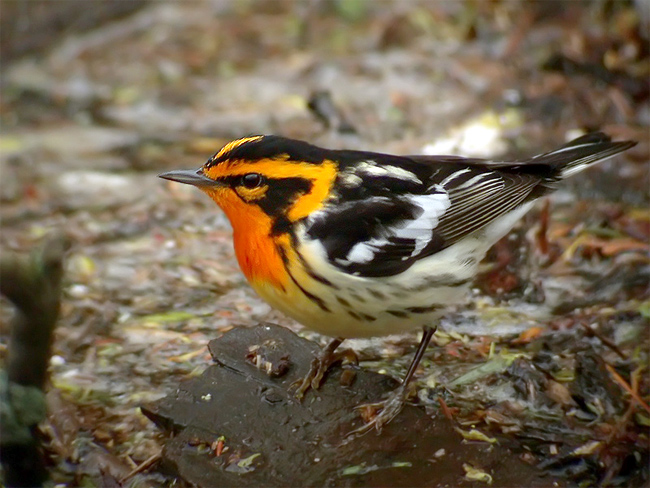
Blackburnian Warbler
Yellow-throated Warbler
Pine Warbler
Palm Warbler
Bay-breasted Warbler
Blackpoll Warbler
Cerulean Warbler
Black-and-white Warbler
American Redstart
Prothonotary Warbler
Worm-eating Warbler
Ovenbird
Northern Waterthrush
Louisiana Waterthrush
Kentucky Warbler
Connecticut Warbler
Mourning Warbler
Common Yellowthroat
Hooded Warbler
Wilson's Warbler
Canada Warbler

There's an enormous educational potential and tourism opportunity being missed; keep the creek corridor wild for the wildlife. Sustain it in the spirit of Aldo Leopold's land ethic as a bird & wildlife sanctuary than merely another well-groomed commuter trial. There are simply not that many places left in Wisconsin where so many different bird species can be observed in a relatively small area in such a short period of time. Though not as critical for nesting habitat by neotropical migratory birds, the creek corridor provides an excellent stopover point for them to rest and refuel for the next leg of their arduous journey. Over two hundred bird species can be observed at Pheasant Branch Conservancy; birds that spend winters in the Amazon Jungle; birds that nest in remote corners of the Boreal Forests in Canada. Isn't anyone else even remotely amazed by this!?


Blackburnian Warbler foraging along the creek corridor.

Does a sanctuary for wildlife exclude children, handicapped individuals, or bicyclists? The answer is a resounding 'no.' But is it necessary to despoil a trail so that the least advantaged among us can safely use it? Where else do we see this "for everyone" philosophy in public operation? Baseball diamonds? Swimming pools? Playground equipment? Contrary to some comments I received through my blog, children presently do just fine bicycling along the existing gravel trail. I have also observed people who are confined to wheelchairs use the trail and the only trouble I've witnessed them experience were at stream crossings (thankfully, the bridges will solve that problem). Will it be easier for them if paved? Sure, of course. But I wonder how comfortable Middleton's politicians will feel by exposing children and handicapped people to road bicyclists who are capable of reaching speeds in excess of 20mph on paved trails with blind corners.


There will be no more of this, my fellow birders!

I understand it's a grant from the Department of Transportation, but it's my opinion that widening and paving the creek corridor trail from Parmenter Street to Century Avenue will be a mistake and waste of money; money better spent on planting more native plants and shrubs on restored areas along the creek corridor, as well as stabilizing the stream bank from ongoing erosion. The existing gravel trail is more than suitable for accommodating popular mountain and hybrid style trail bikes. While birding, I have conducted dozens of interviews with other trail users; joggers, pedestrians, and other birders. They overwhelmingly prefer the gravel trail the way it presently is. Paving it is unpopular. Paving it is unnecessary. Paving the trail will open it to road bicycles, which are capable of going much faster than trail bicycles. Birding along the Capital City trail near Nine Springs (which is paved and serves as a model for the proposed trails in Middleton) can be a very nerve-racking experience on pleasant days when there is increased bicycle traffic.

As someone who spends nearly every morning and evening birding along the creek corridor trail for several hours at a time during migration, I'm concerned not only for myself, but also for my friends. It will be much more difficult for us while looking up into the trees with our binoculars to hear approaching bicyclists on a paved trail. My hearing is fine, but others I know who go there to bird are hearing impaired. Paved, though less of a concern, conducting nature photography will be substantially more difficult due to increased traffic. Paved, there's a greater chance recently fledged birds (and amphibians, mammals, etc.) that wander onto the trail will be severely injured or killed. As traffic has increased on the trail I'm finding more and more squashed frogs and toads during spring. Perahps worst of all, paved, it seems very likely to increase the probability of a pedestrian/bicycle collision around blind corners.

Mike McDowell
Addendum 08/05/2009:

On 08/04/2009, Middleton Common Council voted 6 to 2 in favor of awarding the contract to install the bridges at the remaining stream crossings and pave the trail (from Parmenter Street to Century Avenue).

All images © 2009 Mike McDowell
Sunday, June 28, 2009

How do you pronounce it?


I use a Swarovski AT80 HD spotting scope for digiscoping and a Swarovski 8x32 EL as my primary birding binocular. Working at Eagle Optics for nearly a decade, I thought I would share some of the ways I've heard 'swarovski' mispronounced over the years. The variety seems almost endless and perhaps it contributes something to the mystique of Swarovski in the optics and crystal markets. It's probably easiest to break down these offenses by syllable mispronunciations, but I'm sure I haven't covered the full realm. One of the most bizarre ways I've heard 'swarovski' mispronounced is 'swarovstika.' This is awful because it's actually a Polish name, though the company is headquartered in Austria.

1st syllable (rhymes with):

Sah - la
Zah - la
Sha - la
Svar - bar
Swar - bar

Zwar -bar
Swarv -bar
Svarv - bar
Shwar - bar
Skar - bar
Shar - bar
Shore - or
Swore - or
Shwor - or

2st syllable rhyme (sometimes omitted!):

Ov - of
Oh - owe
Voh - owe
Aw - draw
Ah - la
Var - car
Off - cough
Koff - cough

3rd syllable rhyme (least amount of variants):

Skee - knee
Skees - knees

Combining the three syllables, we get examples like:

Shore • var • skee
Sha • var • skee
Shwar • koff • skee
Zah • var • skee
Zwar • voh • skee
Shar • ov • skee
Swar • skees (second syllable omitted)
Shore • skee (second syllable omitted)

Link: How do you pronounce 'Swarovski'?

© 2009 Mike McDowell
Monday, February 16, 2009

What is a natural photograph?


A worthwhile read...

"Sometimes as nature photographers, our minds focus too much on getting a good photograph, instead of just enjoying nature and being there to capture some of the light we come across. It's important to keep nature natural, and I'll tell you a story to help illustrate what I mean. It's about the ethics of attracting animals by "baiting" them - feeding them in an effort to get them to come closer to you, so you can get a photograph."

Link: Read the rest!

Peregrine Falcon © 2009 Mike McDowell
Thursday, January 22, 2009

Not Baited!


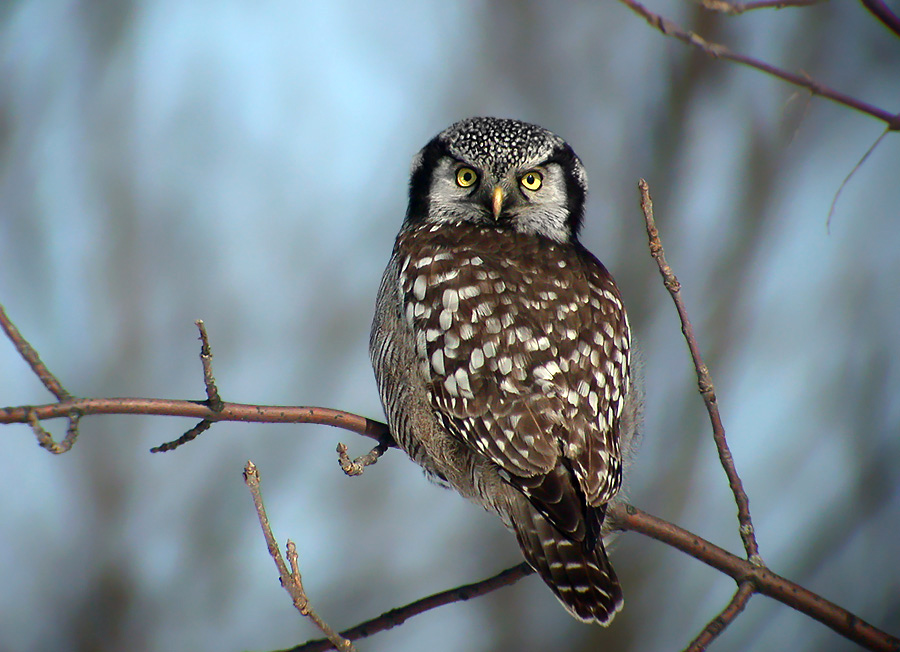
Northern Hawk Owl - not baited!

There has been a lot of discussion recently on birding listservs and forums regarding the baiting of wild owls with rodents by photographers. The burning question typically arising out of these discussions is whether or not baiting owls constitutes unethical behavior on behalf of the photographer toward nature. A hasty rationalization is made that since it's perfectly acceptable to put birdseed out for songbirds, then so it must be when feeding mice to owl; its exactly the same thing, so the argument goes.

A birder I know remarked that luring a chickadee to a bird feeder seems inherently different versus baiting a much larger avian predator. I'm inclined to agree. Using a mammalian analogy, there does seem to be a difference between attracting gray squirrels to my backyard with peanuts versus luring wolves in with fresh meat. The act of baiting may render a similar desired effect - an opportunity to experience or record a wild critter – but what of potential consequences? Is it a big deal if gray squirrels begin to habituate around my yard? Not so much. Wolves? Will owls habituate to people because they're being fed?

In the field, I seldom think of myself as a part of nature. Strolling along a prairie or forest trail, I sense that I'm an intruder - an encroachment and imposition on their domain. Upon detecting my presence, most wild things quickly move away. For me, the whole point of nature photography is to capture something that's happening as if you could have no effect on nature. To my way of thinking, this is what makes it super challenging as well as rewarding. While photographers who use live bait to attract the attention of an owl obtain some of the finest images I've ever seen, there seems to be something behind this method that philosophically despoils their photographs. Could I be proud of such a shot? I'm not so sure.

As an experienced bird photographer, I can't help but imagine the effort necessary to capture similar quality owl flight shots without luring the bird toward the camera lens. Such spectacular images conjure up guru-like nature photographers who honor and respect the intense challenges before them. But that's not what happens; a mouse is tossed onto a snow bank and awaits certain death - the paparazzi moment is assured. Even using the word "lure" implies something less than passive nature photography more akin to sport. When I photograph birds at my feeders, the reward quotient feels reduced by that particular circumstance. Whatever method employed, be it baiting, playing birdsong recordings, clearing perches, installing perches, etc., there's something altogether artificial in play and the art ceases being veritable nature photography. The fact that there are so many splendid owl images output during these irruptions demonstrates beyond doubt that anybody can do what they do.

© 2009 Mike McDowell
Friday, July 27, 2007

"Winged Thugs"


The following comment was received in response to Birds of Prey and Rollers...

Mike,

Perhaps you haven't read the part in the NBRC response where they mention that Racing Pigeons are also a staple in the diet of these winged thugs. It's a little further down where you may have stopped reading. Perhaps you chose to omit that bit of knowledge to help your argument. Much like the popular media, which as we all know is fond of Paris Hilton and simultaneously makes even the most profound event a circus presentation of cliches and quantities measured in terms of SUVs and football fields all the while grinning through manicured mandibles, you have chosen to ignore that the sport of Pigeon Racing is also being decimated by the same urban feathered opportunists. The reason that statement was put into the response by the NBRC is to show that there are more domesticated breeds affected than just Roller Pigeons. Not only domestic breeds, but wild bird populations are being destroyed systematically, with the protection of the government. These breeds and wild species don't exhibit the USFWS's unwarranted "professionally" ascertained label of having a "genetic defect" (sarcasm intended). This is important because there is a chasm of difference between Roller Pigeons and Racing Pigeons. Of course you probably didn't want to introduce that complexity into your "reading".

Migratory birds, which entails everything from Cooper's hawks to Grackles, have one thing in common; THEY MIGRATE. They move on based on seasons and food supplies. The 1918 law which was agreed upon by the North American nations was intended to prevent any one of these countries from poaching too many of the same species, like the Passenger Pigeon. The law was passed in 1918.....almost 90 years ago, when circumstances were very different from today. To blindly believe that continued conservation in the direction of raptor populations would not at some point cause a tipping of the scales in the favor of the raptors is to be truly closed minded. At the very minimum no biologist to my knowledge and definitely no one at the USFWS has ever come out publicly to raise the possibility that this may be the case. I can only guess that it would greatly work against them when they next seek increased funding. But that's another thread that needs development. Don't ever be lulled into believing that your public servants don't have a built-in biased when it comes to their findings, studies, and reports, when their budget is sacrosanct and it is their raison d'etre.

Racing pigeons are bred for speed, endurance, strength and determination. They are thoroughbreds of the sky and they don't roll, they don't have the "genetic defect" that these idiots at the USFWS like to say Rollers posses. Really, how irresponsible to make such a statement. They, of any domestic or wild prey species, logic would dictate, should stand a better chance than rollers, and even better than most wild bird species. However, they don't. Any racing homer breeder would need several digits to count his yearly losses. This speaks volumes of the density of cooper's hawks specifically. That racing homer enthusiasts are being systematically quartered by these aerial wolves should give you some glimpse as to the real "HAWK PROBLEM". Unlike their rural counterparts, urban cooper's hawks come in multiples. They attack from several angles concurrently. There is usually more than one lying in wait for a meal to pass by. Roller or not, they destroy the habitat they have claimed theirs. They jump from tree to tree, like a rolling plague of locusts, eating song bird nestlings en masse. It doesn't matter that the birds being eaten have that much meat on them. Any biologist specializing in avian species will tell you the same. Cooper's are opportunists and will clean out a thicket of nesting birds regardless of age. They are even known to eat other hawks' nestlings.

However, like the media outlets that try to drum up readership, it's not a compelling story when the weaker side has as strong an argument, though just out of reach because of the obscurity of the demographic group, as that of the government's. You choose to recognize that it is only Roller Pigeons that are being taken out because it is easy to criminalize people already facing prosecution. You mislead your readers into believing your poorly researched article is somehow valid. They applaud you as if on cue. Have we not learned, time and again, to seriously question your government's findings? How many innocent people have to rot in prisons, wrongly convicted by your government. The government is composed of individuals, like you and me. Each with his own agenda, each with his god given set of flaws and vices. In other words, they are human.

That because they have a "genetic defect", which, by the way, no knowledgeable and honest biologist will ever stake his career on since nothing is a defect but instead a mutation, that because of this Roller Pigeons somehow deserve, in some twisted way, to be slaughtered, well, that's as blind as believing your load of feces. Well, Mike, astute as you might think you are, you strike me as being similar to these reporters who love to toss around emotionally charged comments based on little or no knowledge of the actual subject. Sure you have a bit of an audience here, on this blog, who, like well trained guest audiences, applaud you when you say those oft tossed about phrases that seem to be ingrained in the typical American response pattern. You are a weak Oprah, even a Springer of the blog world. Congratulations.

For your education, Cooper's Hawk populations have indeed exploded. One study from the USFWS itself states that they have banded over 50k Cooper's since the mid 70's, and they further claim to only recapture 10% of those previously banded. Further, by the Audubon Society's own count in their Christmas Bird Count, since 1970 Cooper's have gone from a total "observed" number of about 700 to close to 7300. Observed is the key word. The number per party (observer) hour jumped from 0.0162 to 0.0645. That number is more important than the raw numbers since it is an indication of the density of this population of hawks. That is a massive increase. Further, Cooper's hawks are traditionally very hard to count since they tend to stay in the brush when in rural areas, and in trees and between homes in urban areas. They don't fly in the open, or regularly soar like a Red Tail hawks. In the same Audubon Society CBC, summaries of certain regions with regard to the Cooper are quoted as stating that the Cooper's "population explosion knows no bound". With words like that coming from the same Audubon Society that last month listed the 20 species of common birds that are currently and rapidly disappearing from our environment, all of which are prey species to the Cooper's, you have to wonder who has done their research. I can certainly say that you didn't, Mike.

My response:

From fossils collected in California, New Mexico and Florida, Cooper's Hawks have existed in North America since at least the late Pleistocene (half a million years ago). Birds that constitute traditional prey items for these and other raptors somehow managed to flourish for tens of thousands of years in their presence, including the Passenger Pigeon. So contrary to your opinion, hawks are not destroying native bird populations. Conservatively, the estimated annual number of North American migratory birds that perish from colliding with human made structures during migration is 100 million. Some suggest this number is as high as a billion birds each year. As tragic as either figure is, the number one cause of the decline of bird populations is still habitat loss and fragmentation. Like the demise of the Passenger Pigeon, we’re to blame for this – not hawks. That there is shrinking (and/or shifting) habitat for hawks to hunt on is most telling in the context of your hobby, and though they seem to have adapted well to urbanized settings, collisions with man-made objects accounts for 70% of deaths in urban Cooper's Hawks. Roller Pigeon fanciers will not win the hearts and minds of birders and bird watchers by vilifying raptors with junk science and employing ad hominem attacks to anyone who disagrees with them.

References:

C. W. Boal, R. W. Mannan 1999. Comparative breeding ecology of Cooper's Hawks in urban and exurban areas of southeastern Arizona. J. Wildl. Manage. 63(1): 77-84.

W. A. Estes, R. W. Mannan 2003. Feeding behavior of Cooper's Hawks at urban and rural nests in southeastern Arizona. Condor 105: 107-116.
S. D. Emslie, J. D. Speth, R. N. Wiseman 1992. Two prehistoric Puebloan avifaunas from the Pecos Valley, southeastern New Mexico. J. Ethnobiol. 12: 83–115.

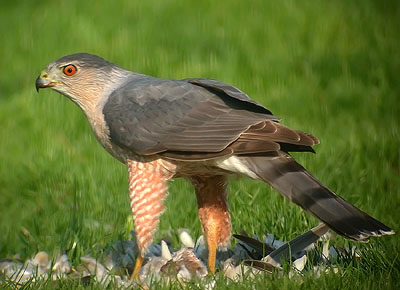
Cooper's Hawk image © 2007 Mike McDowell