Showing posts with label News. Show all posts

Thursday, March 3, 2011

Migratory bird clocks up 27,000 km journey

Amazing!


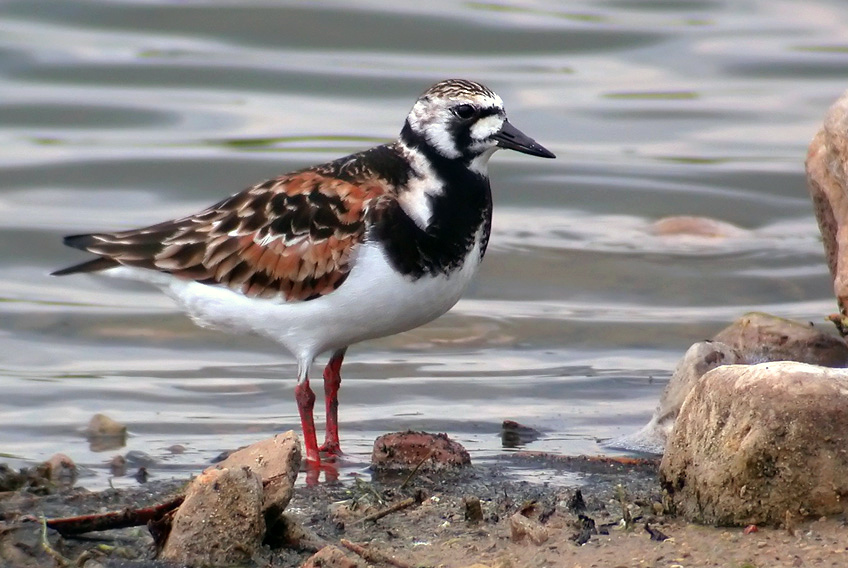
"AFTER TWICE COMPLETING a 27,000 km journey around the world twice, one ruddy turnstone has well and truly earned a lifetime of frequent-flyer points. Researchers from the not-for-profit Victorian Wader Study Group and Deakin University tracked the migration of four ruddy turnstones (Arenaria interpres) from Australia to their breeding grounds in Siberia."

Link: Full article from Australian Geographic

Ruddy Turnstone © 2011 Mike McDowell

Wednesday, January 12, 2011

Oh! It's Ley Lines!

Smug and self-assured, she replied ley lines were responsible for the recent mysterious spate of bird and fish deaths around the world, including the Arkansas blackbird incident. What are ley lines? I didn't know at the time, but I was reasonably certain it had to be nonsense after listening to her. You can read about them in detail on Wikipedia, but here's a short definition from the Skeptic's Dictionary:

"Ley lines are alleged alignments of ancient sites or holy places, such as stone circles, standing stones, cairns, and churches."


Wackadoodle alert!

From Archaeological Theory: An Introduction - Matthew Johnson (2010):

"Ley lines do not exist. This was shown by Tom Williamson and Liz Bellamy in Ley Lines in Question (1983), which analyzed such lines statistically and showed that the density of archaeological sites in the British landscape is so great that a line drawn through virtually anywhere will 'clip' a number of sites. It took Williamson and Bellamy a book's worth of effort and statistical sophistication to prove this, however."

Originally 'discovered' by Alfred Watkins in 1920, psychics, new age spiritualists, and other charlatans claim an energy complex re-discovered with divining rods proved ley lines exist and began ascribing mystical powers to them. Naturally, no modern scientific instrument can detect these asserted energy fields. This is both troubling and annoying because wildlife pathologists and biology technicians are diligently working with limited funds on finding real causes behind animal mortality events and population declines.

Claims without evidence that attempt to explain animal mortality events with mystical causes fail to offer any practical solutions. What would psychics and new agers have us do? Should we walk around with divining rods and point them at birds or something? Should we sprinkle pixie dust in our yards? Or maybe we can just think positively and the law of attraction will make bird populations rebound because we merely want them to. How insipidly moronic and arrogant! These non-experts think they know more about the nature of things than people who have been studying biology and ecology for most of their adult lives.

Bunk like this devalues the efforts of our professional scientists at a time when nature's critters need our help more than ever. By embracing this nonsense, why would such an individual feel inclined to back scientists with their money or vote? After all, they must believe scientists are simply wasting time on something futile because they know they're on wrong track. So, what's killing bats? Ley lines! It's ley lines, all the way down, and not geomyces destructans! Damn you and your science! I dare these wackaloons to call the Madison lab and tell them that.

People who attribute ley lines to animal deaths are so fail because they're counting hits but ignoring misses (confirmation bias). Why are there mass animal mortality events where there aren't any ley lines? Why are animals thriving where there are? They also fail to understand that a correlation is not necessarily causation. They probably believe ley lines explain other things, too, like car accidents, birth defects, mental illness, crop failures, etc. What can be asserted without evidence can be dismissed without evidence. Fortunately for the reality-based community, there's plenty of empirical evidence to help us explain what's going on with these unrelated animal mortality incidents. It just takes time and effort to get to the truth.

"That which is lacking in the present world is a profound knowledge of the nature of things; the fundamental truths are always there, but they do not impose themselves because they cannot impose themselves on those unwilling to listen."

~ Frithjof Schuon

Tuesday, January 11, 2011

It's a Winner!


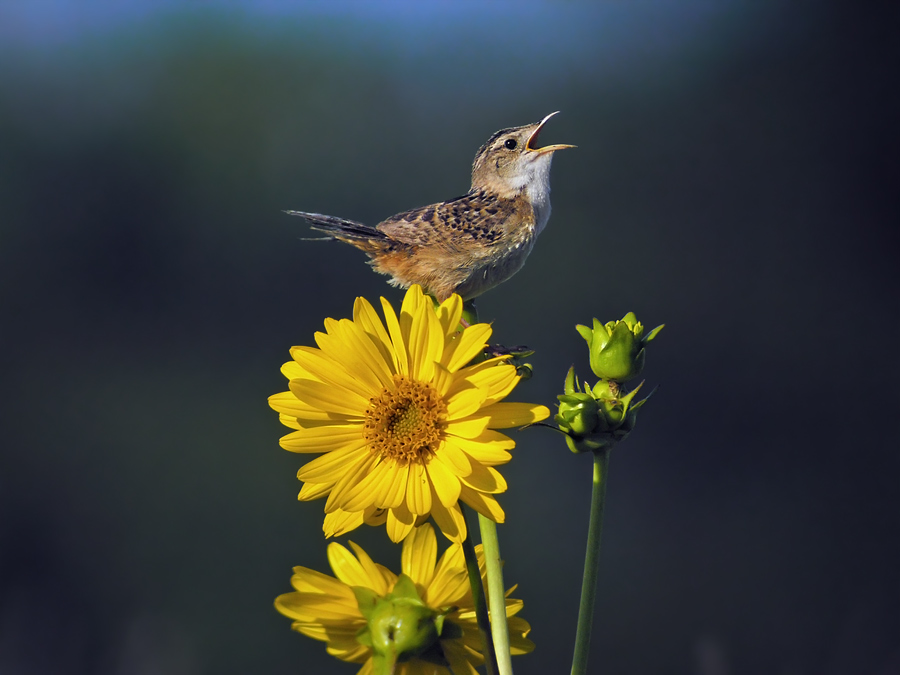
Though it wasn't my personal favorite digiscoped image of 2010, my Pope Farm Park Sedge Wren placed 8th in Swarovski's International Digiscoper of the Year 2010 contest. Still, there's something special about a Sedge Wren perched atop some flowers like this. How often do you see that? Plus, it was a 3-hour field effort on my part to get the image just the way I saw it in my imagination. The competition was very tough; there were many outstanding images and only 3 US digiscopers placed in this year's top 20 winners. Congratulations to all!

Link: Digiscoper of the Year 2010 Winners!

© 2011 Mike McDowell

Thursday, January 6, 2011

Blackbirds Deaths and Reality


While the Arkansas blackbird tragedy is an unusual and sad story, what isn't unusual is that blackbirds and other songbirds die from a wide array of human activities. Reading comments on several websites, many people seem to actually want the blackbird deaths to be some kind of wackadoodle government conspiracy, but this draws attention away from real and serious threats that imperil our native songbirds; they perish by the hundreds of millions each year, primarily due to habitat loss. Window collisions account for over 500 million songbird deaths annually, but there are many other causes.

"But they're being found dead out in the open!" Birds do not always instantly die from injuries caused from flight collisions. A bone fracture might prove to be fatal minutes after impact, which is not uncommon when birds hit a window. Birds also fatally collide with power and telephone lines, which is why you might find them in the road. After an impact, an injured bird might have just enough strength left to fly for cover in nearby shrubs, hidden from view, only to die later from internal injuries. Because of this, you might find a dead songbird in the middle of your yard or in the street where there isn't an obvious structure it might have collided with.

The 5,000 or so dead Arkansas blackbirds were likely a small percentage of the roosting flock. During spring migration, it’s not uncommon to find tens of thousands of blackbirds in large flocks at Nine Springs in Madison. One birder I know once reported observing over 100,000 blackbirds there a few years ago. Imagine if that many birds panicked during the night and took off all at once. Would 5,000 impact deaths seem so implausible? Sad, but not serious: 5,000 Red-winged Blackbird deaths (about .0025% of their North American Population). Sad, and serious: 3 Whooping Crane deaths (about 3% of the Eastern Migratory Population).

That people were initially worried is probably justified, provided their concern was for the safety and health of our nation's wildlife and ecosystems. On the other hand, I can't help but feel that other individuals, behind their accusations of government conspiracies and apocalyptic plagues, are more worried about themselves.


Link: Why are birds falling from the skies?

Red-winged Blackbird © 2011 Mike McDowell

Sunday, November 7, 2010

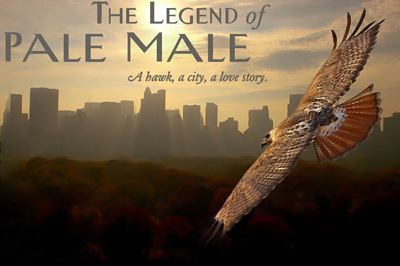
The Legend of Pale Male

This ought to be good...


Pale Male image used with permission.

Wednesday, October 27, 2010

Endangered whooping crane population rebounds


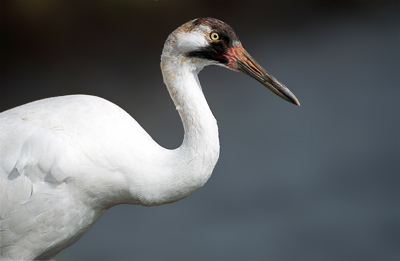
"North America’s imperiled whooping crane population — which had experts in a panic just 18 months ago after nearly 10% of the giant birds died in their wintering grounds in Texas — has rebounded after a banner summer season in Northern Canada where a near-record number of chicks were born."

Read more: Endangered whooping crane population rebounds

Whooping Crane image courtesy of USF&WS

Monday, August 2, 2010

They did not need to die.


"They did not need to die."

Neytiri - Avatar

After making a jot of notation, Rick continued, turning to the eighth question of the Voight-Kampff profile scale. "You have a little boy and he shows you his butterfly collection, including his killing jar."

"I'd take him to the doctor." Rachael's voice was low but firm.

Blade Runner - Philip K. Dick


Nearly all North American bird species are federally protected under the Migratory Bird Treaty Act of 1918, which makes it unlawful to take migratory birds, their eggs, feathers, or nests. "Take" is defined to include by any means or in any manner, any attempt at hunting, wounding, killing possessing, or transporting any migratory bird, nest, egg, or part thereof.

About a year ago I discovered several YouTube videos of kids shooting and killing songbirds (nuthatches, chickadees, sparrows, catbirds, robins, jays, woodpeckers, wrens, warblers, flycatchers, and more) with BB guns, pellet guns, and even arrows. It's quite despicable and sad for a birder to watch. It's apparent these kids don't realize they're breaking the law; some even emulate the style and enthusiasm of professional hunting shows found on television.

Are these kids merely honing their hunting skills? Will they evolve into ethical wildlife stewards and protectors of habitat by contributing to land conservation as licensed hunters? Did you shoot songbirds with a BB or pellet gun when you were a kid? The videos offer plenty to think about.


Keeping this in somewhat of a perspective, of all threats to migratory birds, habitat loss and fragmentation is the primary cause of steady population declines. Other human causes of mortality (tens of millions of birds annually) include pesticides, feral cats, and collisions with buildings, windows, and automobiles. Fairly low on the list you'll find hunting. Because it's managed by federal and state agencies, hunting birds legally is not considered a threat to the population of any North American bird.

So, what about the illegal hunting of birds? There really isn't much data out there, but apparently over 3 million BB and pellet guns are sold each year. This doesn't tell us much. How many of these videos are on YouTube? The more I searched the more I found, and the list at the end of this post is a mere sampling of what's out there.

For a long time I kept knowledge of these videos to myself. However, I decided to forward one in particular to the US Fish & Wildlife Service because it showed a visible license plate on a vehicle in the background. I thought it would be an easy case for them to investigate and potentially prosecute. Weeks passed, but nothing ever became of my inquiry. Finally, I decided to share the videos with Sharon Stiteler of Birdchick Blog. Repulsed by them, she also reached out to USF&WS and here is the reply she received and recently shared with me:

"Here is our law enforcement's response [below]. Unfortunately, the reality is that juveniles are involved and not enough badged men to go around, so anything you wish to take into your own hands education-wise is up to you."

USFWS, Reg. 3, Migratory Bird Permit Office

"Two of the three, and possibly all three of these videos show only evidence of children shooting birds. The Federal government does not prosecute juveniles, except for the most heinous of crimes. Lot's of these types videos floating around the web and not enough agents. Took us several months and hundreds of investigative hours (including numerous interrogations and lab work) to catch the whooping crane shooter, only to discover DOJ would not prosecute the juvenile shooter (he was 17). Some of our agents do pursue these types of investigations when time allows."

U.S. Fish and Wildlife Service - Midwest Region

The kids know not what they do, but I dare you to tell them that. If you leave a comment on a video citing its unlawfulness you'll be met with the most extreme and juvenile vitriol. You know, because they're just kids. So, what now? Contact YouTube? They're unlikely to police it. In fact, I couldn't find anything specifically prohibiting the posting of these types of videos in their Terms of Service or Community Guidelines except possibly this:

"Don't post videos showing bad stuff like animal abuse, drug abuse, under-age drinking and smoking, or bomb making."

Do you think this constitutes animal abuse? From an animal rights perspective, are these songbird killing videos depicting anything worse than legal duck, turkey, and pheasant hunting? I would like your thoughts and ideas. For now, the best it seems I (we) can do is to flag the videos:

YouTube: We Enforce These Guidelines

"YouTube staff review flagged videos 24 hours a day, seven days a week to determine whether they violate our Community Guidelines. When they do, we remove them. Sometimes a video doesn't violate our Community Guidelines, but may not be appropriate for everyone. These videos may be age-restricted. Accounts are penalized for Community Guidelines violations and serious or repeated violations can lead to account termination."

YouTube, LLC
901 Cherry Ave.
San Bruno, CA 94066
Phone: +1 650-253-0000
Fax: +1 650-253-0001

WARNING: The following videos show unlawful killing of songbirds; some are extremely graphic and will likely upset anyone who admires songbirds.

Yellow-rumped Warbler (Removed!)

White-throated Sparrow

Northern Mockingbird

American Robin #1

American Robin #2

Gray Catbird

Tufted Titmouse

Eastern Phoebe

Brown Thrasher

Carolina Wren

Northern Cardinal

Blue Jay (Removed!)

Yellow-bellied Sapsucker

Multiple Songbirds #1

Multiple Songbirds #2

Multiple Songbirds #3

Thursday, July 15, 2010

15 years of staunch environmentalism in Middleton's Pheasant Branch Conservancy


"When angry residents organized against the Middleton City Council in 1995 over a plan to put sewer lines through a nature preserve, many people — including some of the angry residents — thought the group would dribble away once the issue blew over. Instead, the group, Friends of Pheasant Branch Conservancy, is celebrating its 15th anniversary this year after establishing itself as an often tough-minded environmental voice in the community."

Link: Full Article at Wisconsin State Journal

PBC image © 2010 Mike McDowell

Saturday, July 10, 2010

Light Pollution: A Growing Problem for Wildlife


Migratory birds are veering off course. Newborn sea turtles are crawling inland rather than moving towards the sea. Nocturnal insects are flocking to the cities. Why all the confusion in the animal kingdom? Artificial lights. Researchers convened to discuss the increasing impacts of light pollution earlier this week at the 24th annual International Congress for Conservation Biology in Edmonton, Alberta.

Link: Full Article from Discovery News

Wednesday, June 9, 2010

Even Small Patches of Urban Woods Are Valuable for Migrating Birds


"Even tiny patches of woods in urban areas seem to provide adequate food and protection for some species of migrating birds as they fly between wintering and breeding grounds, new research has found. The results are important because, with the expansion of cities worldwide, migrating landbirds increasingly must pass through vast urban areas which offer very little of the forest habitats on which many species rely."

Link: Full article from ScienceDaily

Thursday, March 18, 2010

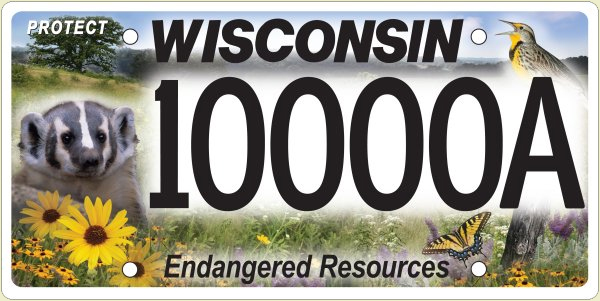
The Badger Won!


Naturally, the Badger design won by a landslide:
  • Badger: 6,167 votes for 68%
  • Great blue heron: 2,890 votes for 12%
  • Eastern bluebird: 2,846 votes for 12%
  • Red-headed woodpecker: 1,905 votes for 8%
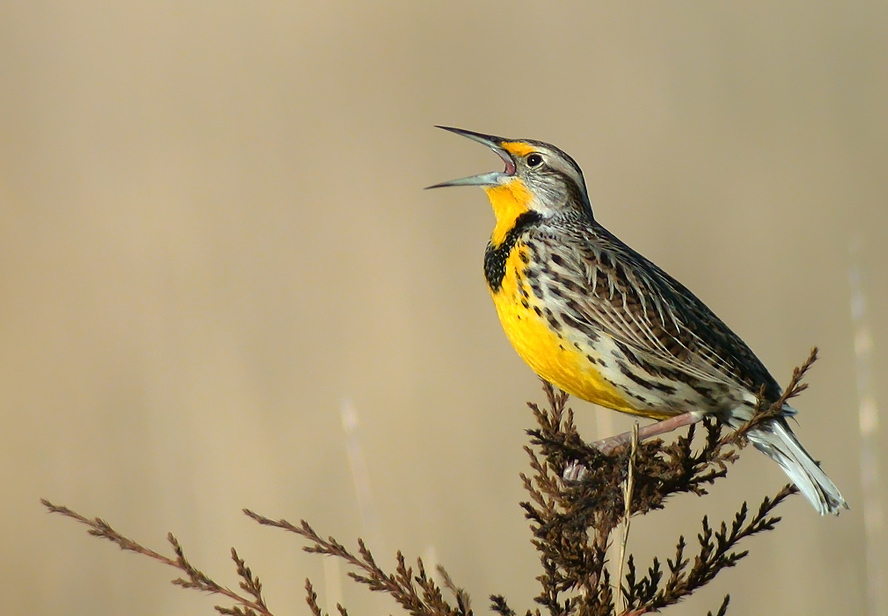
So, a Western Meadowlark I digiscoped in Nebraska will appear (upper right) on the new Wisconsin Endangered Resources license plate!

Friday, March 12, 2010

Mountaintop Coal Mining


(click on image for more artwork by Robin Street-Morris)

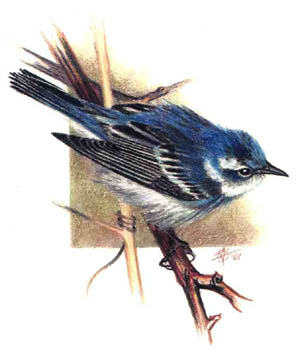
"Unfortunately for the Cerulean Warbler, the region it most depends on for survival is the region in Tennessee most coveted by coal mining companies for mountaintop removal coal mining. The Tennessee Valley Authority alone owns 55,000 acres in the Northern Cumberland Plateau area, on which it could mine coal. MTR coal mining is a prime cause of deforestation and forest fragmentation in Appalachia, precisely the type of threats that are wiping out the Cerulean Warbler and other forms of life in the southeast United States. But perhaps there is room for hope: Some of the Northern Cumberland Plateau area is above 2,000 feet in elevation, and there are two bills in the Tennessee legislature that would prohibit MTR coal mining at those elevations."

Link: Continue reading at Natural Resources Defense Council

Saturday, February 20, 2010

What is sickening and killing California's Brown Pelicans?


Courtesy of USF&WS

"Right now, rescue centers are inundated with sick pelicans. Another IBRRC site in San Pedro has 200 birds, and the San Francisco Oiled Wildlife Care and Education Center (also run by the IBRRC) is treating another 100. The IBRRC alone is spending $1,000 a day to feed and care for the birds. Another group called Pacific Wildlife Care estimates it costs $500 to care for and rehabilitate a sick pelican."

Link:  Full Article from Scientific American

Link:  Donate to Pacific Wildlife Care

Link:  Donate to the IBRRC

Tuesday, December 22, 2009

That's all for 2009!

Keeping it relatively green, I kept close to home for the majority of my birding excursions in 2009. In terms of numbers, I had my best year ever at Pheasant Branch Conservancy with 167 bird species in 75 visits. (eBird's total for the conservancy is up to 209 species.) My Wisconsin 2009 year list stands at 207, my lowest on record (a good thing). My longest drive to watch birds was Horicon NWR to attend the annual festival as a volunteer field trip leader. I also led several field trips for Madison Audubon and one for The Nature Conservancy. Birding locations outside of Dane County included Baxter's Hollow, Spring Green Preserve, and Cook Arboretum. I donated to several conservation groups, including Operation Migration, Raptor Education Group, Inc., and The Nature Conservancy. While the overall output of my digiscoping was down, I was fortunate to experience one of my most productive years in terms of quality. Here's a sampling of 2009's beautiful bird memories:


All of these birds were photographed in their natural environment. No playback devices were used to attract them. Songbirds were not provided with birdseed or any other food items to lure them into the open. Birds of prey were not baited with living animals.

See you in 2010!

© 2009 Mike McDowell

Wednesday, December 16, 2009

Record Year for Fledged Bluebirds!


"A record-breaking 28,814 fledging bluebirds were reported by BRAW monitors in 2009. This is 7,435 more fledglings than last year and slightly better than the previous all-time record two years ago when 28,244 fledglings were reported."

Link: Bluebird Restoration Association of WI

Link: 2009 Report (Adobe .PDF)

© 2009 Mike McDowell

Tuesday, December 8, 2009

2010 Phenology Calendar


This year's calendar includes images from local photographers Mike McDowell, Elizabeth Thompson, Eric Peyrot and Colette Kolker Wagner. Eric Peyrot's wetland scene is featured on the cover. You can see more from Mike McDowell in his digiscoping blog on birds and nature, and Colette Kolker Wagner's photos are on exhibit in Elegance in Nature at the University of Wisconsin Library December 3, 2009 through January 21, 2010.

  • Full color photos by local photographers
  • Checklists of animal and plant events
  • Climate and sunrise/sunset data
  • Monthly nature notes

Great gift for nature enthusiasts!

Link: 2010 Phenology Calendar now available

Wednesday, November 25, 2009

Operation Migration hangar vandalized


From Operation Migration's on-line Field Journal...

Date: November 25, 2009 - Entry 2
Reporter: Joe Duff
Subject: STEALING FROM A CHARITY
Location: Livingston Co. IL

Keeping a small non-profit afloat is never easy and in this economic climate it is considerably more challenging. When times are tough, people understandably have other priorities demanding their attention, and charitable donations must take a back seat. Even in the best of times, conservation causes like ours attract only three percent of all the philanthropic dollars given by Americans.

Operation Migration is a lean organization with a small staff and a 600 square foot, one room, basement office. Everyone works long hours for modest pay, and none us have a job that doesn’t demand multiple talents. We each cover all the bases from working with the birds, to fundraising and public speaking. We design our own equipment, build our own pens, write our own copy, and prepare our own presentations.

We are conscientious about every dollar we spend. Accountants audit the financials at the end of each year and we answer to our membership and a volunteer Board of Directors. That is why it hurt so much to hear that sometime after we left Necedah in October, the hangar we use during the summer was robbed and vandalized.

What we don’t need with us on the migration is left behind locked up in the hangar, as are some of the crew’s vehicles. Both Bev and Geoff left their cars there until they could return to pick them up once we got the birds to Florida. Their tires were slashed and lights smashed.

Brooke lives with the bird all year long. He moves to Patuxent for the hatch and early training, spends the summer in Necedah, and the fall en route to Florida. He helps to monitor the birds over the winter at St Marks, returning once again to Patuxent in the spring. His entire life is spent on the road so he uses the hangar to store all the belongings that the rest of us would keep at home. Most of them are now gone or destroyed in some distorted expression of violence that we simply can’t comprehend.

Thanks to the Disney Worldwide Conservation Fund we have new wings for our aircraft. The old Zoom wings had a king post protruding out the top that supported all the wires that keep them ridged in flight. The new ones don’t need that superstructure and our birds are safer because of it. Because the old wings fly slower, we use the them during the summer to train the fledgling birds. All four of these wings were slashed. A few minutes of senseless destruction by a mindless hooligan(s) and we’re looking at a bill for $20,000 to replace the wings.

When Richard van Heuvelen is not flying with birds he bends metal to his own whims. Out of solid steel he creates lifelike sculpture, and if he were not trying to safeguard an endangered species, he would likely be a famous artist and far richer. One of his pieces was a full size Whooping crane. He told me it was his hardest work because he knows so well what it was supposed to look like. He captured it perfectly. Now, the wings are broken, the body smashed and the rest spray painted in an obscene gesture of cowardice.

We still have two of the original aircraft originally purchased for the making of Fly Away Home. They were used first to lead geese, then swans and eventually Sandhill cranes. I flew one and Deke Clark flew the other when we led the first flock of Whooping cranes from Wisconsin to Florida. In fact we only have one now because the other was donated to the Smithsonian National Air and Space Museum in Washington. The second aircraft was in the hangar and has now suffered the ravages of someone with too much anger and too little self-control. Hopefully it can be salvaged as it cannot be replaced.

It’s hard to understand why anyone would do this. The things destroyed were worth far more than the things stolen. Was Operation Migration targeted and if so, for what? What could we have done to deserve such vengeance? Or were we just an easy target for the same kind of displaced aggression we see so often in the birds.

All of us lost something in that willful destruction of property, but mostly we lost faith. Who knows what motivates such unrepressed anger. I know what motivates mine. So now it’s time to prove that we are made of better stuff. Instead of lashing out, we will redirect our anger at this cowardly act of destruction into more resolve.

Link: Read the story on Birder's World Blog

Link: Donate to Operation Migration

Thursday, October 15, 2009

Thursday, October 8, 2009

Pick the Badger!


Pick the Badger! Wisconsin is the Badger State, after all. The Endangered Resources Program will introduce a new, second license plate that will be available for purchase in addition to the original wolf plate. It's my personal favorite because it shows a bird, a mammal, an insect, and wildflowers. Well, it helps that one of my digiscoped meadowlark photographs appears on it. The Eastern Bluebird design is also lovely and would be my second choice. Actually, they're all pretty darn good!


(original)

Link: Vote for the new plate design!

Western Meadowlark © 2009 Mike McDowell

Monday, September 21, 2009

Return of the Sandpiper


Thanks to the Delaware Bay's horseshoe crabs, the tide may
be turning for an imperiled shorebird.

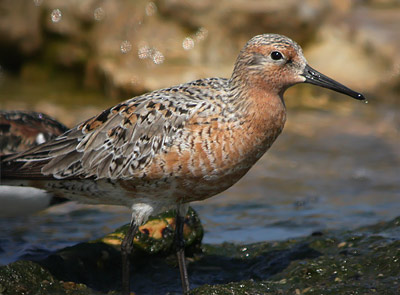
"The red knots descend from the sky. Plain, stocky sandpipers, they can fly a distance equivalent to a trip to the moon and back over the course of their lifetimes. They exude a twitchy, almost manic energy. Many have come from Tierra del Fuego, at the tip of South America. After a brief rest in Brazil, they travel almost 5,000 miles straight to Delaware Bay on the way to their Arctic nesting grounds. Upon arrival in the bay, they are basically starving, their breastbones protruding from their downy red chests."

Link: Full article from Smithsonian.com

Red Knot image © 2009 Tom Prestby