








Showing posts with label eBird. Show all posts

Tuesday, November 30, 2010

Late November Birding


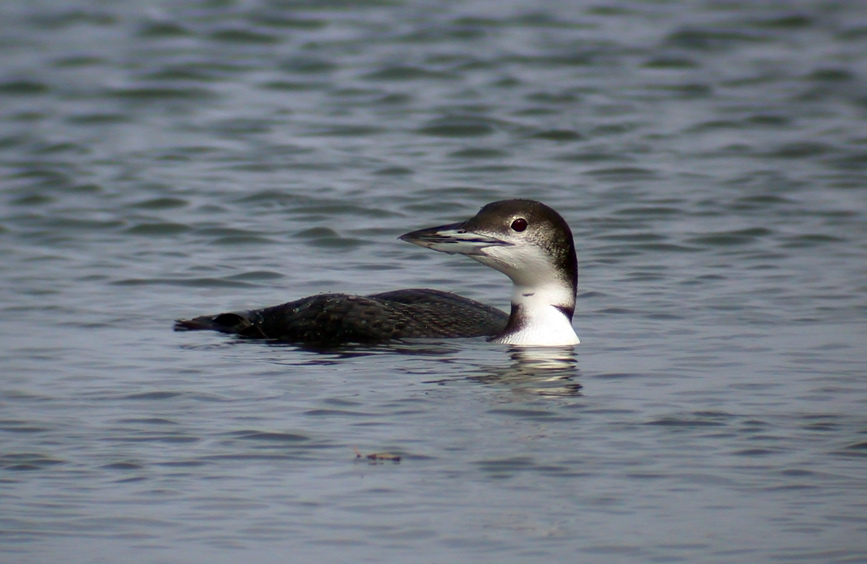
Common Loon on Lake Mendota

Check out this cool app showing migration of individual loons that currently have satellite transmitters on them:

Link: Common Loon Migration Study

Location: Pheasant Branch
Observation date: 11/27/10
Number of species: 41

Canada Goose
Tundra Swan
Mallard
Redhead
Ring-necked Duck
Bufflehead
Common Goldeneye
Hooded Merganser
Ruddy Duck
Ring-necked Pheasant
Common Loon
Bald Eagle
Northern Harrier
Red-tailed Hawk
Sandhill Crane
Ring-billed Gull
Herring Gull
Mourning Dove
Great Horned Owl
Red-bellied Woodpecker
Downy Woodpecker
Hairy Woodpecker
Northern Flicker
Blue Jay
American Crow
Black-capped Chickadee
Tufted Titmouse
White-breasted Nuthatch
Brown Creeper
European Starling
American Tree Sparrow
Fox Sparrow
Swamp Sparrow
White-throated Sparrow
Dark-eyed Junco
Northern Cardinal
Red-winged Blackbird
House Finch
Pine Siskin
American Goldfinch
House Sparrow

© 2010 Mike McDowell

Tuesday, September 28, 2010

Effort-based observations enable powerful data analysis


"eBird is a true crossroads between birding and science. As we develop eBird, we're continually walking the line between building better tools that birders want to use, while maintaining our focus on collecting useful scientific data in the process. The truth is, every piece of data submitted to eBird is valuable--from single records of a bird in space and time (Incidental Observations), to complete checklists with associated effort information. But there are differences between the levels of analysis we can perform using the effort-based observations versus incidental observations. As eBirders, we're always interested in how to make the most out of our data, and in this article we'll explore some of the reasons why recording effort can make a big difference when it comes to data analysis."

Link: Keep reading at eBird.org

Friday, September 10, 2010

Disappearing Act


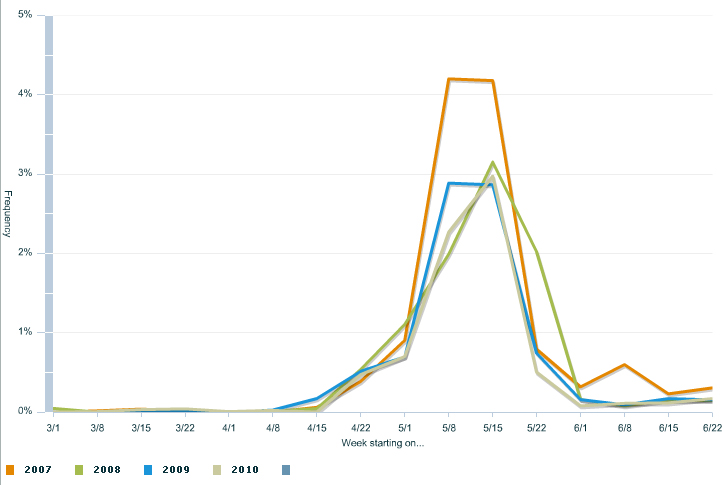
What happened to Bay-breasted Warblers during this past spring migration? Sightings by birders for this species were dramatically down from previous years in many mid-western states. In fact, I recorded only a single individual at Pheasant Branch Conservancy during May. Looking at the eBird frequency graph for this warbler species in Wisconsin, you can clearly see the drop in 2010 compared to 2007, 2008, and 2009:


What was interesting was that the US graph showed little overall change:


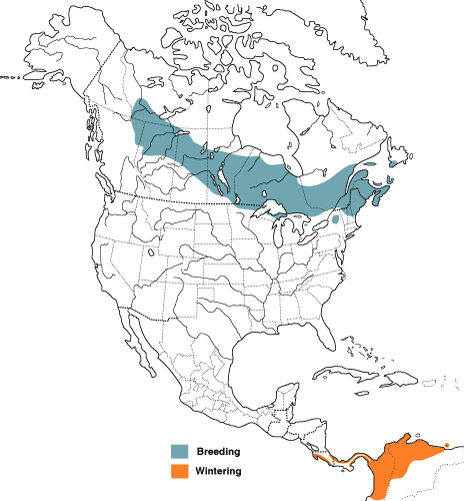
Bay-breasted Warbler range map:


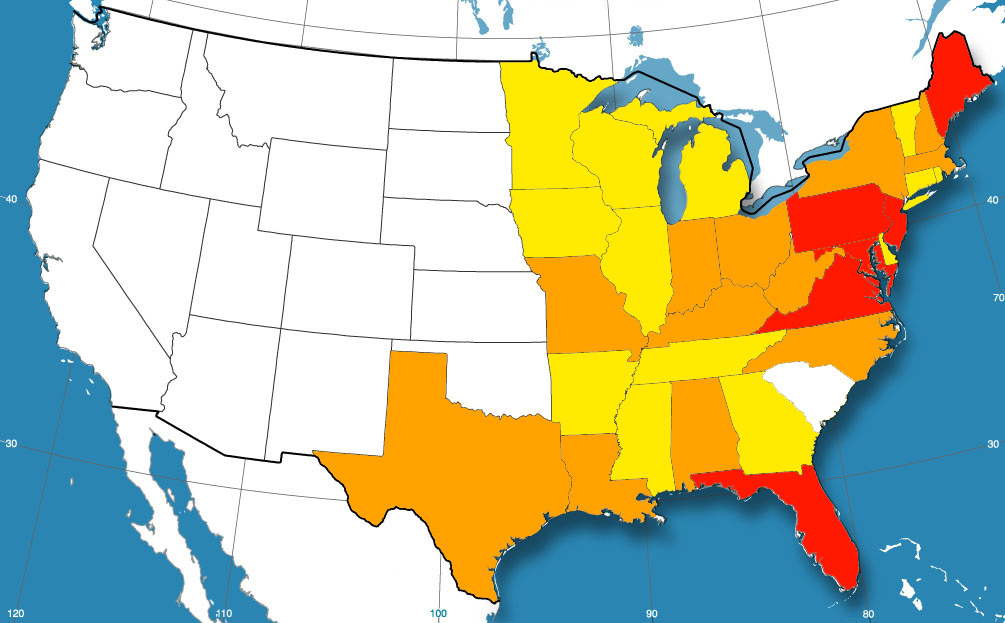
What explains this? This got me wondering if some states had increases in order to offset decreases. Using the same combined years, I plotted graphs for eastern states (South Carolina had no data) and colored those with 2010 frequency decreases in yellow, relatively unchanged frequencies are orange, and increases for 2010 are in red:


It appears Bay-breasted Warblers might have taken a more easterly migration route during spring 2010. Why? Pure conjecture, but I wonder if these particular trans-gulf migrants flew around smoke from the Deepwater Horizon fire. Bay-breasted Warblers began arriving on the gulf coast the 2nd week of April and the explosion was April 22th. While flying, did they detect smoke and buzz over to Florida instead? Perhaps the 2010 differential was an anomaly or weather system related. We know that warblers tend to migrate in mixed-flocks, so why weren't other species affected the same way? There are a lot of explanations that might fit the data, but probably no way to know the real explanation or cause. Whatever the case may be, I doubt midwest birders will forget the spring they saw so few or no Bay-breasted Warblers.

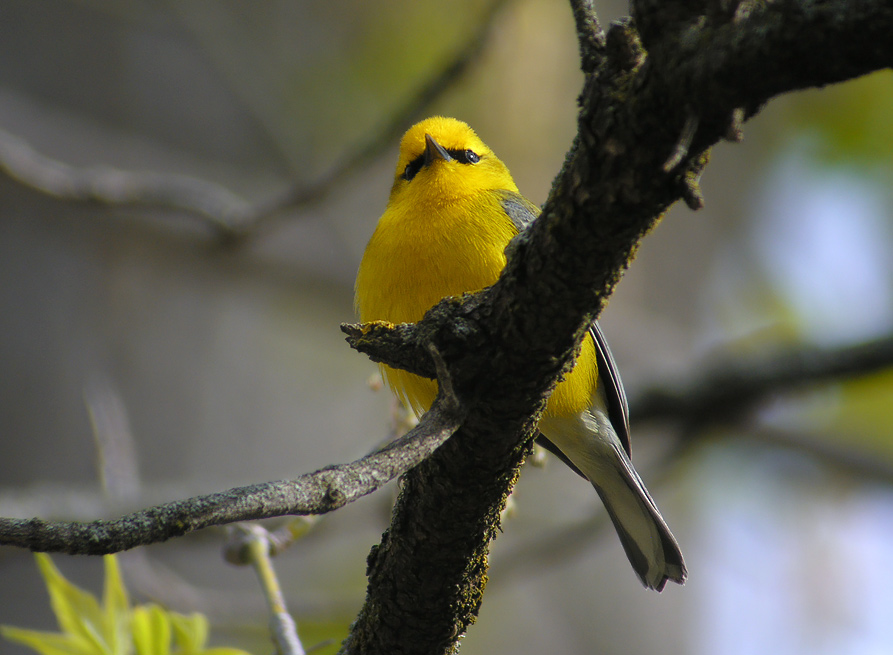
Bay-breasted Warbler © 2010 Mike McDowell

Monday, April 26, 2010

eBird data at work!


"The previous 'Patterns from eBird' featured animated maps of Northern Cardinal based on predictive modeling. This time we'll take a look at how these maps predict migration in Eastern Phoebe, a widespread eastern species. Eastern Phoebe is the hardiest flycatcher in the United States and Canada, and in some areas it returns to the breeding grounds more than a month earlier than any other flycatcher. Its wintering range is largely within the United States, so these animated maps reveal its entire annual cycle."

Link: Full article and animated map at eBird.org

Monday, July 6, 2009

eBird Tip

Let's say you want to find out if a certain species of bird has been reported in a particular area, perhaps all the locations within a county. There's a way in eBird to do just exactly that. For this example we'll search for Savannah Sparrow in Dane County, Wisconsin.

Once you're on eBird, follow these steps:

1. View and Explore Data.
2. Maps.
3. Select Species and Continue (type 'savannah sparrow').
4. Change Location.
5. Select a region (Wisconsin).
6. Select a sub-region (Counties in Wisconsin).
7. Select "Dane" and Continue.
8. Wait for markers to load...


Presto! Now you can zoom in or out on the map and find out where other eBirders have reported Savannah Sparrow.

Wednesday, May 6, 2009

The Beauty and the Data


Wood warblers are often the most sought after birds during spring migration. When small woodlots or urbanized woodland settings become filled with these colorful, spritely little birds, the significance and importance of adequate stopover habitat becomes clearly evident. Certainly, beauty of bird and habitat are one of the primary reasons birders choose to spend so much time in the outdoors, but what can we do with our time and efforts that might also benefit the scientific field of ornithology?

Now that I've been participating in this avocation for over 15 years, it does seem like I'm seeing fewer warblers season to season. This is the third year I've been utilizing eBird as a way of recording my sightings at Pheasant Branch, so there really isn't enough data to fully support a downward trend for this unique location. Also, on the subject of birders documenting their sightings, I'm presently reading Birdscapes by Jeremy Mynott and enjoyed the point of the following paragraph:

“Moreover, this is the kind of progress in ornithology to which we can all, in principle, contribute; there are still many unanswered questions about bird behaviour, which intrigue amateurs at least as much as scientists and which amateurs can sometimes help answer, as they also do in the sciences of astronomy or archaeology (but scarcely at all in nuclear physics or neurology). After all, it is the observations and records of thousands of ordinary birdwatchers that provide so much of our knowledge about bird migration and distribution, for example the arrival and departure dates of migrants in different parts of the country. Scientists call it phenology when they do it, but the data are largely supplied by amateurs.”

Because I concentrate over 90% of my birdwatching at Pheasant Branch, the data I have accumulated over the past three years is starting to reveal a wonderful story regarding the bird species that migrate, nest, or are year-round residents. I think any birder would take a great deal of satisfaction learning so much about just one spot, one story, regarding an avifauna phenomenon that spans the course of a year, year after year. Since January of 2007, I've submitted over 220 checklists for Pheasant Branch Conservancy into eBird. It takes me only a few minutes to transfer my mental or paper checklist into the on-line form. I encourage my blog readers to utilize eBird and bird locally as often as possible.

Location: Pheasant Branch
Observation date: 5/6/09
Number of species: 65

Mallard
Great Blue Heron
Green Heron
Killdeer
Mourning Dove
Belted Kingfisher
Red-bellied Woodpecker
Yellow-bellied Sapsucker
Downy Woodpecker
Hairy Woodpecker
Eastern Phoebe
Great Crested Flycatcher
Blue-headed Vireo
Blue Jay
American Crow
Northern Rough-winged Swallow
Barn Swallow
Black-capped Chickadee
Tufted Titmouse
White-breasted Nuthatch
House Wren
Ruby-crowned Kinglet
Blue-gray Gnatcatcher
Swainson's Thrush
Wood Thrush
American Robin
Gray Catbird
Brown Thrasher
European Starling
Cedar Waxwing
Blue-winged Warbler
Golden-winged Warbler
Tennessee Warbler
Orange-crowned Warbler
Nashville Warbler
Northern Parula
Yellow Warbler
Chestnut-sided Warbler
Magnolia Warbler
Yellow-rumped Warbler
Black-throated Green Warbler
Blackburnian Warbler
Palm Warbler
Bay-breasted Warbler
Blackpoll Warbler
Black-and-white Warbler
American Redstart
Ovenbird
Northern Waterthrush
Common Yellowthroat
Wilson's Warbler
Eastern Towhee
Chipping Sparrow
White-throated Sparrow
Northern Cardinal
Rose-breasted Grosbeak
Indigo Bunting
Red-winged Blackbird
Common Grackle
Brown-headed Cowbird
Baltimore Oriole
House Finch
Pine Siskin
American Goldfinch
House Sparrow

Blue-winged Warbler © 2009 Mike McDowell