Showing posts with label Binoculars. Show all posts

Tuesday, September 28, 2010

Minox Comfort Bridge Series


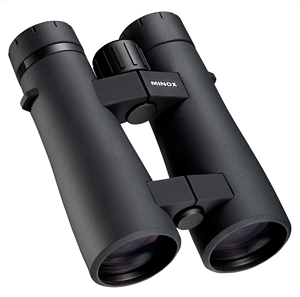
It's been a while since I've written a binocular review for my blog, so I thought I'd let all of you in on a special we're running here at Eagle Optics. We have a limited quantity of demo 8x33 #62197, 8x44 #62195, and 10x44 #62196 Minox BL/BR “Comfort Bridge” series binoculars at great value for the quality of optics you'll get. These manufacturer demo units are selling at $299.99 (new $469), $329.99 (new $489), and $339.99 (new $499) respectively.


Optically, I find this particular Minox model to be vastly superior over the new Nikon Monarch (the one with dielectric prism coatings), the Pentax SP series, and rivals even some binoculars in the $600 to $800 price range. They're fairly lightweight, rugged, waterproof & fog proof, super-smooth focus, and have a decent close-focus. On that last point, though Minox lists the 8x33 having a 8' close focus, I was able to bring it down to 5.5' during my inspection. I checked out several of these binoculars first-hand and they all appeared to be in like-new condition with no signs of wear or use. They come with the same accessories (case, strap, rainguard, tethered objective lens covers) and 30-year warranty as new ones do. Supplies are limited, so don't hesitate if you're in the market for a great birding binocular because I know these will sell quickly!

Link: 8x33

Link: 8x44

Link: 10x44

Friday, June 11, 2010

Swarovski SLC 8x42 HD


Swarovski SLC 8x42 HD

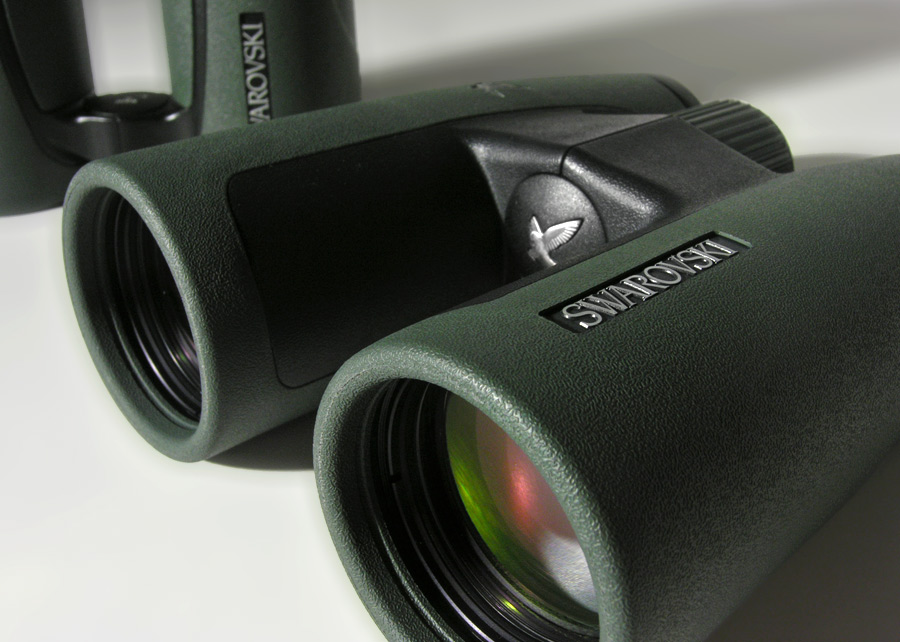
Swarovski, at long last, has added an 8x42 to their SLC binocular line. Earlier this week I had an opportunity to get my first look at the new Swarovski SLC 8x42 HD and spent a little time comparing it with my Swarovski Swarovision EL 8.5x42.

Both binoculars specify fluoride-containing HD lenses, but the SLC HD is priced around $340 less than the EL; I was curious what optical differences I might find between the two. Though both binoculars have a generous field-of-view, the SLC is a smidge wider (408 ft @ 1,000 yds vs. 399 ft @ 1,000 yds). Also obvious is the fact that SLC HD lacks the field flattener that gives the Swarovision EL near perfect edge-to-edge sharpness. Resolution-wise, though, I was unable to discern a difference between the two. I no longer notice the Swarovision's “rolling-globe effect,” but those who have trouble with that particular optical characteristic and desire the same super resolution, the SLC HD may be a better choice. Just remember that you'll be giving up the Swarovision's awesome edge!

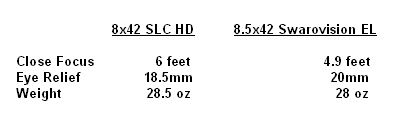
Here are a few other minor differences:


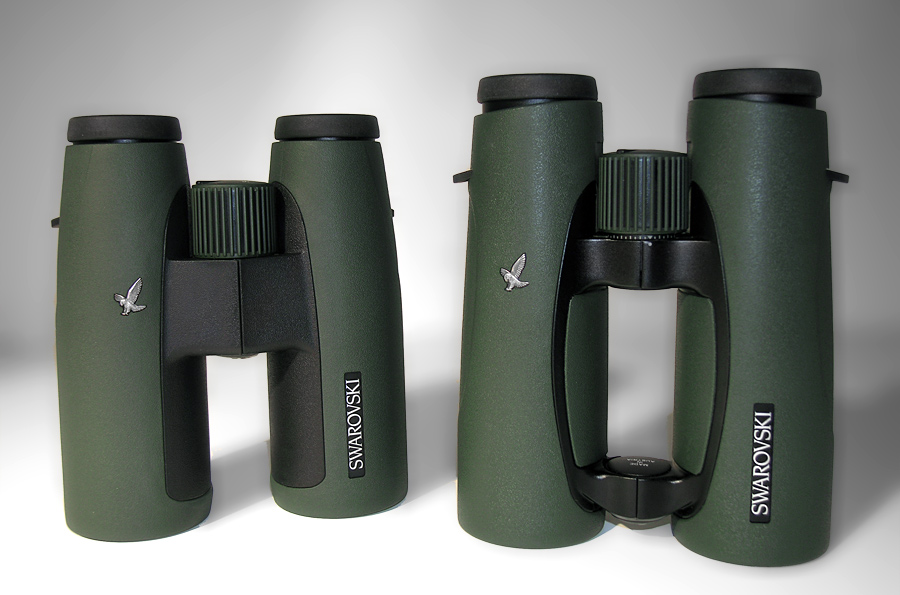
SLC HD (left) Swarovision EL (right)

From the image above you can tell that there are substantial ergonomic differences, the Swarovision EL retaining the open-hinge design of its predecessor. The SLC HD is a little heavier despite the fact it's shorter than the EL. Overall, I think the SLC HD is a worthy contender in the super-premium class of binoculars that includes the Nikon EDG, Leica Ultravid HD, and the Zeiss FL. Personally, I thoroughly enjoyed birding with my Swarovision EL this spring, which has elevated my views of birds to a whole new level.

© 2010 Mike McDowell

Thursday, February 1, 2007

Vortex Razor 8x42 Review


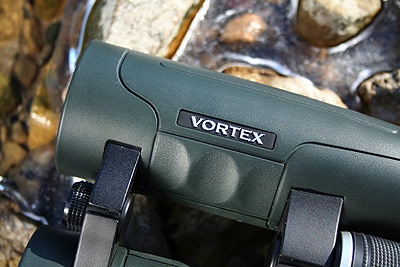
Yesterday I purchased a pair of Vortex Razor 8x42 binoculars to add to my optics "collection" (the correct classification for my heap of glass, as advised by a colleague). Technically, I really didn't need another binocular because I have a Nikon Premier SE 8x32 and a Vortex Stokes DLS 8x42 for my two primary birding binoculars (sometimes I use a Swarovski 8x30 SLC). Lately, though, I've been admiring the Razor's distance resolution, which is observably better than my Stokes DLS. Ya know, it's not easy working around so many great optics (sigh). I'll probably donate a few of my less expensive binoculars to Birder's Exchange.

Last evening after work, I stopped to look for the Short-eared Owl at Middleton's Municipal Airport and to try out my new optics. The owl must have hunted elsewhere, but I did get to test out the Razor's super-sharp resolution when a Red-tailed Hawk pounced on prey on a hill about a mile away. I was amazed by the clarity and crispness – pretty close to my Superior E. Even at distance and in dim light, the hawk's form was perfect and I could make out three distinct colors - dark top, light underside and copper tail. The Razor delivered very usable views almost 40 minutes past sunset, though my DLSs were marginally brighter. However, I prefer the winner with distance resolution over a slight edge on brightness.

Oh joy - look what's in store for the weekend...

SATURDAY:
Low: -3
High: 6; (Wind Chills: -15 to -25)

SUNDAY:
Low: -8
High: 4; (Wind Chills: -15 to -25)

MONDAY:
Low: -10
High: 5; (Wind Chills: -15 to -30)


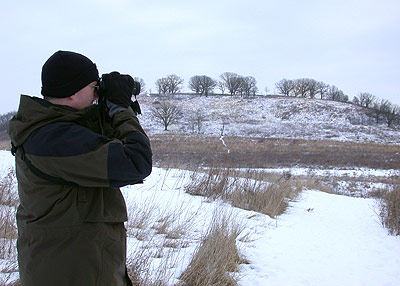
Yikes! When it gets this cold, I'd rather stay inside and watch backyard birds or read a good book. While modestly warmer temperatures endured this morning, I decided to go birding at Pheasant Branch Conservancy with my Razors to provide additional observations for this short review. Looking around the snow covered fields, the Razor's optics are slightly warm under overcast skies, but not distractingly so. Once the sun came out from behind the clouds, the binoculars were color neutral. I found a small flock of American Tree Sparrows near the fence line and enjoyed watching them forage in phenomenal detail.


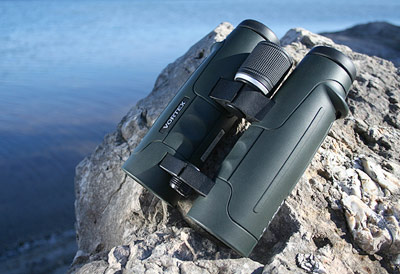
The Razors have exceptional contrast and virtually no chromatic aberration in the center of the field. You can get some color fringing to appear near the edge of the field, but every binocular in the world will show a little near the edge. The field is discernibly flat and very wide at 410' @ 1,000 yards, making scanning an awesome experience. Ergonomically the binoculars are slightly heavier (29.4 ounces) than I normally like, but the “European” open-hinge design balances it out pretty well. I use the slide-and-flex bino harness on all my binoculars so the weight is never on my neck and doesn't create a problem.

The Vortex Razors' price is another of its attractive qualities. In fact, I can't think of a binocular with better optics in its price range. But enough about what I think – you can read a recent customer review on the Razor at this BirdForum.net thread.

All images © 2007 Mike McDowell

Monday, November 27, 2006

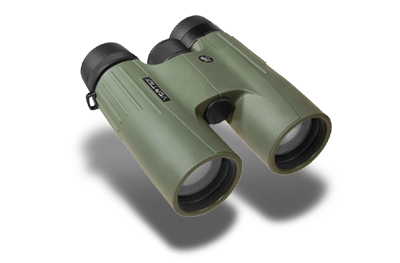
Vortex Viper - Binocular Review


Recently, I conducted a side-by-side binocular comparison with the Vortex Viper against similarly featured models at various price points, all under $1,000.00. When conducting binocular tests, I don't like to include too many binoculars, so you may opine that some obvious favorites are missing from this review.

Though the Viper is available in three magnifications (8x42, 10x42 and 12x42), I compared only 8x models. All binoculars were tripod mounted against standard resolution charts at 50 feet with indoor lighting. I also brought the binoculars outside for distance, color and brightness tests at different times (including dusk) on an overcast day with good atmospheric conditions.

Binoculars used for this comparison/review:
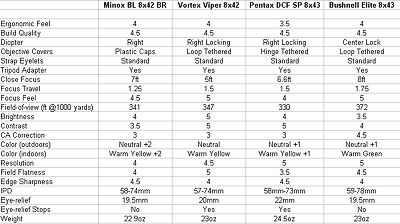
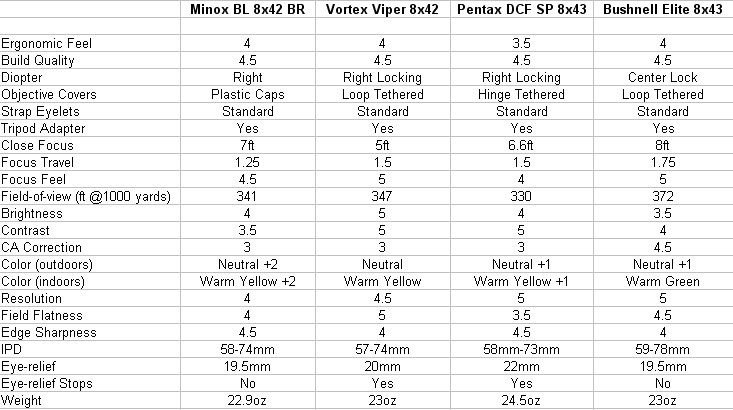
My Score Card:


(click on image for larger version)

Ranking: 1 = poor, 2 = fair, 3 = good, 4 = above average, 5 = outstanding.


Ergonomics / Build Quality

All four binoculars felt very comfortable in my hands leaving only minor points to be critical over. The Pentax is slightly bulkier than the other three binoculars. All four are waterproof and nitrogen purged – build quality seems very high and suspect all would be dependable in the field. If pressed to rule one out on perceived build quality, the Minox would be the last of the four I would pick if going on a mountain hike or birding in a damp rainforest.

The Pentax and Viper both have a right-side locking diopter, while the Elite has a center diopter beneath the focus knob that locks. The Minox has a standard right side non-locking diopter ring. The Pentax has tethered objective lens covers attached at the hinge (I don't like those), but that's still better than the separate plastic covers that are easily lost (what the Minox comes with). The Elite and the Viper have looped tethered objective lens covers (my favorite) that are easy to cover and uncover. Each binocular has standard strap eyelets and are also threaded on the central hinge to connect to a standard binocular tripod adapter.

Focus Wheel / Travel

In testing the focus wheels I looked for comfort, focus travel/speed and smoothness. All four binoculars are between 1.25 and 1.75 turns from close-focus to infinity Minox: 1.25; Viper: 1.5; Pentax: 1.5; Elite: 1.75. All were similar in smoothness when turning the focus knob – none were stiff or had noticable play. The Viper and Elite were smoothest and the Pentax seemed to have only slightly more resistance.

Close Focus and Field of View

A super-close focus isn't critical for my applications, so even the Elite with an 8 foot close focus is satisfactory. The Pentax was 6.6 feet and the Minox has a 7 foot close focus. The Viper came in with the best close focus at 5 feet. At 347 feet @ 1,000 yards, the Viper's field of view is generous for its price range and beat the Pentax and the Minox. Naturally, the more expensive Elite topped out in this category with 372 feet @ 1,000 yards.

Brightness, Contrast and Color

The Viper was the clear winner on brightness – a discernible difference over the other three. The Pentax and Minox seemed about the same to my eye. The low mark for the Elite doesn't necessarily mean it's a poor low-light performer, it's just not quite as good as the others in the tests I conducted. I could not detect any negligible difference in contrast between the Pentax and the Viper. The Elite was a close runner-up with the Minox being about average.

The Bushnell Elite topped the other three in correcting chromatic aberration (purple/green color fringing) and I was unable to detect any significant difference between the other three binoculars. In outdoor lighting, whites seemed a little warm on the Pentax and Elite, but the Minox was the warmest. The Viper was the most color-neutral and pleasing to my eye of the four. In indoor lighting, as expected, all of the binoculars appeared to be a little warm but the Elite had more of a greenish tinge when looking at whites. The Minox remained the warmest of the four in indoor and outdoor lighting.

The Pentax and Elite were about even for resolution and ranked highest in my evaluation, but the Viper had a clear advantage over the other binoculars for field flatness. By field flatness, I mean the tendency of vertical objects (like a telephone pole) to remain a straight line when bringing it to the edge of the field. To be fair, the Elite has a larger field of view and I ranked it nearly as high as the Viper. The Pentax had noticeable field curvature among the four binoculars. I was unable to make a distinction on edge sharpness. Naturally, none of the binoculars in this review are going to match the edge sharpness of a Swarovski or Leica. I gave the Pentax and the Minox the highest score with the other two being very close behind it.

The Vortex Viper is about half the price of the Bushnell Elite, making it a strong contender in the mid-priced binocular race. The higher priced Pentax DCF SP is one of my favorite binoculars and the Viper definitely gives it a run for its money. I chose the Minox BL/BR in this review as a standard lightweight 8x42 mid-priced roof prism binocular. Because the Vortex Viper isn't much more expensive than the Minox, I think it's a clear winner in its price class for the quality of glass and optical performance.

Update: Award Winning Vortex Viper!