Showing posts with label Behavior. Show all posts

Wednesday, February 9, 2011

Amazing Winter Wren video!

Check out this incredible HD video of a singing Winter Wren by Lang Elliott and Bob McGuire:


Though they're fairly common at Pheasant Branch Conservancy during spring and fall migration, I can count the number of Winter Wren digiscoping encounters I've had on one hand – they're a very challenging bird to follow when they're not on breeding territory.

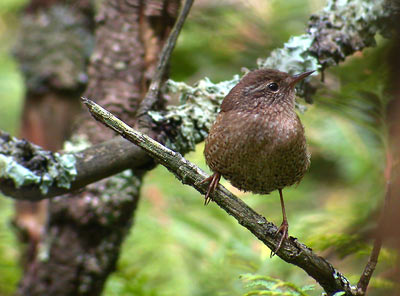
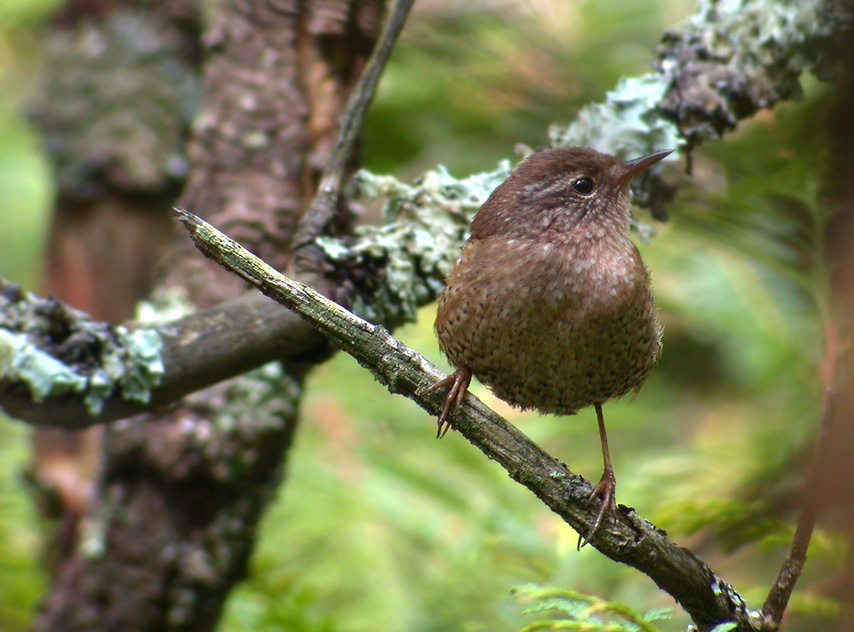
My best Winter Wren shot (below) was captured at the Ridges Sanctuary in Door County, WI a few years ago in late May. This particular bird was defending his territory by returning to the same perch to sing his amazing song. Unfortunately, the images of him singing were blurry from his quivering body and beak – it's just too fast to freeze in poor lighting. I was lucky to catch a few frames when he paused between phrases.


© 2011 Michael McDowell

Monday, January 31, 2011

On Nest!


Can you see the owl in this photograph? This is the same tree cavity this pair of Great Horned Owls used last year – much nicer accommodations than an exposed stick nest one usually observes these owls on. The male was perched at his usual sentry spot in a nearby conifer, collecting warmth from the sun:


We're getting a lot of snow today and are supposed to have somewhere between 12" and 20" of total accumulation by the end of Wednesday. I'm glad I was able to go birding at the conservancy for several hours yesterday, as it looks like we're going to be snowed in for a few days. Perhaps I'll finally get some snowshoeing in this winter.

Location: Pheasant Branch
Observation date: 1/30/11
Number of species: 25

Cooper's Hawk
Red-tailed Hawk
Rough-legged Hawk
Mourning Dove
Barred Owl
Belted Kingfisher
Red-bellied Woodpecker
Downy Woodpecker
Hairy Woodpecker
Blue Jay
American Crow
Black-capped Chickadee
Tufted Titmouse
White-breasted Nuthatch
Brown Creeper
American Robin
Cedar Waxwing
American Tree Sparrow
White-throated Sparrow
Dark-eyed Junco
Northern Cardinal
House Finch
American Goldfinch
House Sparrow

© 2011 Mike McDowell

Tuesday, August 31, 2010

Summer and Fall Warblers


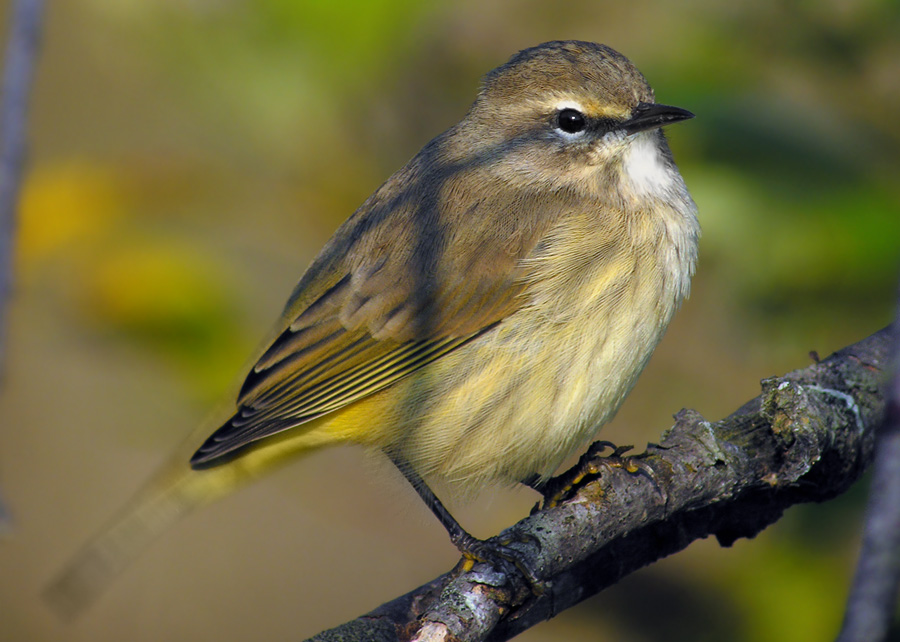
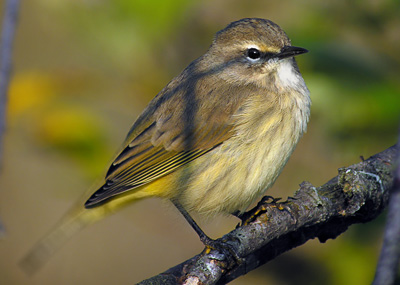
Palm Warbler

While tallying species isn't the sole point to my enjoyment of birding, I've observed 19 warbler species at Pheasant Branch Conservancy during the month of August. I cite this number in the interest of fun birding because I occasionally meet birders who dismiss fall migration (especially warbler watching). They're just too difficult to identify, so the objection goes. Recognizing non-breeding warbler plumages can seem daunting when thumbing through a field guide, but this is because the birds are generally shown perched in profile and out of the context of their habitat. There's a wealth of identification knowledge that can't be experienced in two-dimensional illustrations; one must visit the woods and watch the warblers live.
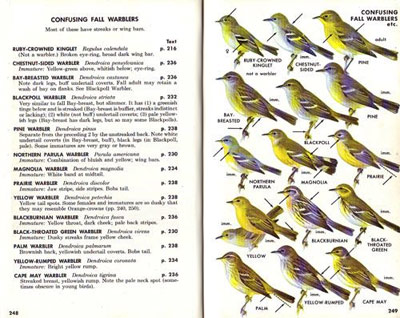


The bird's behavior and/or vocalization, even if only a single call note, can be very helpful in making an accurate identification. Spring is comparatively easy when birds are singing their diagnostic songs, but consider that upper-story warblers, like Blackburnian and Black-throated Green, tend to have higher-pitched call notes, like "tink" or "twip," while those in the understory generally cast a louder "chip" or "smack" sound. (Can you guess why?) Just knowing this much can help eliminate an entire group of warbler candidates. With practice it's possible to identify many warbler species by call note alone.

How the bird moves through vegetation and forages also helps; skulkers still skulk and gregarious warblers, like American Redstarts and Chestnut-sided Warblers, still sally for insects within feet as if you're barely even a passing concern. There's the Palm Warbler's signature bobbing tail and the nuthatch-like foraging style of the Black-and-white Warbler. Even when lighting is poor, there are behavioral cues and impressions that can get you on the right ID track.

Some adult birds still retain their breeding plumage well into August. This month I've seen Black-throated Green, Wilson's, Canada, American Redstarts, and other warblers that looked every bit as gorgeous as they do during spring. Even some basic plumages, while very different from their breeding colors, are downright adorable, like the Chestnut-sided Warbler's beautiful bright green and light gray. The sights, patterns, and sounds experienced during fall migration will even help make you a better birder during spring. There's a lot to learn, but that's precisely the fun of it!

August Warblers at Pheasant Branch:

Blue-winged Warbler
Golden-winged Warbler
Tennessee Warbler
Nashville Warbler
Northern Parula
Chestnut-sided Warbler
Magnolia Warbler
Black-throated Blue Warbler
Black-throated Green Warbler
Blackburnian Warbler
Bay-breasted Warbler
Black-and-white Warbler
American Redstart
Northern Waterthrush
Connecticut Warbler
Mourning Warbler
Common Yellowthroat
Wilson's Warbler
Canada Warbler

Palm Warbler © 2010 Mike McDowell

Monday, June 28, 2010

The Private Lives of Birds


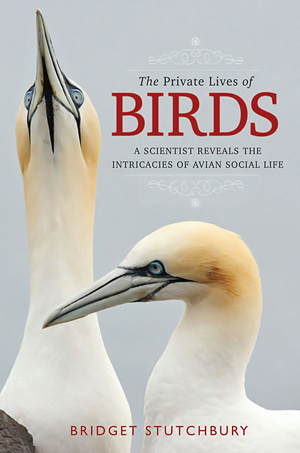
Need a good nature read this summer? A truly informative book I can enthusiastically recommend is Bridget Stutchbury's The Private Lives of Birds. Her research, experiences, and stories offer an incredible glimpse into the complexities of the avian realm during the breeding season. Paint a slightly larger black badge on Common Yellowthroat male and he's instantly more appealing to females. What does a male's plumage say about the status and health of the bird? Find out much time a male Scarlet Tanager can be away from an incubating female on a nest before she breaks the union and abandons the entire project, including him! It might even be that eggs in her nest have different fathers. Our beloved songbirds are liars, cheaters, and bullies? Say it isn't so! I know I'll cite this book for years to come with increasing my understanding of avian social relationships and will undoubtedly make birding that much more interesting!

Wednesday, April 15, 2009

Clever little birds...


This morning at the Pheasant Branch stream corridor, two members of JFNew relocated the log that a pair of Black-capped Chickadees has been excavating for the past few weeks. As you can see from my previous post, the loose log was propped up against a gabion wall that's scheduled to be replaced with rootwad next month due to serious erosion problems. Additionally, the log was out in the open and offered too much temptation for the overly curious. After emailing Middleton Public Lands, a decision was made to relocate the log before eggs were laid in the cavity.

The log was moved approximately 30 feet up the bank from its original location, then wedged between the ground and a tree for stability. It's definitely an improved and more inconspicuous location, but would the chickadee pair be able to find it? Three other birders were present as we watched some rather amazing bird behavior.

At first, the chickadee pair were quite panicked. From nearby branches, the two birds kept flying down to where the log used to be, uttering an array of distress calls. This went on for a few minutes, but then the two began expanding the range of flights to and from the original location, choosing higher branches after each pass. Eventually, one of the chickadees spotted the relocated log, inspected the cavity, came back out and gave out a sharp "twip-it" call. Immediately, the other chickadee flew right to the log and the two birds resumed excavating the cavity.

Success!

Black-capped Chickadee © 2009 Mike McDowell

Friday, April 3, 2009

Waiting and Drinking


Location: Pheasant Branch
Observation date: 4/3/09
Number of species: 29

Wood Duck
Mallard
Mourning Dove
Belted Kingfisher
Red-bellied Woodpecker
Downy Woodpecker
Hairy Woodpecker
Northern Flicker
Eastern Phoebe
Blue Jay
American Crow
Black-capped Chickadee
Tufted Titmouse
White-breasted Nuthatch
Carolina Wren
Golden-crowned Kinglet
American Robin
Cedar Waxwing
Fox Sparrow
Song Sparrow
White-throated Sparrow
Dark-eyed Junco
Northern Cardinal
Red-winged Blackbird
Eastern Meadowlark
Common Grackle
House Finch
Pine Siskin
American Goldfinch

© 2009 Mike McDowell