Showing posts with label Scenic. Show all posts

Thursday, December 2, 2010

2011 PBC Phenology Calendar!


The 2011 Pheasant Branch Conservancy Phenology Calendar is out!

Adorned with beautiful nature photographs taken right at the conservancy by local photographers, learn about nature and science topics each month, including checklists for seasonal animal and plant activities, weather data, nature notes, and more. The calendar also features the 2010 photo contest winners. Perhaps best of all, your dollars will support the Friends of Pheasant Branch and their ongoing efforts to restore and protect one of the best natural areas in Dane County!

Link: Purchase the 2011 Phenology Calendar here!

Sunday, October 31, 2010

October Ends


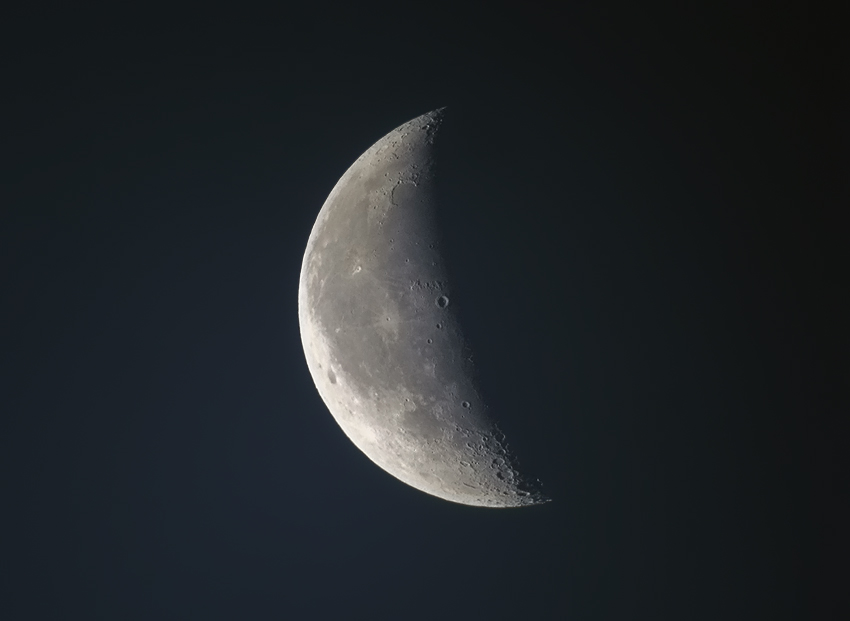
The waning crescent moon was like a white jewel in the darkest part of the dawn sky. Sandhill Cranes were waking and adding their bugling to the dawn chorus of sparrows, finches, and blackbirds.


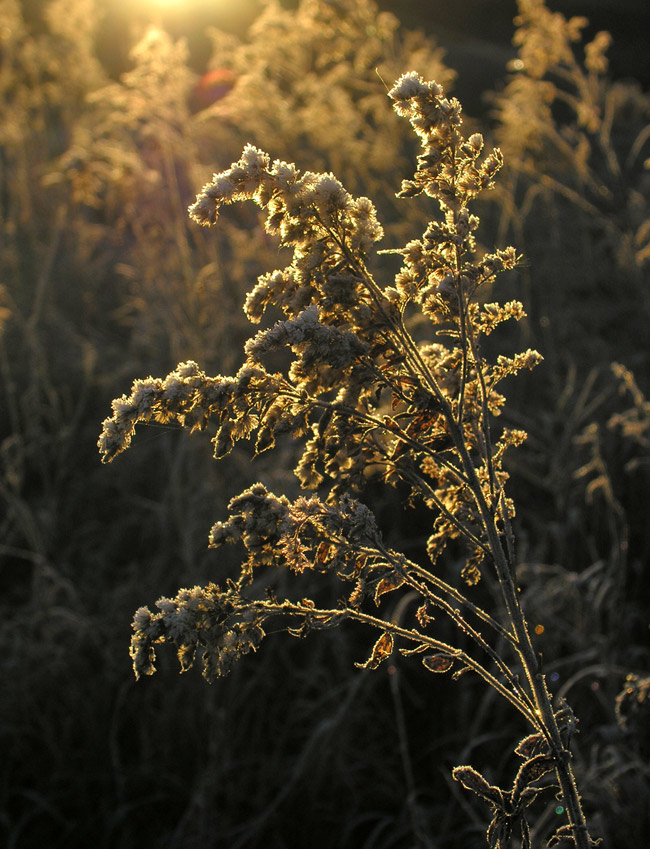
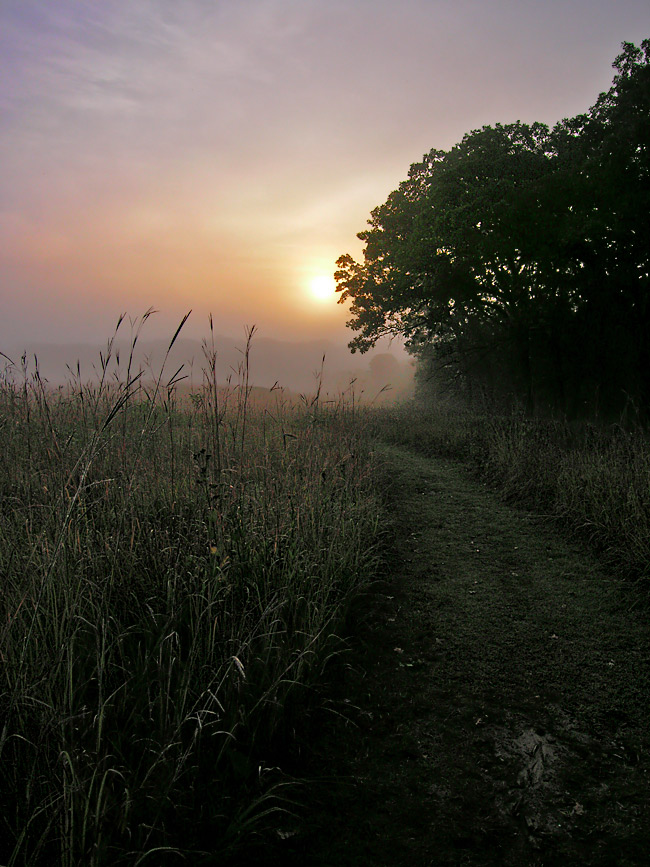
As the sun's bright orange disc crept over the horizon, goldenrod helped render long shadows across the prairie. Overhead, I could hear calls of Eastern Bluebirds, Lapland Longspurs, and Horned Larks.


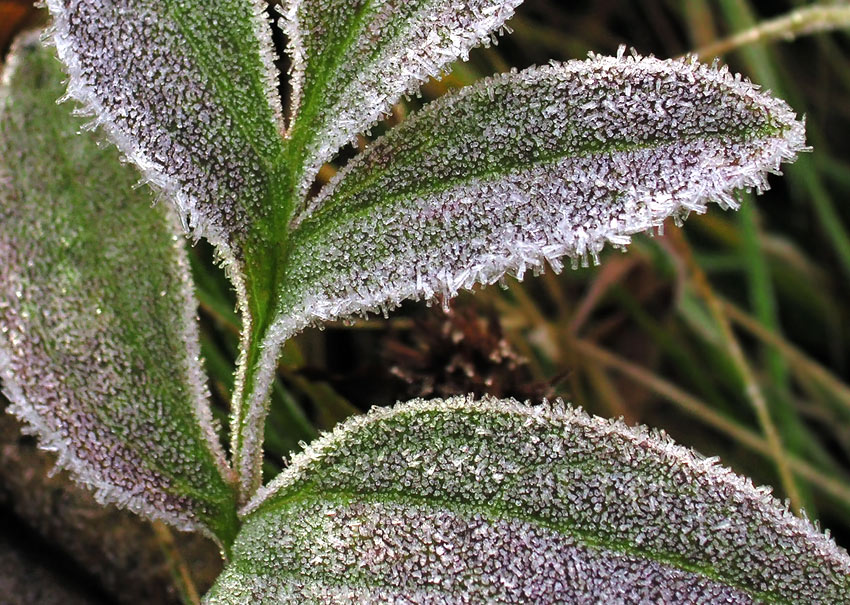
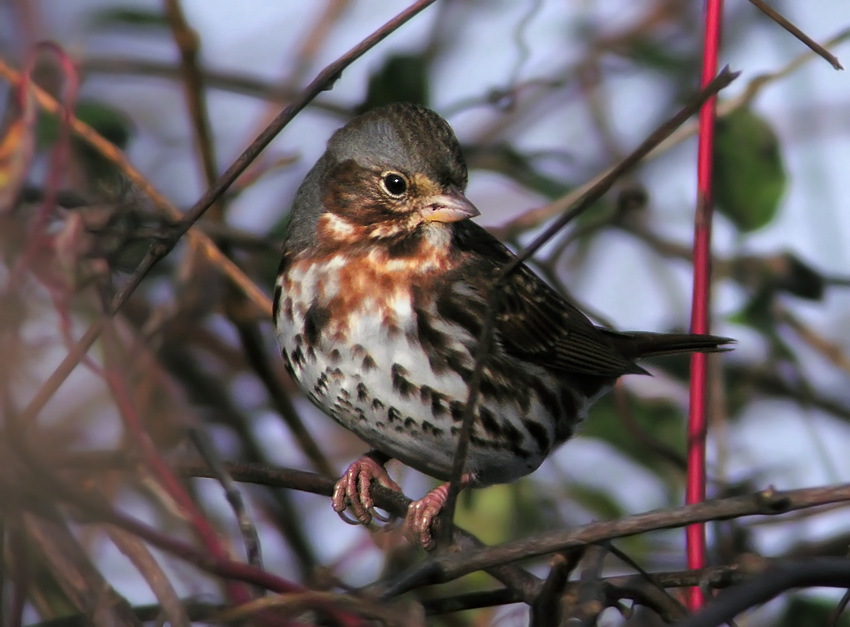
Most everything at ground level was covered in exquisite patterns of frozen crystals. After last night's northerly winds, there seemed to be fewer Fox Sparrows, but I could hear at least one singing from the dogwood.


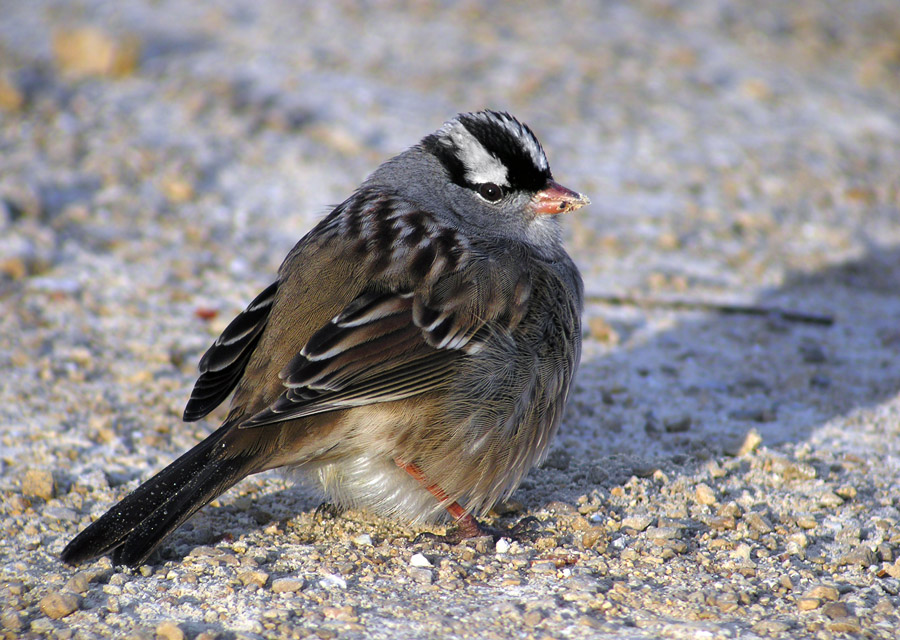
Making my way down the gravel path toward the song, I spotted an adult White-crowned Sparrow probing the sand with its beak; its feathers were fluffed out in order to warm itself in the morning sun. I occasionally find White-crowned Sparrows at the prairie in the dead of winter. Is this as far south as this one will travel?


I've seen its kind endure the worst Wisconsin blizzards with stinging winds that virtually blow them across the snowscape. I wonder if this one will stay and try and make a go of it. I will imagine, if I see one this winter here, that it might be the same bird.


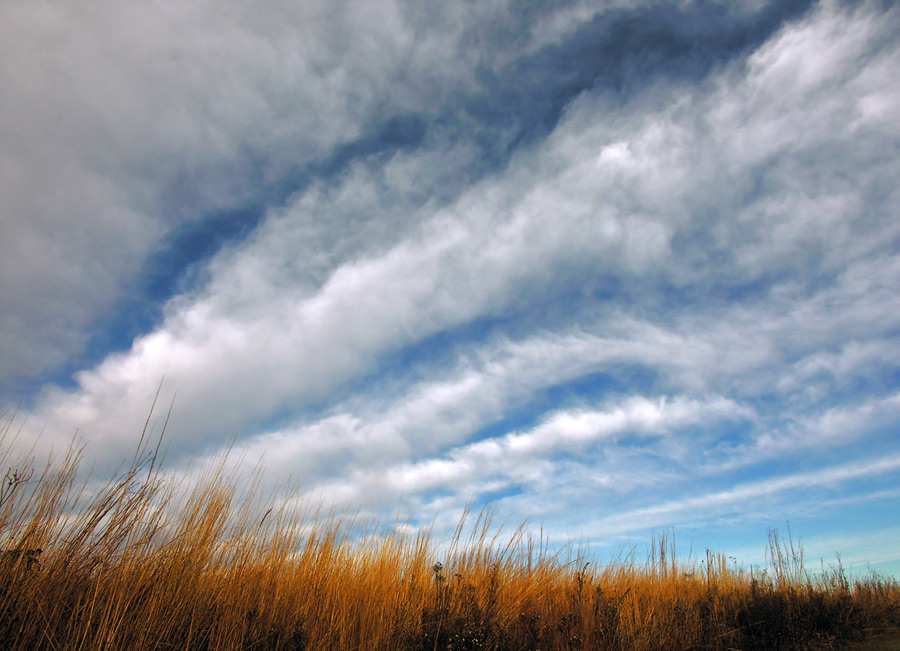
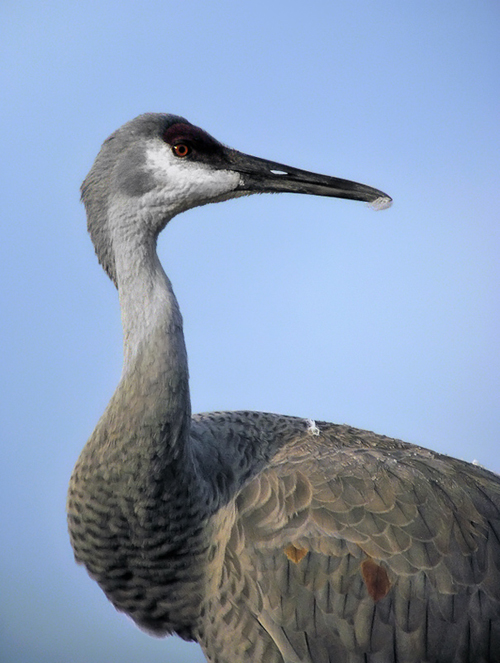
Clear skies gave way to wave-like clouds, causing the sunlight to come and go every few minutes or so, which increased the challenge of my photography interests. Adjacent to the prairie, a group of Sandhill Cranes assembled in an agricultural field; there were several adults and a few colts. While they didn't seem to mind my approaching them, I could tell they were keeping a sharp eye on me.


I thought about the new (and proposed) hunting seasons in Minnesota and Tennessee for cranes. Gee, if it's this easy for me to walk up and photograph them, then making a sport of killing them seems pretty senseless. I wonder if I should have frightened them away.

All images © 2010 Mike McDowell

Tuesday, October 19, 2010

Place


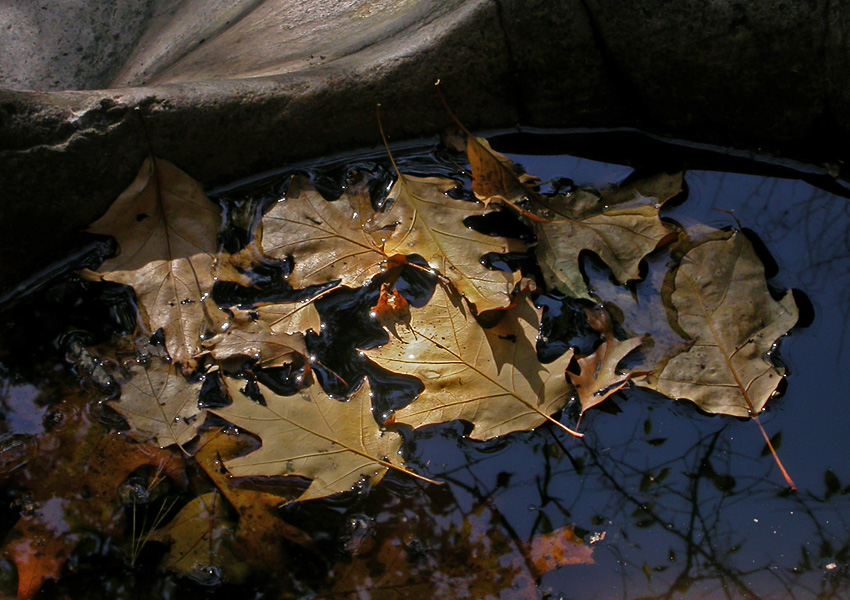
It was sometime in the late eighties when I first I stepped foot into Pheasant Branch. The conservancy has meant different things to me over the years and I didn't have much awareness for its avifauna until the early nineties. Today, though, it's difficult for me to imagine being without such moments of appreciation and reflection on nature; weekly or even daily, but there was such a time. The moments themselves can be as subtle as leaves collecting in a pool of water or as big as a canopy of autumn's colors illuminated by a star millions of miles away.


When by mere happenstance a living creature, be it a bird, mammal, or insect, connects its existence to my own, my visits with nature are doubly enriched. I enjoy observing what they do and think of them as possessing the planet in their own way. I don’t entirely understand why I desire to know more and spend so much time outside, but the pace and activity seems right. It feels like this is exactly what I'm supposed to be doing with my brief time here. I never feel more certain about my existence than when I’m in the field observing, documenting, and recording nature.


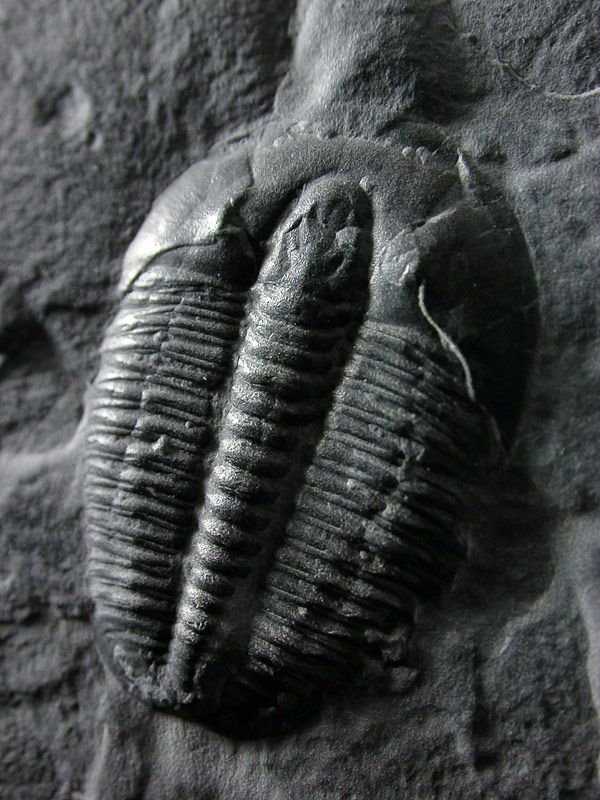
The depth of time preceding a moment in nature possesses a contingency of natural events going back for millions of years. Sometimes when I'm at my home office, I pick up a fossilized trilobite I keep on my desk and reflect upon the fact that it was already a fossil even before there were dinosaurs. What were its moments like? Isn't it a gift to have this kind of knowledge and inquisitiveness about our world?


"Enjoy the little things, for one day you may look back and realize they were the big things."

-- Robert Brault

All images © 2010 Mike McDowell

Thursday, September 2, 2010

Like a Jungle


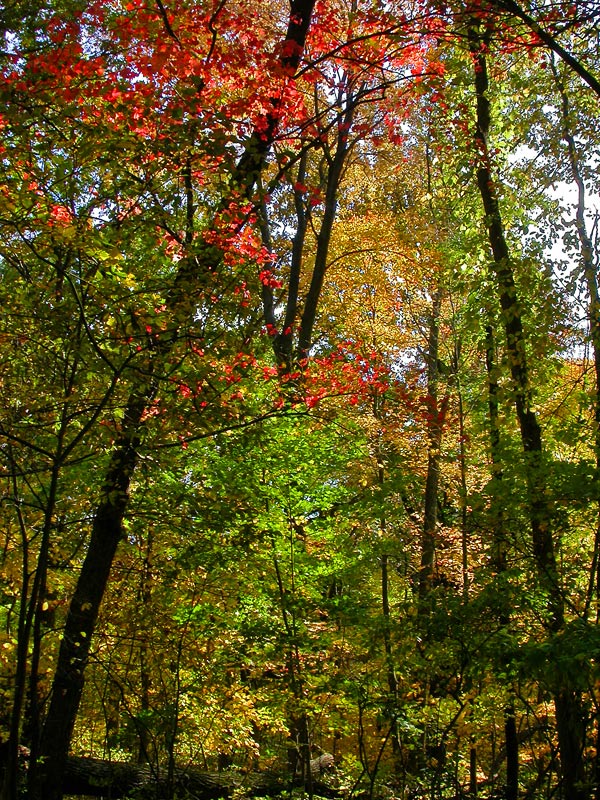
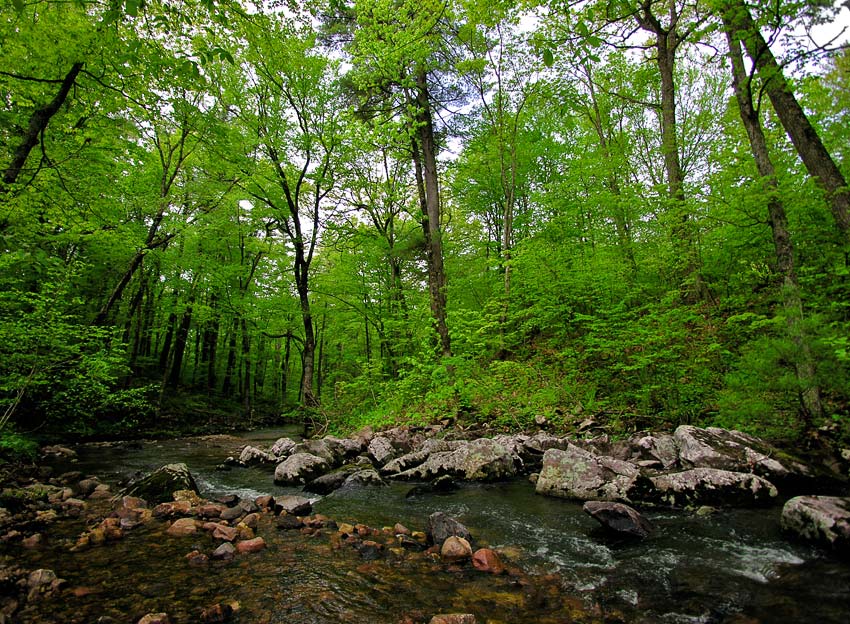
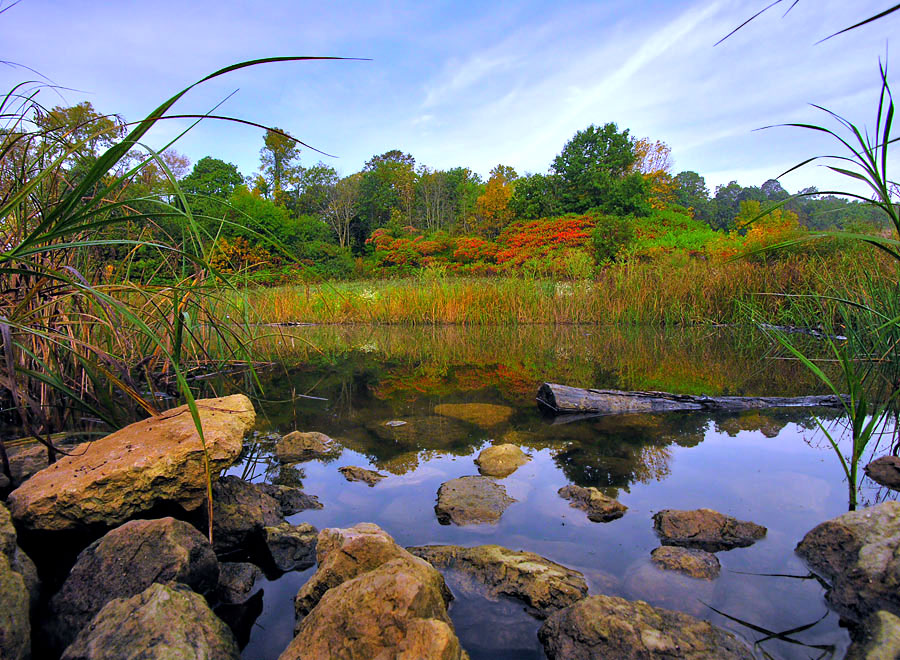
Here's one view of Pheasant Branch Conservancy's 2.5-mile long creek corridor – an intermittent jungle and favorite Wisconsin birding hot spot of mine. It's also the place where I conduct the majority of my nature photography. With a lush forest canopy, rippling water, and an abundance of insects for food, it's no wonder this quaint oasis attracts so many warblers and other neotropical songbirds during spring and fall migration. Besides diverse bird life, there are coyotes, foxes, mink, the occasional river otter, flying squirrels, gray squirrels, moles, chipmunks, rabbits, raccoon, skunks, woodchucks, and opossum. Several years ago a male wolf spent a brief time at the creek corridor.

© 2010 Mike McDowell

Monday, July 26, 2010

Late July Birding


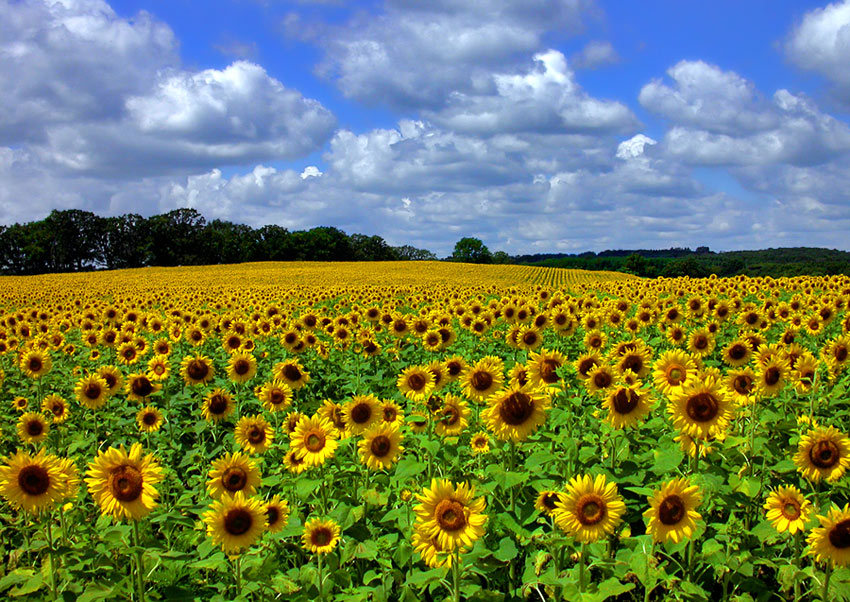
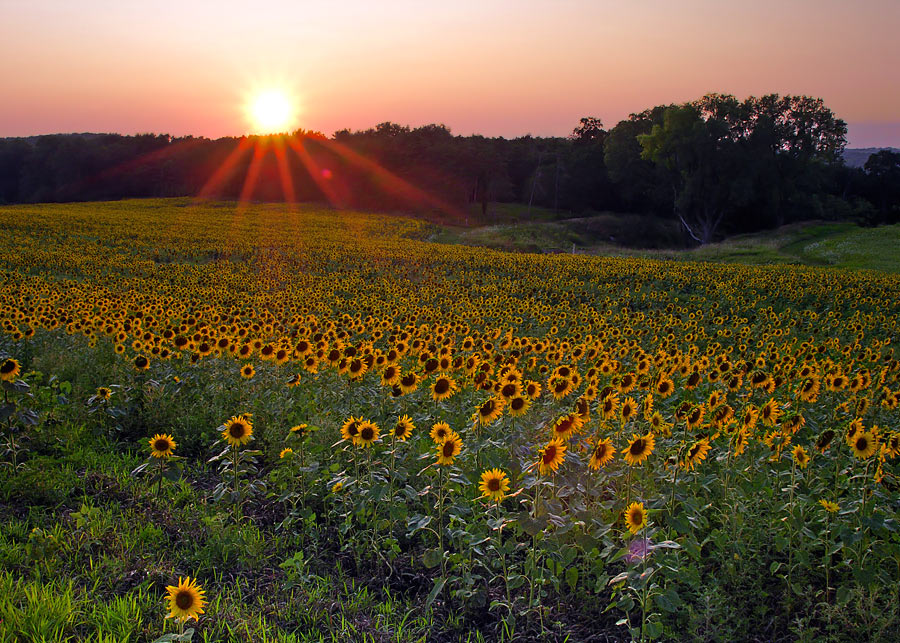
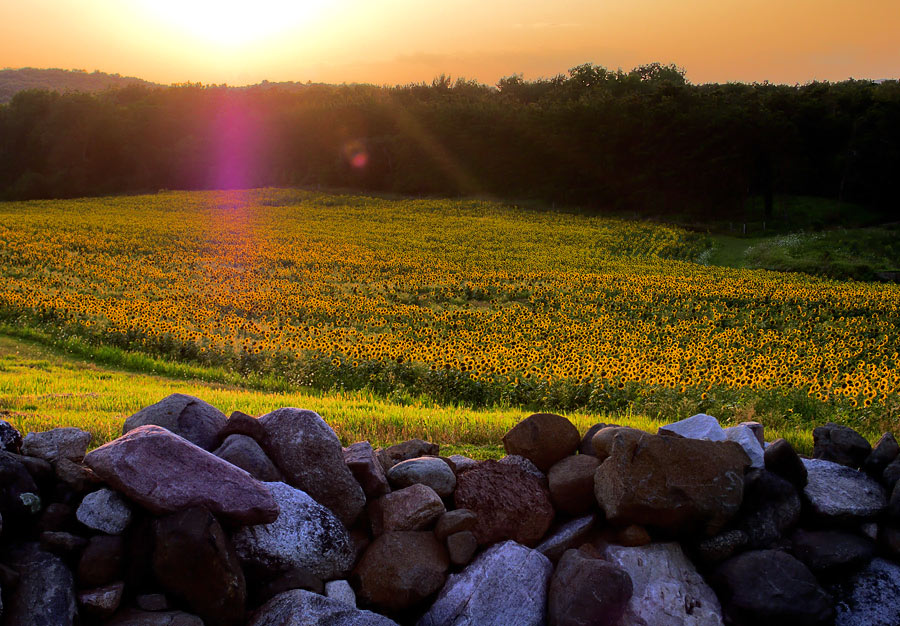
I spent most of Sunday enjoying the sights and sounds of Pope Farm Park in the Town of Middleton; the weather and lighting was perfect for digiscoping. The panoramic sunflower field is at peak and was announced in a local newspaper, attracting a multitude of park visitors to witness and capture its exquisite beauty. I took a few snapshots with my point-and-shoot camera, but quickly moved on to my primary quarry.


A relatively young prairie restoration effort, Pope Farm Park is attracting more and more grassland birds year by year. I was pleased to find a couple of Bobolinks. Last year Clay-colored Sparrows were somewhat sparse, but now their buzz buzz buzz song can be heard from every corner of the prairie. To the untrained ear, many would likely pass them off for an insect, like a grasshopper or cricket.


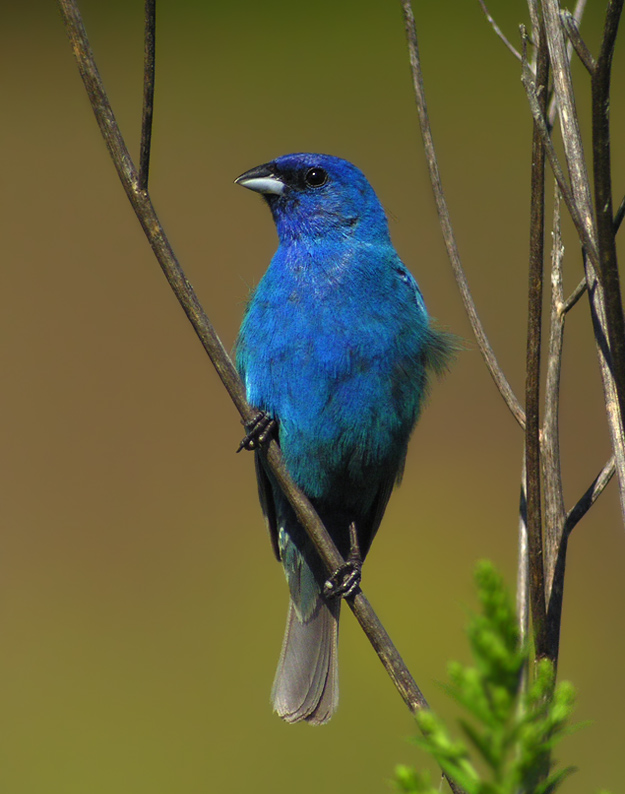
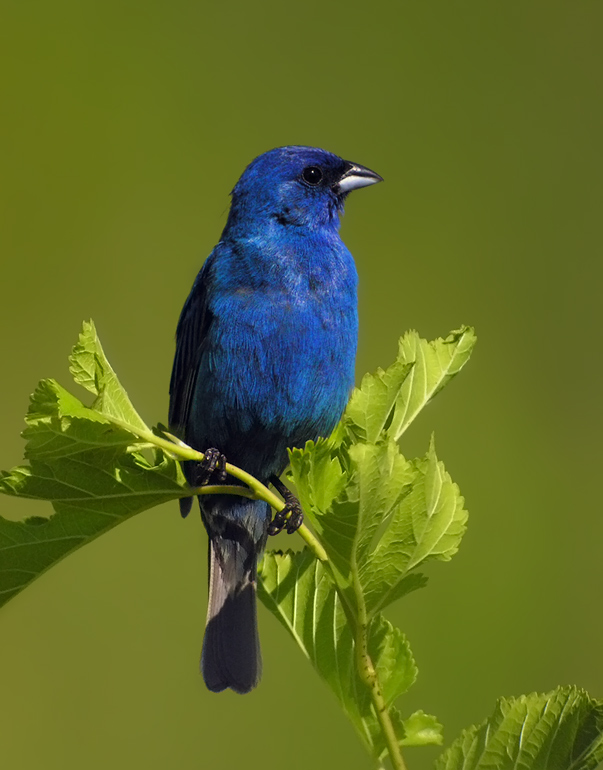
The park is also host to more showy songbirds like Eastern Bluebirds and Indigo Buntings. When I took these particular photos, I couldn't help think about a friend from Massachusetts who has never seen an Indigo Bunting. This bird shows hints of feather wear but still retains its gorgeous radiance. There were several juveniles lurking in the dense grasses by the oaks, so I was sure they had a busy and productive breeding season.


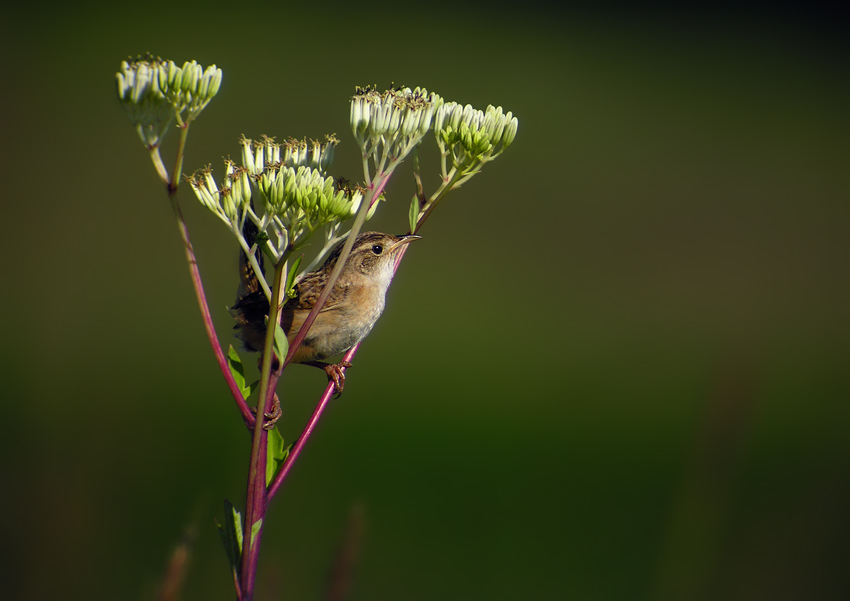
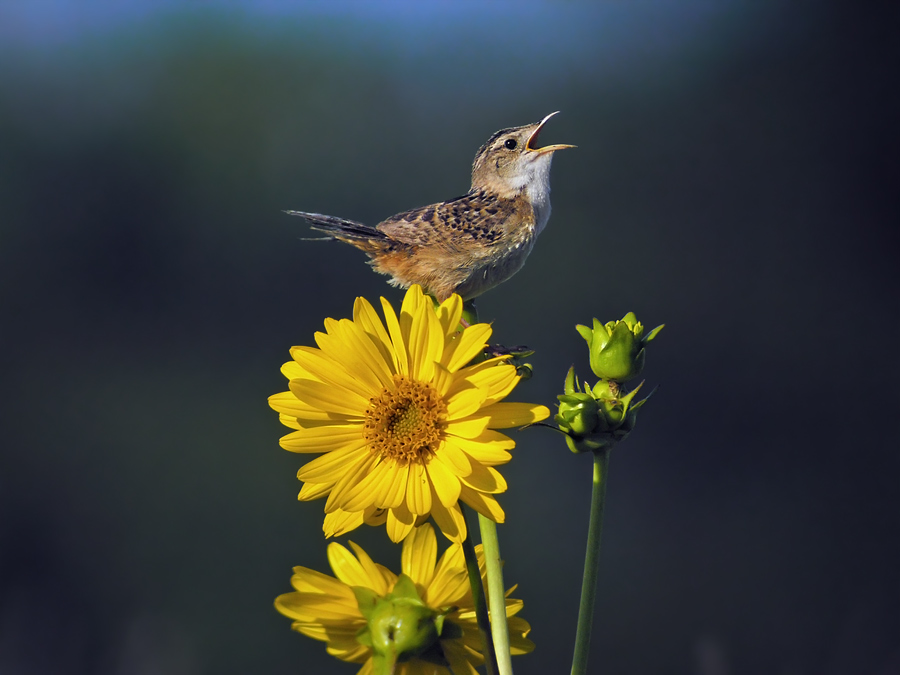
Another enjoyable discovery was the numerous Sedge Wrens that have recently taken up residence this summer at the park. Approximately twenty yards from one another, these two wrens exchanged songs practically the entire day. Towering above the prairie, the Sedge Wren below seemed to favor this particular perch, making a lovely portrait of a singing bird.


Pope Farm Park – July 25th, 2010:

Great Blue Heron
Turkey Vulture
Mourning Dove
Chimney Swift
Red-bellied Woodpecker
Northern Flicker
Eastern Wood-Pewee
Eastern Phoebe
Eastern Kingbird
Blue Jay
American Crow
Tree Swallow
Barn Swallow
Black-capped Chickadee
Red-breasted Nuthatch
House Wren
Sedge Wren
Eastern Bluebird
American Robin
Gray Catbird
Brown Thrasher
Cedar Waxwing
Common Yellowthroat
Chipping Sparrow
Clay-colored Sparrow
Field Sparrow
Vesper Sparrow
Song Sparrow
Northern Cardinal
Indigo Bunting
Bobolink
Red-winged Blackbird
Eastern Meadowlark
Common Grackle
House Finch
American Goldfinch

All images © 2010 Mike McDowell

Monday, July 12, 2010

Healing Day


Common Yellowthroat

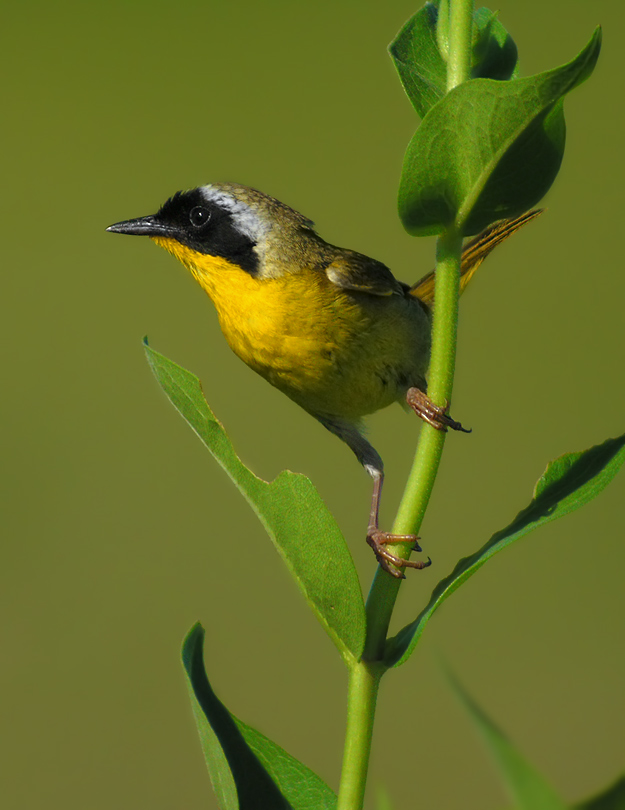
Common Yellowthroats are as numerous as I've ever observed at Pheasant Branch Conservancy; their witchity witchity witchity songs dominate the grassland. With worn plumage, the adult males don't look quite as exquisite as they did in spring, but this one wasn't as bedraggled as most I encountered during my stroll.


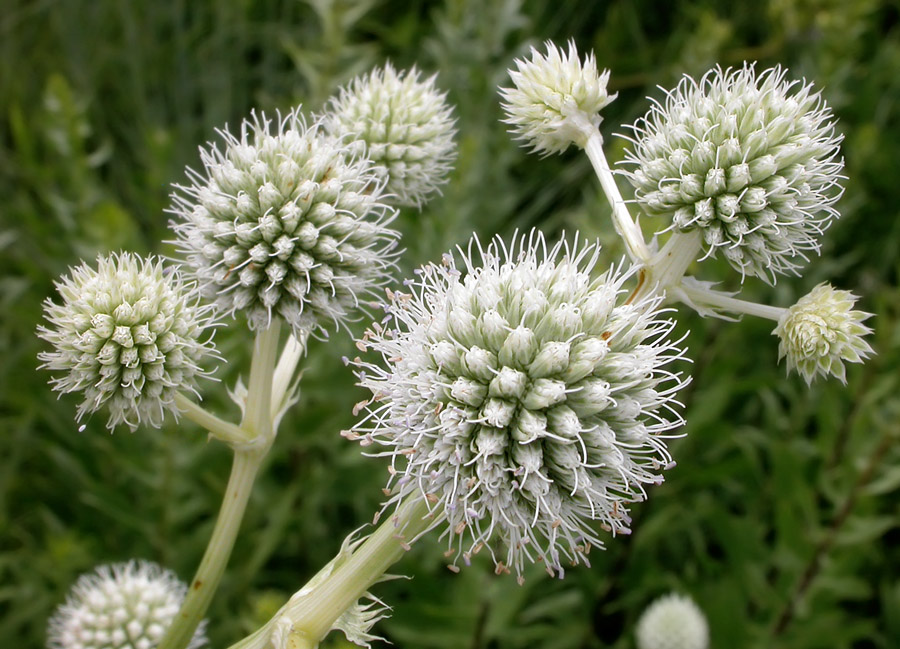
Rattlesnake Master

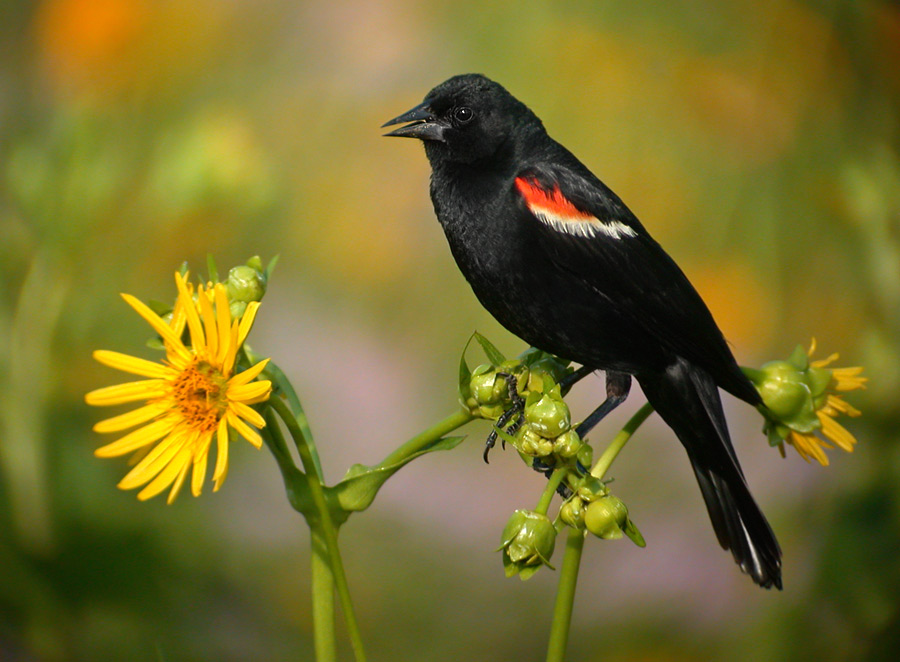
I think it would be interesting to experience the seasonal progression and transformation of a prairie from the perspective of a bird. When songbirds return in April and May, the grasses and plants are barely a foot tall; there are few places to hide and perch. But by the time juveniles fledge, it's a veritable micro-jungle; their habitat increases in size by depth. Birds take advantage of summer's growth by perching atop tall wildflowers (especially Compass Plant) when checking for danger or to hold territories.


Red-winged Blackbird


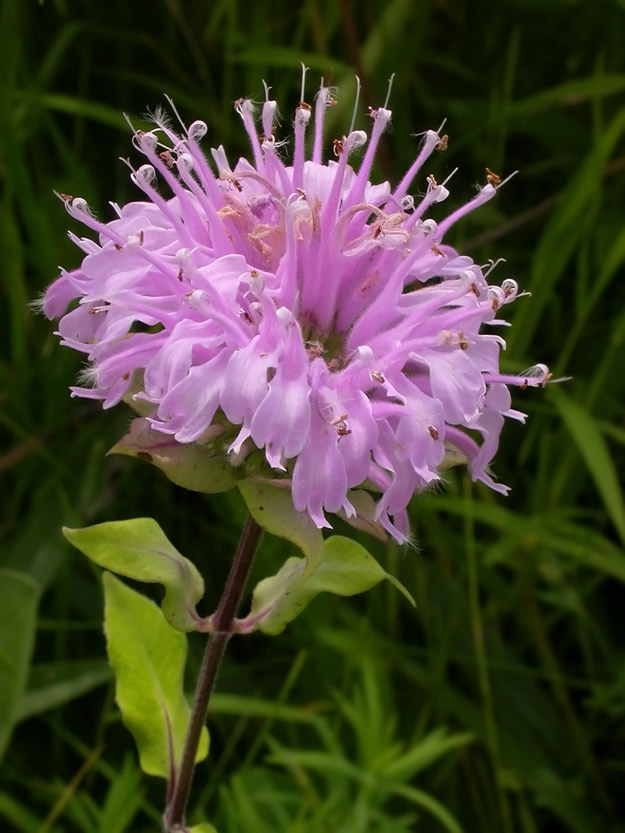
Bergamot

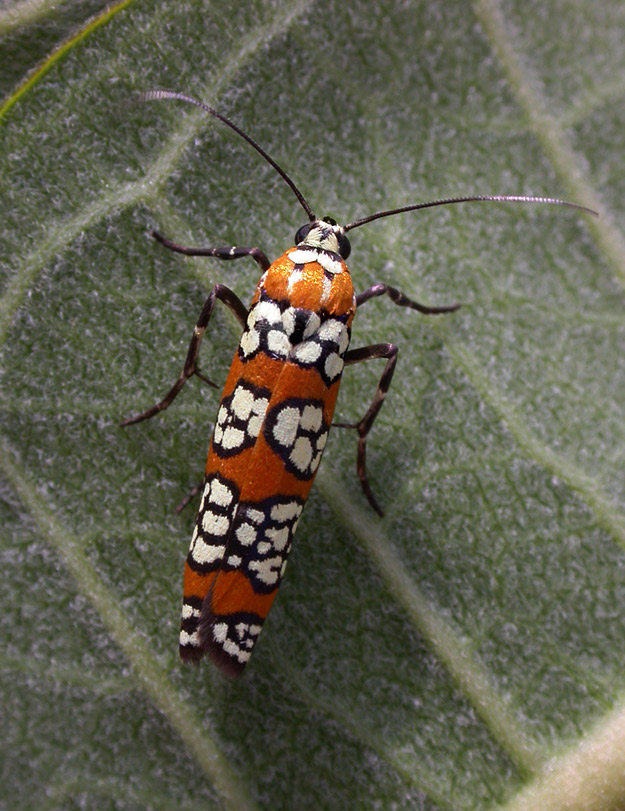
Carried by a gentle breeze, the fragrance of wildflowers is intoxicating. The fields are covered with Black-eyed Susan and Bergamot. Milkweed is doing exceptionally well this summer, which is good for the Monarchs. I like to inspect the plants carefully to see what might be hiding under a leaf. This time my efforts rendered this colorful Ailanthus Webworm Moth.


Ailanthus Webworm Moth

Taking a short break atop the drumlin, I draw in the panoramic scene overlooking the prairie and marsh. At least for one part of this nutty world, everything I can sense with my eyes and ears is as it should be. But then a lone Killdeer call reminds me of fall migration, what it may mean for birds that winter along the gulf and will be arriving soon. What we've done is heartbreaking and unforgivable, but I try to do my best to suppress despair and enjoy the good day that will help progress toward healing.


Song Sparrow

Location: Pheasant Branch
Observation date: 7/10/10
Number of species: 49

Mallard
Ring-necked Pheasant
Great Blue Heron
Red-tailed Hawk
Sandhill Crane
Killdeer
Mourning Dove
Ruby-throated Hummingbird
Belted Kingfisher
Red-bellied Woodpecker
Downy Woodpecker
Hairy Woodpecker
Eastern Wood-Pewee
Willow Flycatcher
Eastern Phoebe
Great Crested Flycatcher
Red-eyed Vireo
Blue Jay
American Crow
Tree Swallow
Barn Swallow
Cliff Swallow
Black-capped Chickadee
Tufted Titmouse
White-breasted Nuthatch
House Wren
Sedge Wren
American Robin
Gray Catbird
European Starling
Cedar Waxwing
Yellow Warbler
Common Yellowthroat
Chipping Sparrow
Clay-colored Sparrow
Field Sparrow
Savannah Sparrow
Song Sparrow
Swamp Sparrow
Northern Cardinal
Indigo Bunting
Dickcissel
Red-winged Blackbird
Eastern Meadowlark
Common Grackle
Brown-headed Cowbird
Baltimore Oriole
House Finch
American Goldfinch

© 2010 Mike McDowell

Wednesday, June 30, 2010

June Ends


Spring Green Preserve

We've reached the end of a rather hot and rainy June. Days off work with good weather have been a little hard to come by, so my nature outings were fewer this month. Spring Green Preserve has an incredible diversity and richness of subjects to offer the naturalist and nature photographer, making it an easy destination choice on a day off with gorgeous weather. I rave about Spring Green frequently and my blog readers know it's of my favorite natural areas in Wisconsin; I'm very thankful it's close to Madison.


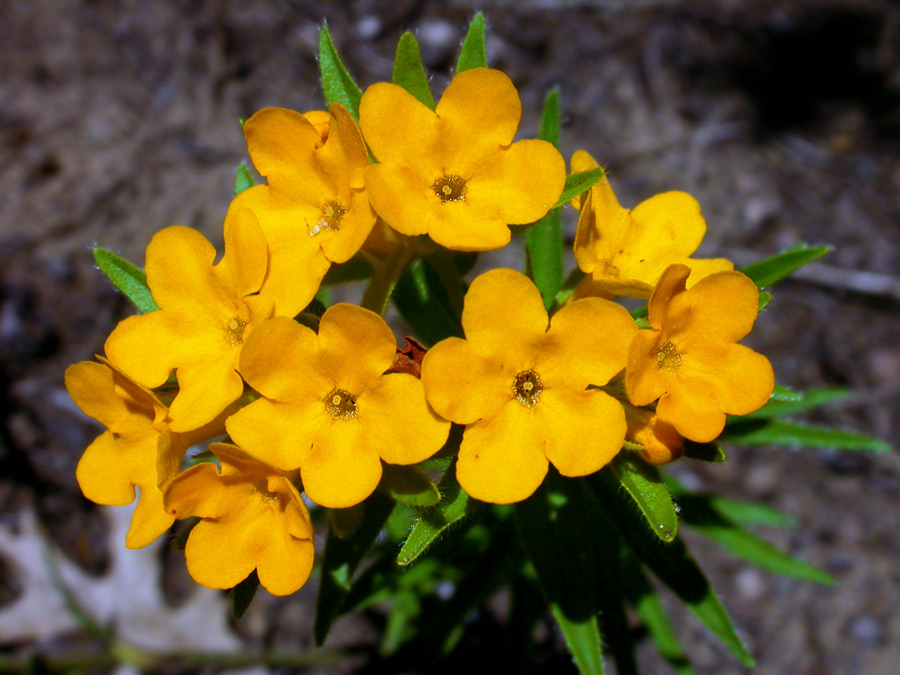
Puccon

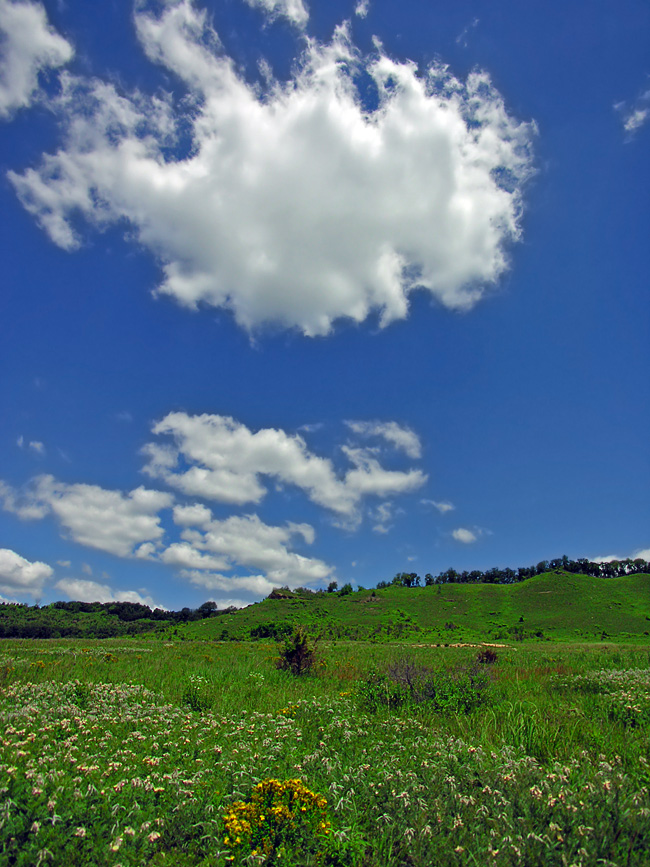
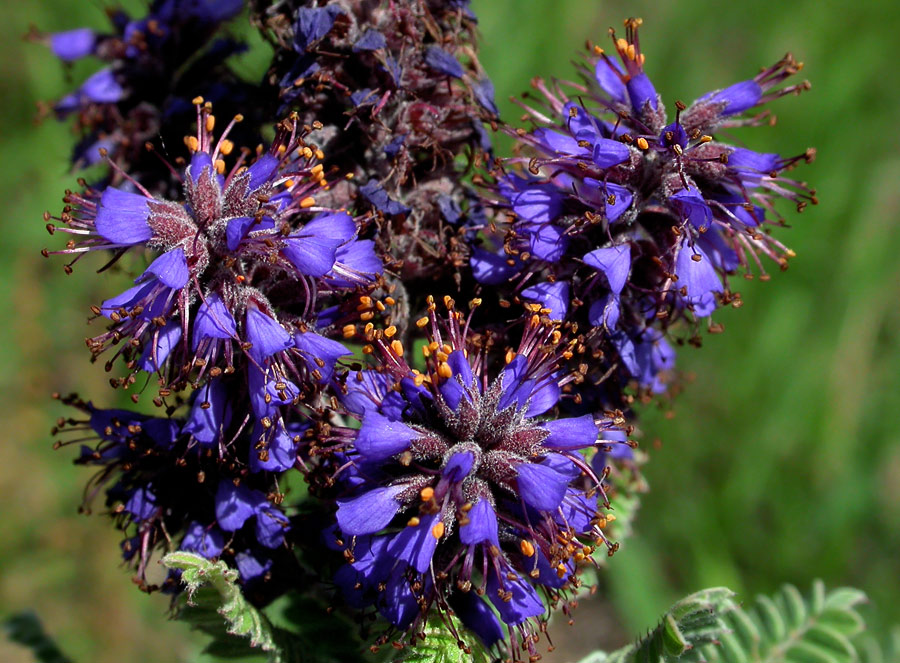
Throughout spring, summer, and fall, the prairie transfers from one accent to another. Sometimes yellow prevails against the green, other times it's blue or purple. St. John's Wort is wrapping up, so too has Goats Rue, and the Prickly Pear Cactus bloom is nearly over. Still, some early June wildflowers linger. Now flowering Lead Plant has the stage. Though it seems rather diminutive at a quick glance, it's a pretty astonishing flower when viewed up close.


Lead Plant


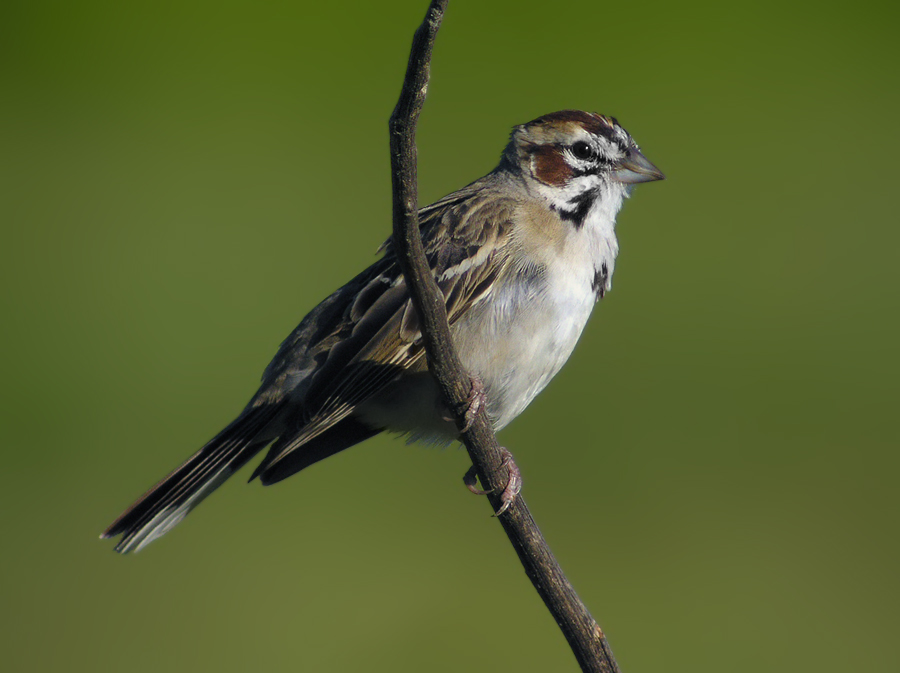
Lark Sparrow

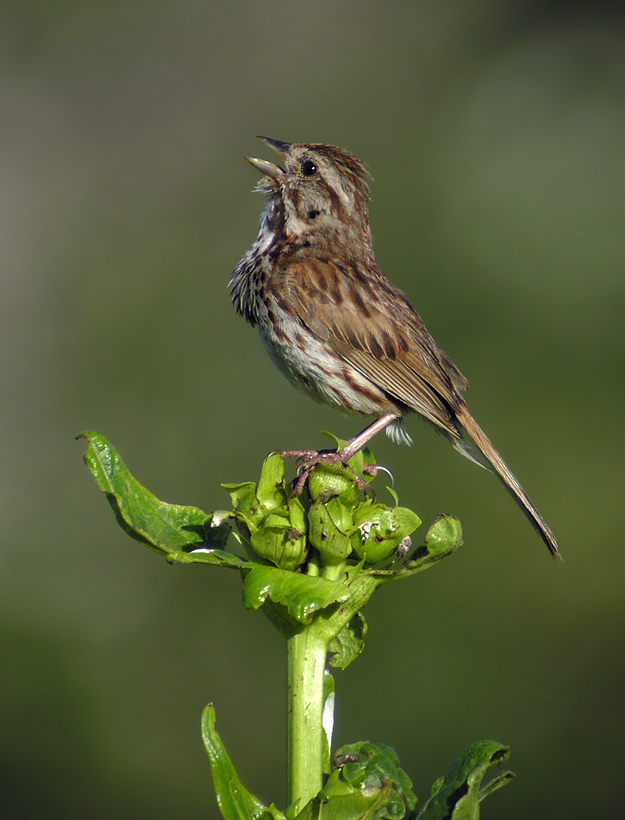
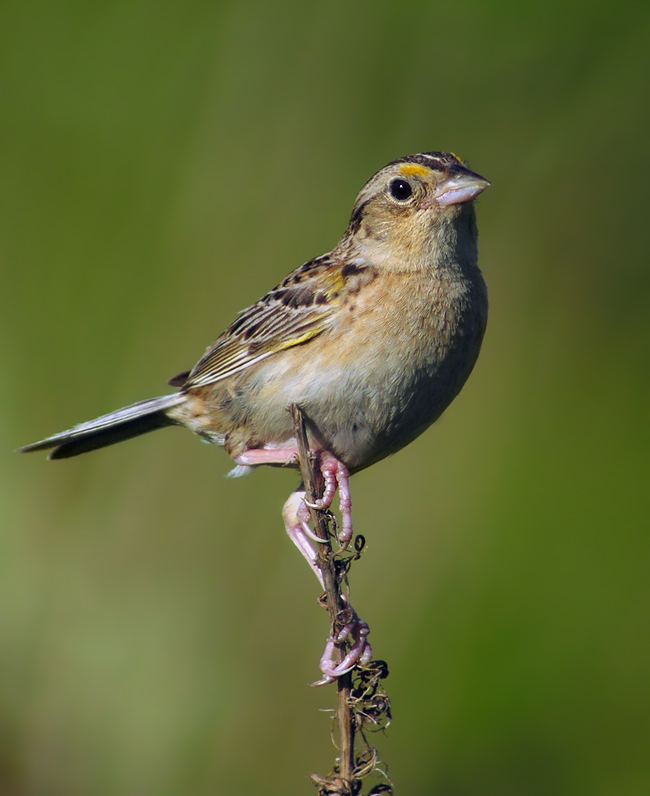
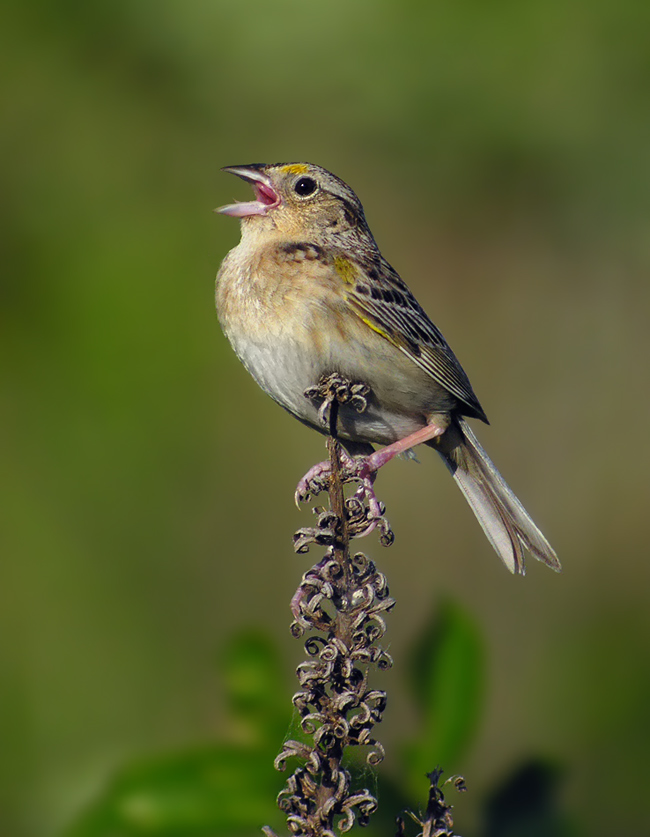
The most obvious birds of the prairie are sparrows: Field, Grasshopper, Vesper, and Lark Sparrows. It's nice that there seems to be a bumper crop of Grasshopper Sparrows this year. The males are still busy defending territories with song, which gave me plenty of opportunities to capture nice portraits of them.


Grasshopper Sparrow


Grasshopper Sparrow


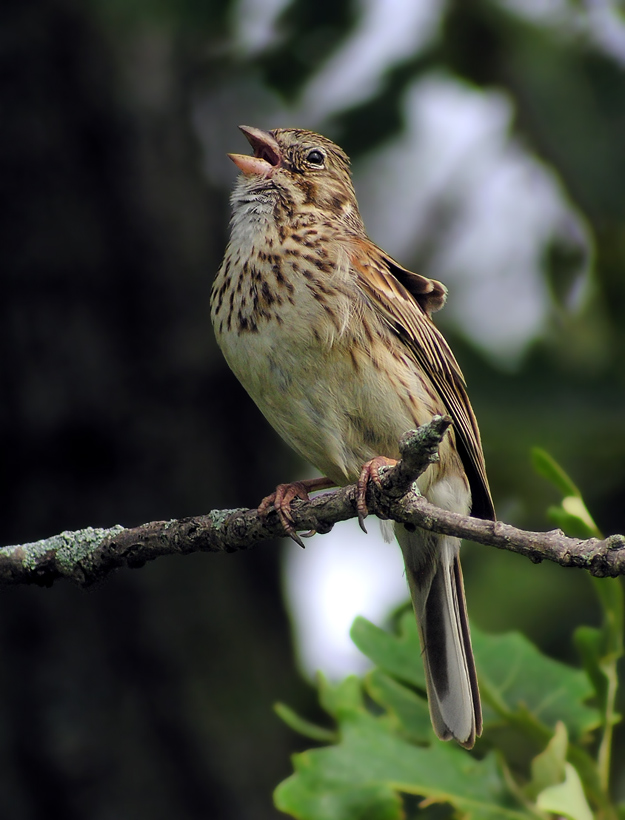
Vesper Sparrow

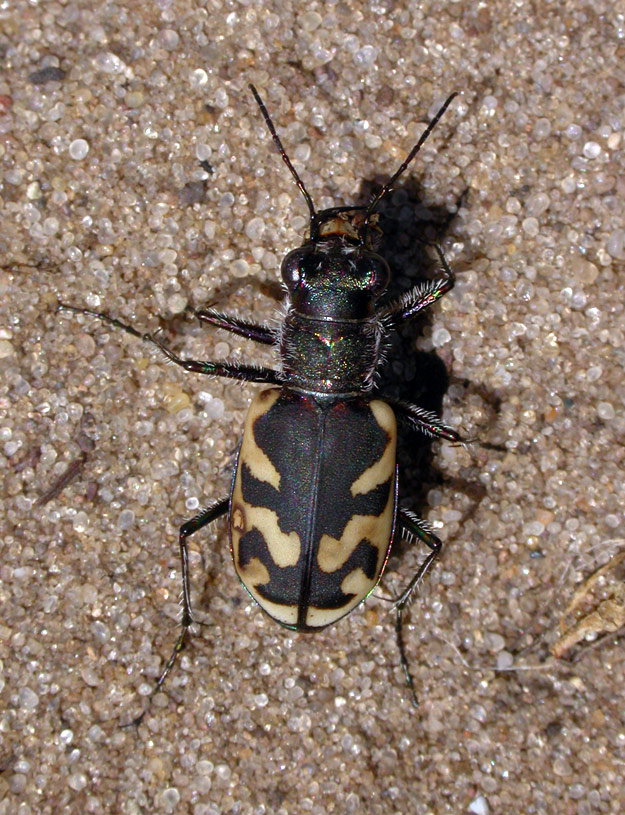
When walking the sandy trails at Spring Green Preserve, don't forget to look down. There are lots of interesting insects like Tiger Beetles, Velvet Ants, Dung Beetles, and Robber Flies just in front of your feet as you walk.


Beautiful Tiger Beetle


Robber Fly

I think Robber Flies are frighteningly cool insects that resemble something out of sci-fi horror flick with nasty behavior to boot. They have a spike-shaped proboscis that they jab into their prey and use it to inject saliva containing a mix of neurotoxins and enzymes that paralyze and digest the insides. Nice, huh? The devilish fly then sucks out the liquefied meal through its proboscis.


Robber Fly with prey

© 2010 Mike McDowell

Saturday, June 19, 2010

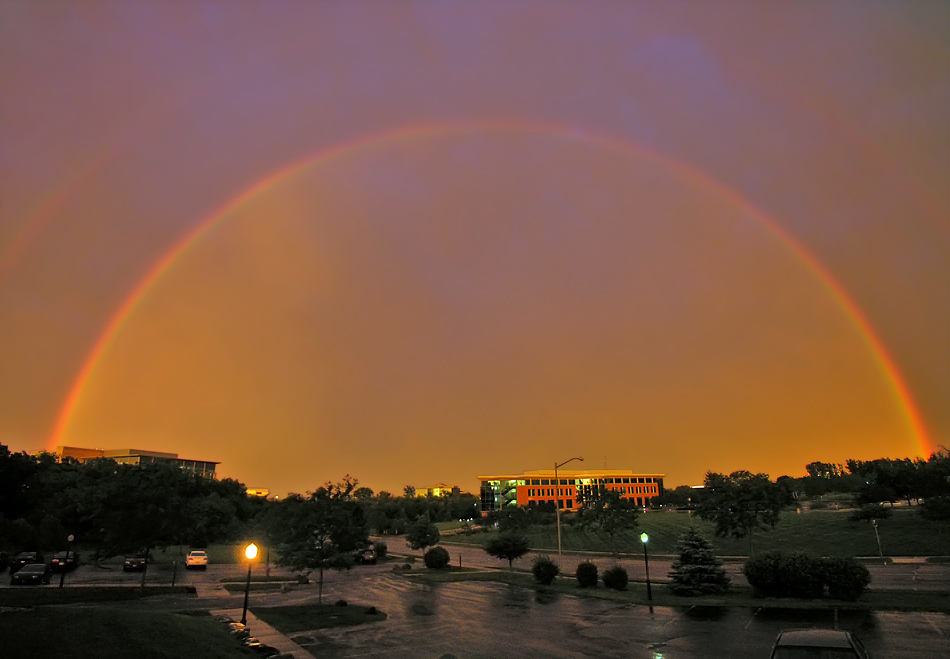
Rainbow

Pretty awesome rainbow last evening after the thunderstorms rolled through:


© 2010 Mike McDowell

Sunday, May 16, 2010

The Golden Swamp Warbler


It's essential for me to get away from the city from time to time. The charm and solace of an urbanized natural area can quickly vanish, especially on weekends. Those who visit such a place with an interest in a passive nature activity like birding must contend with sounds emanating from the woods that clamor "multi-use, multi-use!" Oh, birding isn't impossible, but one's enjoyment of it becomes diminished by competing noise. Sadly, this wasn't always the case at Pheasant Branch Conservancy, but I'm sure the overwhelming majority of Middleton's residents see the paved trail as an improvement. It isn't.


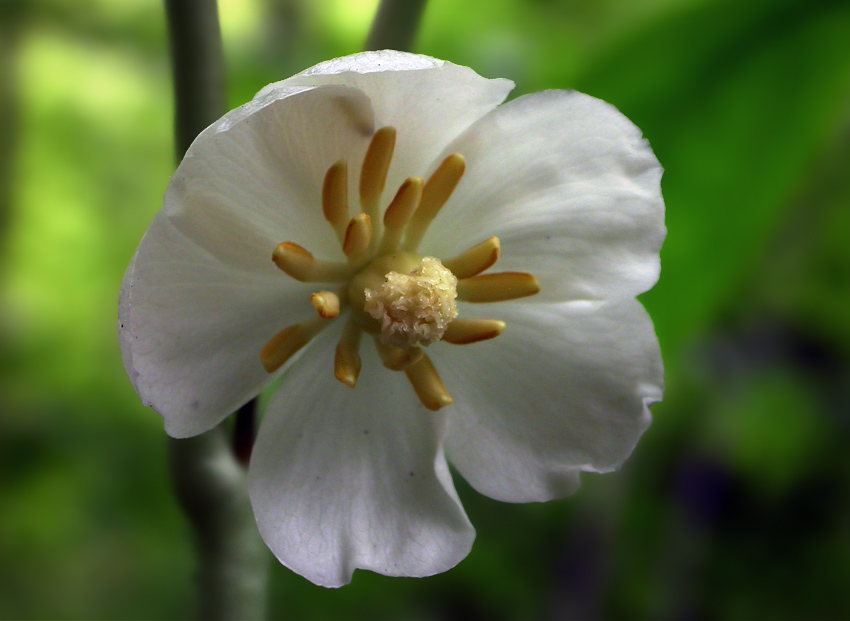
May Apple

I don't want to have to step out of someone's way or keep looking over my shoulder for approaching bicyclists. I don't want to hear "passing on your left" or have someone's dog stick its snout in my crotch. I simply want to hike a trail adorned with wildflowers, where I can occasionally sit, be idle, and not have to move for anything. In tolerating change, I recommend (to myself) balancing Pheasant Branch with places that have just one road in and promise that the only sounds heard will be wild things. If I neglect to do this, sometimes I begin to feel my cynicism and temperament simmer for what's been lost.


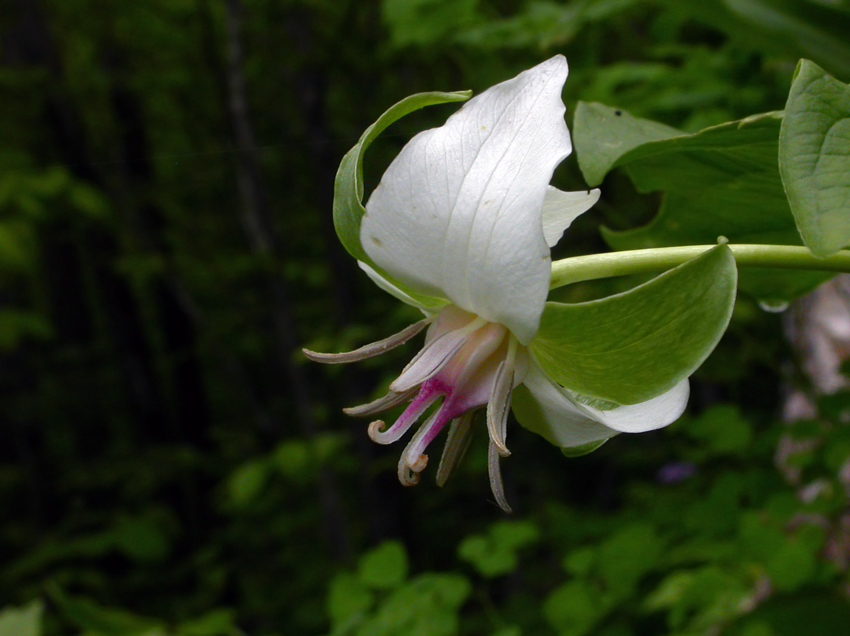
Nodding Trillium


Woodland Phlox

The purity of nature unbridled and her vast rewards are decidedly priceless. Walking at such a place is like stepping into a kind of time machine. I'm transported to a state that probably resembles Wisconsin before we Europeans arrived. It's a locale like this where I can patiently wait for something to absorb and photograph things that interest me in complete tranquility. I can gain a sense of what it must have been like for 19th century naturalists and explorers. Sometimes good fortune smiles upon the secluded with an opportunity to bear witnesses to something previously unseen.


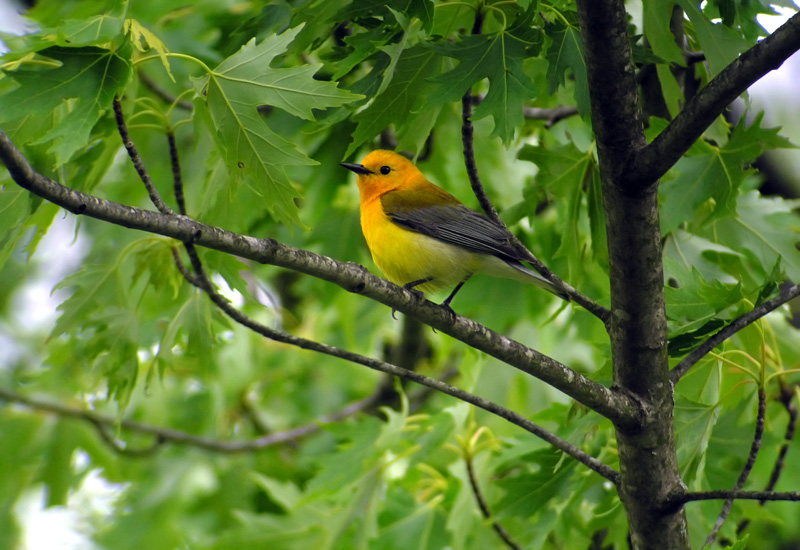
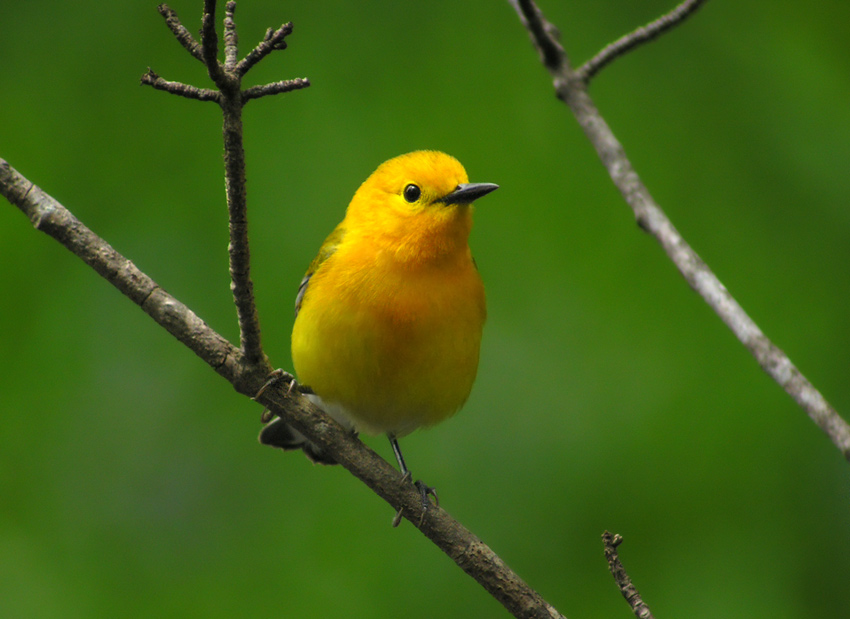
The Prothonotary Warbler's song is unmistakable to the birder and nature enthusiast. A glimpse by the uninitiated might casually suggest an unusual looking goldfinch. The golden swamp warbler can be pretty elusive, even for birders, but his voice gives him away. I know he's near, but where? Wait - there! Directly above me in a maple tree!


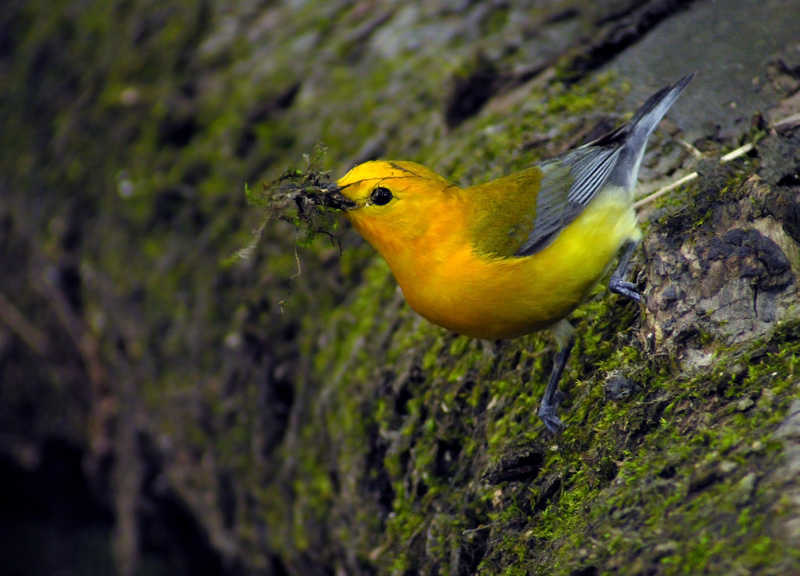
To my utter astonishment, the warbler dropped to a lower perch, then cautiously and deliberately made his way to a particular moss-covered log near where I was sitting. Singing as he worked, he began pealing off the moss, cramming as much as he could in his beak. To my fortune, once wasn't enough! The sprightly warbler continued to make return visits to the log for additional nesting material.


It was immediately obvious that the moss was material he was collecting for a nearby nest he was busily constructing in a cavity of a dead tree. I wondered if his mate was present yet. Oh, there's such great treasure out there, my friends. It can be challenging to find, but if one knows where to look and what to listen for, a sweet golden bird can render undiluted joy and exhilaration!


Man changes the conditions to suit the things.
Nature changes the things to suit the conditions.

- John Burroughs

All images © 2010 Mike McDowell

Thursday, September 24, 2009

Owen Conservation Park


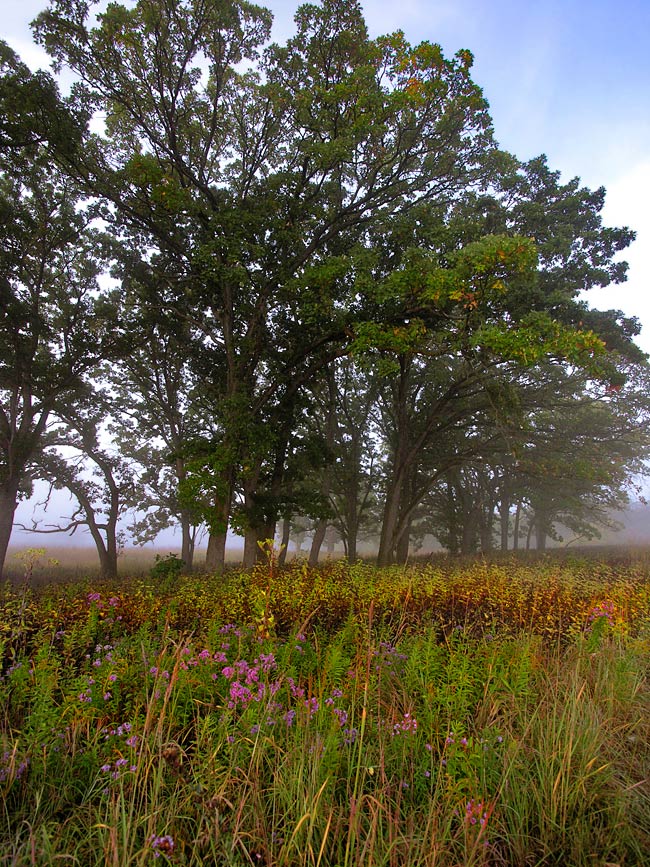
We're very fortunate in Dane County to have so many wonderful natural areas for birding. Since the trail project is still underway at the Pheasant Branch creek corridor, our birding trio has been visiting Owen Conservation Park in Madison for the past week. Given last night's migration, I figured today would be good. We saw 12 warbler species, 3 kinds of vireos, dozens of White-throated Sparrows, and lots more! As predicted, we had our first Orange-crowned Warbler of fall. We ended the morning with 53 species in just over an hour of birding. I didn't digiscope, but instead took a few scenic shots of Owen Park with my Nikon Coolpix 8400 & wide-angle lens.


All images © 2009 Mike McDowell

Tuesday, August 11, 2009