Showing posts with label Birding. Show all posts

Thursday, March 3, 2011

Early March Migrants


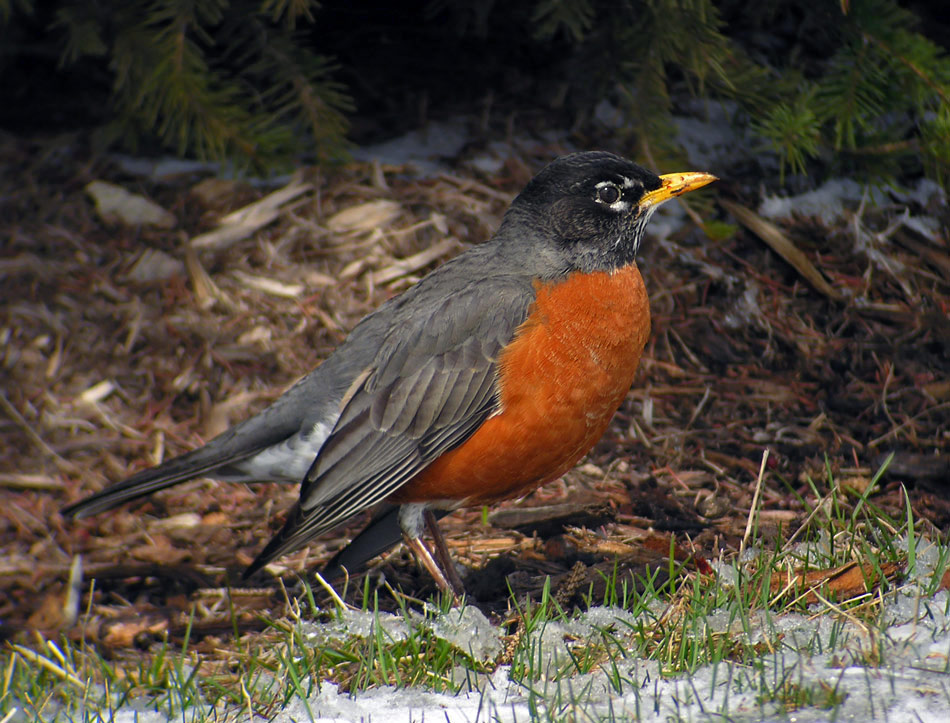
Though I've observed American Robins all winter at Pheasant Branch Conservancy, this morning I spotted one in the courtyard outside my apartment. It seemed not to miss a spot where it might discover a juicy earthworm as it foraged in the small grass islands surrounded by snow. We needn't worry for robins if we're slammed with another blizzard as they eat fruits and berries when open ground is unavailable.

At work we're beginning to see Red-winged Blackbirds and Common Grackles coming to our feeders. I've also heard reports of Sandhill Cranes returning to Wisconsin. Many of the birds that return in early March are short-distance migrants. While some robins do not migrate at all, the majority of those that over-winter in southern Wisconsin breed further to our north. Winds are favorable for migration. I just checked NexRad and birds to our south and southeast are on the move tonight!

American Robin © 2011 Mike McDowell

Migratory bird clocks up 27,000 km journey

Amazing!


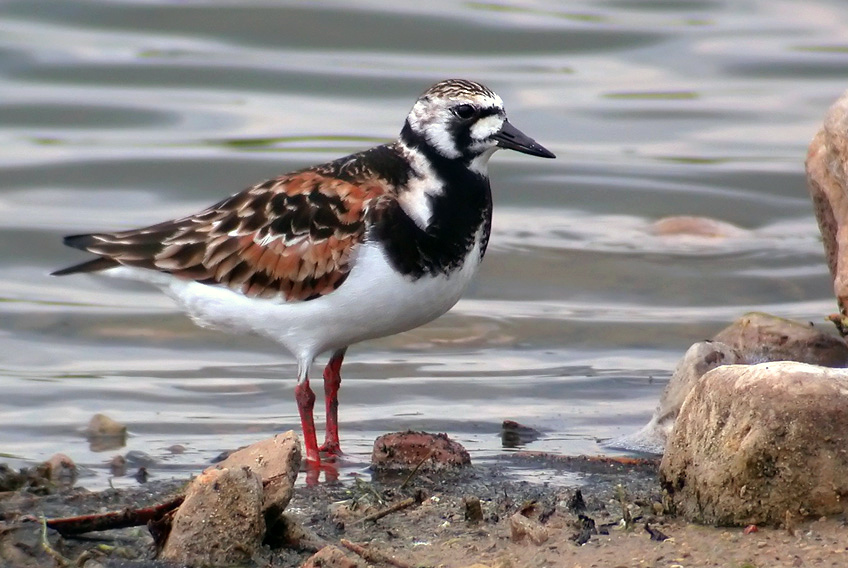
"AFTER TWICE COMPLETING a 27,000 km journey around the world twice, one ruddy turnstone has well and truly earned a lifetime of frequent-flyer points. Researchers from the not-for-profit Victorian Wader Study Group and Deakin University tracked the migration of four ruddy turnstones (Arenaria interpres) from Australia to their breeding grounds in Siberia."

Link: Full article from Australian Geographic

Ruddy Turnstone © 2011 Mike McDowell

Tuesday, March 1, 2011

Feeding Chickadees!

From Eric Wood: "While snow shoeing at Tahoe Meadows, Debbie and I came across a hungry flock of Mountain Chickadees. Luckily for us (and them) they liked granola."

It's March!


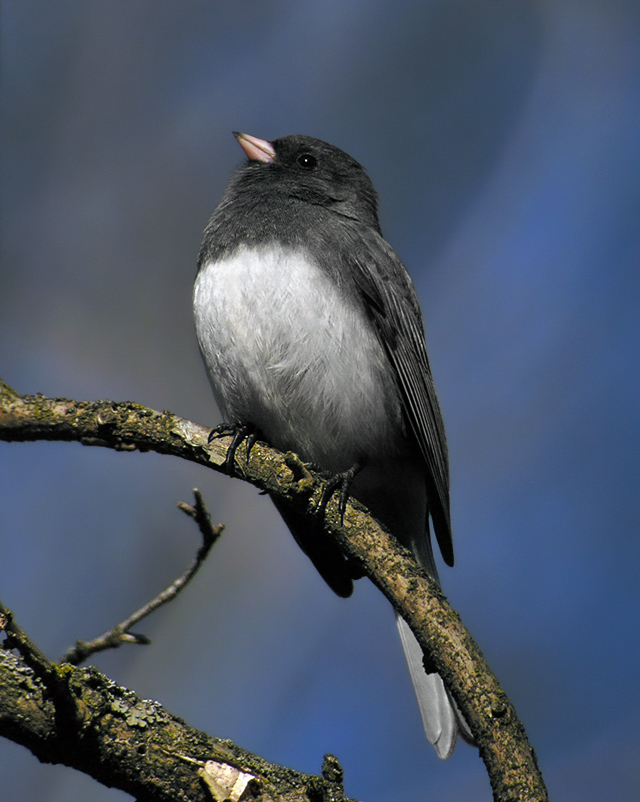
A Dark-eyed Junco prepares to sing!

Spring no longer seems like some unattainable time and place opposite months of snow and cold. Spring's sights, sounds, and smells render sensory reminiscence. Melting snow releases remnants of decay and emergent growth; it's a distinct olfactory sensation that feels like time travel to me. By what ever biological processes are at work, birds have taken notice to the changing season, too. Pheasant Branch Conservancy is presently filled with their songs. Most members of the forest choir are House Finches, American Tree Sparrows, Northern Cardinals, and Dark-eyed Juncos, but I've also heard the cheerful phrases of American Robins. Junco flocks begin to increase in size as winter fades. Their repertoire of trilly songs is a precursor to their journey north, but I'll continue to enjoy their company for another month or so. As their departure grows closer, their songs reach a climactic volume that's even a little humorous. It's nice to get a little chuckle out of their antics despite the fact they'll be preparing to leave.

Dark-eyed Junco © 2011 Mike McDowell

Tuesday, February 22, 2011

2011 Great Backyard Bird Count


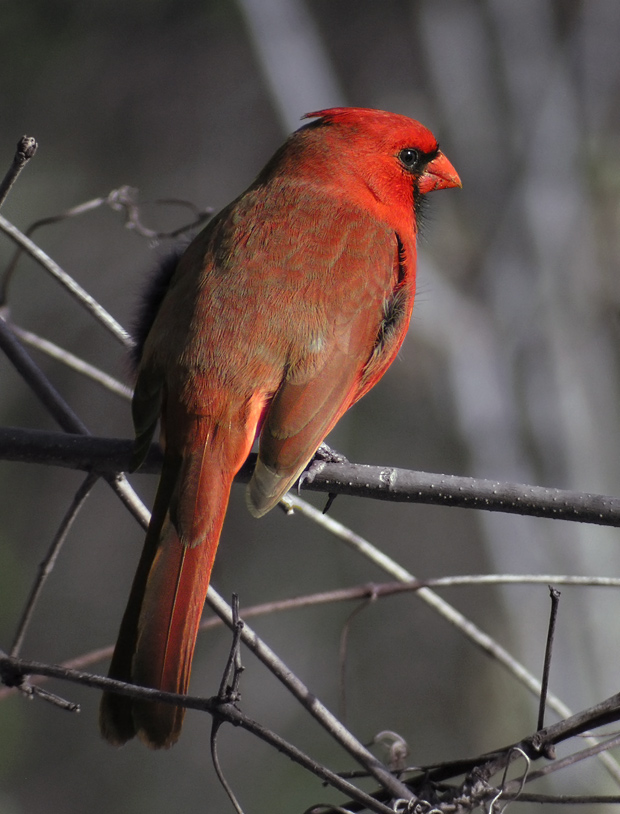
Did you participate in the Great Backyard Bird Count over the weekend? What was your best bird? I tallied 15 species with a Rough-legged Hawk flyover. Typical winter birds, including a Northern Cardinal that began singing at 2:45AM – crazy bird!

Canada Goose
Cooper's Hawk
Red-tailed Hawk
Rough-legged Hawk
Mourning Dove
Downy Woodpecker
Blue Jay
American Crow
Black-capped Chickadee
American Tree Sparrow
Dark-eyed Junco
Northern Cardinal
House Finch
American Goldfinch
House Sparrow

Northern Cardinal © 2011 Mike McDowell

Wednesday, February 9, 2011

Amazing Winter Wren video!

Check out this incredible HD video of a singing Winter Wren by Lang Elliott and Bob McGuire:


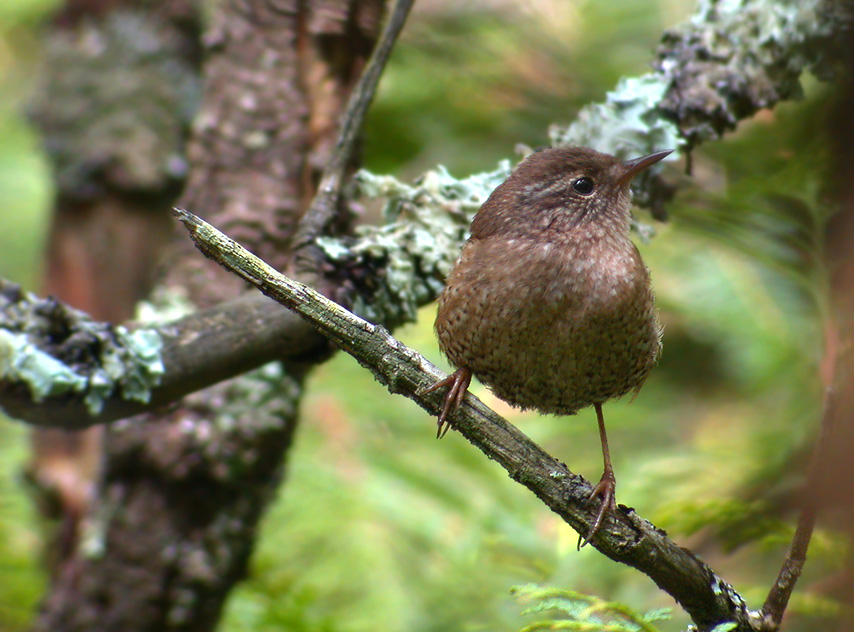
Though they're fairly common at Pheasant Branch Conservancy during spring and fall migration, I can count the number of Winter Wren digiscoping encounters I've had on one hand – they're a very challenging bird to follow when they're not on breeding territory.

My best Winter Wren shot (below) was captured at the Ridges Sanctuary in Door County, WI a few years ago in late May. This particular bird was defending his territory by returning to the same perch to sing his amazing song. Unfortunately, the images of him singing were blurry from his quivering body and beak – it's just too fast to freeze in poor lighting. I was lucky to catch a few frames when he paused between phrases.


© 2011 Michael McDowell

Monday, February 7, 2011

Winter Bluebirds


Eastern Bluebird

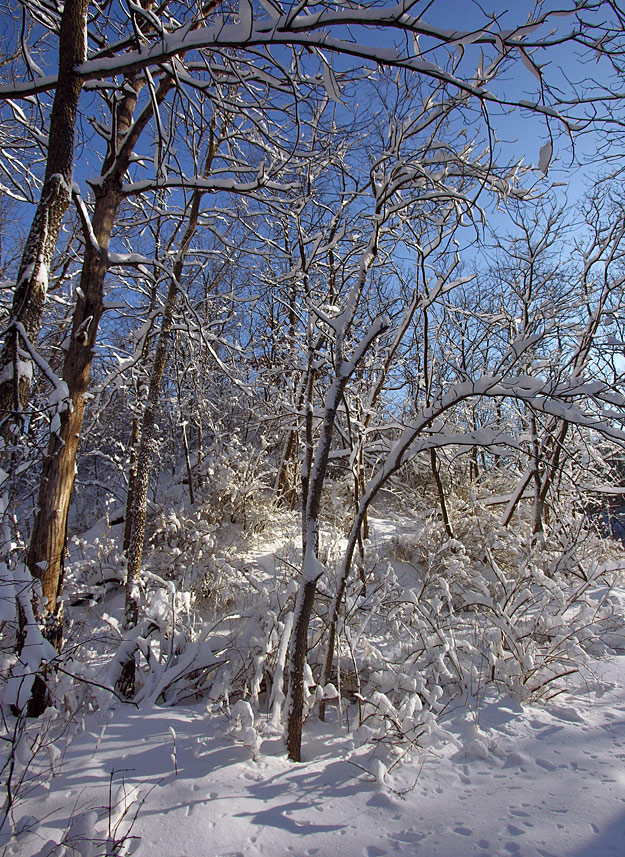
Scenes of natural beauty abound after a fresh snowfall, especially in the dead of winter when those of us living in Wisconsin crave any sort of change. The wooded snowscapes are picturesque; silhouetted trees rendering blue shadows over the countryside, but seldom are they decorated with anything as striking as a flock of Eastern Bluebirds – they were like ornaments when perched together. When Dottie Johnson and I came upon the bluebird flock at Rowan Creek on Saturday, we were stunned how bright and glowing their feathers were; the light reflecting off the snow illuminated every blue plume.

A mixed flock of other birds foraged with the bluebirds along the edges of the creek, including an American Robin, Song and Swamp Sparrows, White-breasted Nuthatch, and a Downy Woodpecker. We followed them for several minutes, pausing briefly when I thought I heard the chatter of a Winter Wren. Further down, we finally caught up with the little brown ball of feathers. The energetic wren kept favoring a particular spot of exposed tree roots with access to the open ground and water. We were on our way out of the park after snowshoeing for several hours, so we decided to let the birds do their thing without disturbing them any further.

Location: Rowan Park
Observation date: 2/5/11
Number of species: 23


Canada Goose
Mallard
Red-bellied Woodpecker
Downy Woodpecker
Hairy Woodpecker
Blue Jay
American Crow
Black-capped Chickadee
Tufted Titmouse
White-breasted Nuthatch
Brown Creeper
Winter Wren
Eastern Bluebird
American Robin
European Starling
Cedar Waxwing
Song Sparrow
Swamp Sparrow
Dark-eyed Junco
Northern Cardinal
House Finch
American Goldfinch
House Sparrow

© 2011 Mike McDowell

Monday, January 31, 2011

On Nest!


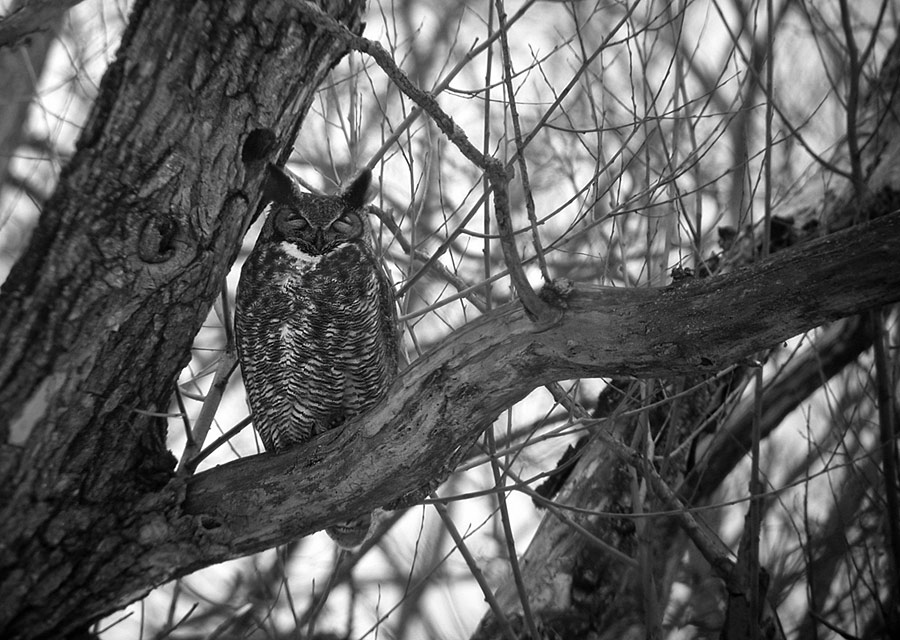
Can you see the owl in this photograph? This is the same tree cavity this pair of Great Horned Owls used last year – much nicer accommodations than an exposed stick nest one usually observes these owls on. The male was perched at his usual sentry spot in a nearby conifer, collecting warmth from the sun:


We're getting a lot of snow today and are supposed to have somewhere between 12" and 20" of total accumulation by the end of Wednesday. I'm glad I was able to go birding at the conservancy for several hours yesterday, as it looks like we're going to be snowed in for a few days. Perhaps I'll finally get some snowshoeing in this winter.

Location: Pheasant Branch
Observation date: 1/30/11
Number of species: 25

Cooper's Hawk
Red-tailed Hawk
Rough-legged Hawk
Mourning Dove
Barred Owl
Belted Kingfisher
Red-bellied Woodpecker
Downy Woodpecker
Hairy Woodpecker
Blue Jay
American Crow
Black-capped Chickadee
Tufted Titmouse
White-breasted Nuthatch
Brown Creeper
American Robin
Cedar Waxwing
American Tree Sparrow
White-throated Sparrow
Dark-eyed Junco
Northern Cardinal
House Finch
American Goldfinch
House Sparrow

© 2011 Mike McDowell

Monday, January 17, 2011

Pine Siskin!


I spent Saturday and Sunday watching divisional football games and doing apartment chores: dishes, laundry, vacuuming, etc., but kept a watchful eye on my bird feeders – there was especially a lot of activity on Sunday. It's like they knew a snowstorm was coming early Monday morning. Actually, birds have a middle-ear receptor called the vitali organ that can sense minute barometric pressure changes. Birds use it to help them avoid bad weather during migration, so it seems plausible it could also serve to signal when to stock up on more energy because food may be out of reach during an indeterminate period of harsh weather.

One of the first birds I notice in the morning is a cawing American Crow that perches atop the same tree every day at the end of the parking lot. He's a sneaky bird, though, and has thus far evaded my attempts to photograph him. Every time I open my patio door to point my lens out, he flies off. Most of the time I put out fresh birdseed first thing in the morning, but sometimes I do it the evening. When there isn't any birdseed left, I'll often find several Mourning Doves perched on my patio chairs and table, as if they're waiting for me to serve them! There were a few White-breasted Nuthatches, Black-capped Chickadees, Northern Cardinals, Blue Jays, Dark-eyed Juncos, American Tree Sparrows and other usual winter birds. Yesterday I had my first Pine Siskin at my apartment feeders - that's number 62!

© 2011 Mike McDowell

Wednesday, January 12, 2011

Oh! It's Ley Lines!

Smug and self-assured, she replied ley lines were responsible for the recent mysterious spate of bird and fish deaths around the world, including the Arkansas blackbird incident. What are ley lines? I didn't know at the time, but I was reasonably certain it had to be nonsense after listening to her. You can read about them in detail on Wikipedia, but here's a short definition from the Skeptic's Dictionary:

"Ley lines are alleged alignments of ancient sites or holy places, such as stone circles, standing stones, cairns, and churches."


Wackadoodle alert!

From Archaeological Theory: An Introduction - Matthew Johnson (2010):

"Ley lines do not exist. This was shown by Tom Williamson and Liz Bellamy in Ley Lines in Question (1983), which analyzed such lines statistically and showed that the density of archaeological sites in the British landscape is so great that a line drawn through virtually anywhere will 'clip' a number of sites. It took Williamson and Bellamy a book's worth of effort and statistical sophistication to prove this, however."

Originally 'discovered' by Alfred Watkins in 1920, psychics, new age spiritualists, and other charlatans claim an energy complex re-discovered with divining rods proved ley lines exist and began ascribing mystical powers to them. Naturally, no modern scientific instrument can detect these asserted energy fields. This is both troubling and annoying because wildlife pathologists and biology technicians are diligently working with limited funds on finding real causes behind animal mortality events and population declines.

Claims without evidence that attempt to explain animal mortality events with mystical causes fail to offer any practical solutions. What would psychics and new agers have us do? Should we walk around with divining rods and point them at birds or something? Should we sprinkle pixie dust in our yards? Or maybe we can just think positively and the law of attraction will make bird populations rebound because we merely want them to. How insipidly moronic and arrogant! These non-experts think they know more about the nature of things than people who have been studying biology and ecology for most of their adult lives.

Bunk like this devalues the efforts of our professional scientists at a time when nature's critters need our help more than ever. By embracing this nonsense, why would such an individual feel inclined to back scientists with their money or vote? After all, they must believe scientists are simply wasting time on something futile because they know they're on wrong track. So, what's killing bats? Ley lines! It's ley lines, all the way down, and not geomyces destructans! Damn you and your science! I dare these wackaloons to call the Madison lab and tell them that.

People who attribute ley lines to animal deaths are so fail because they're counting hits but ignoring misses (confirmation bias). Why are there mass animal mortality events where there aren't any ley lines? Why are animals thriving where there are? They also fail to understand that a correlation is not necessarily causation. They probably believe ley lines explain other things, too, like car accidents, birth defects, mental illness, crop failures, etc. What can be asserted without evidence can be dismissed without evidence. Fortunately for the reality-based community, there's plenty of empirical evidence to help us explain what's going on with these unrelated animal mortality incidents. It just takes time and effort to get to the truth.

"That which is lacking in the present world is a profound knowledge of the nature of things; the fundamental truths are always there, but they do not impose themselves because they cannot impose themselves on those unwilling to listen."

~ Frithjof Schuon

Tuesday, January 11, 2011

It's a Winner!


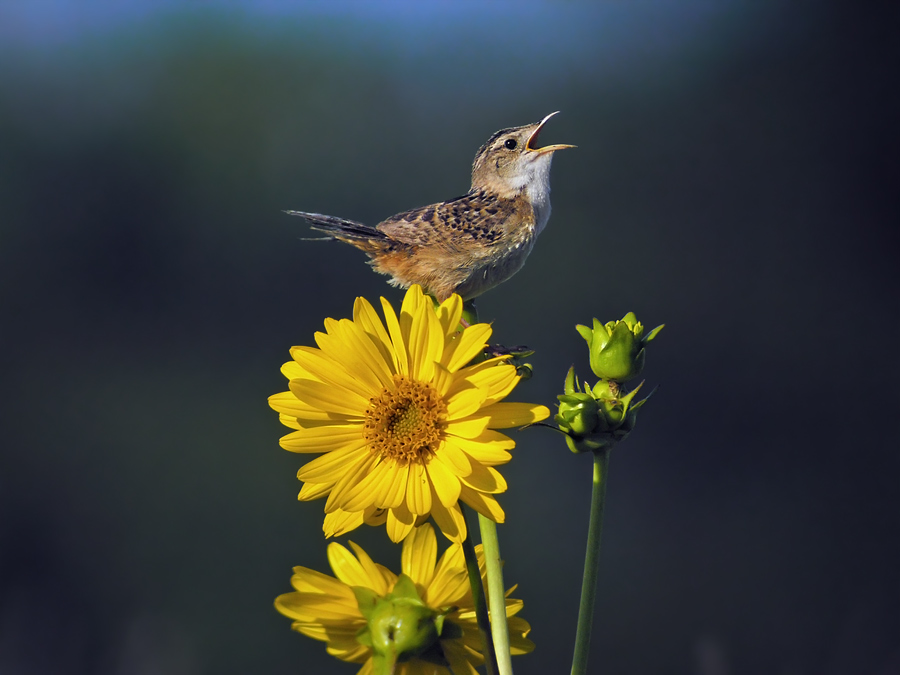
Though it wasn't my personal favorite digiscoped image of 2010, my Pope Farm Park Sedge Wren placed 8th in Swarovski's International Digiscoper of the Year 2010 contest. Still, there's something special about a Sedge Wren perched atop some flowers like this. How often do you see that? Plus, it was a 3-hour field effort on my part to get the image just the way I saw it in my imagination. The competition was very tough; there were many outstanding images and only 3 US digiscopers placed in this year's top 20 winners. Congratulations to all!

Link: Digiscoper of the Year 2010 Winners!

© 2011 Mike McDowell

Monday, January 10, 2011

Winter Woods


American Tree Sparrow

On Sunday I made my first birding excursion to Pheasant Branch Conservancy for 2011. Temperatures were in the single digits as I headed out the door, but the forecast called for highs in the low twenties. Despite the cold and crisp air, I felt sublimely chipper beginning another year of birding at a location I feel a deep connection with nature.

A typical winter outing to the conservancy yields around 30 common bird species, but I'm always prepared for the occasional surprise. This time it turned out to be a lone Killdeer foraging along the edges of the big springs located at the prairie parcel. How incredibly weird to find a Killdeer in early January! There's plenty of edge habitat surrounding the water, which remains open throughout winter, and the bird seemed healthy and content with its wintery situation. The water at the springs maintains a constant temperature of 51 degrees Fahrenheit throughout the year, so the bird, being closer to the water than me, was probably considerably warmer!


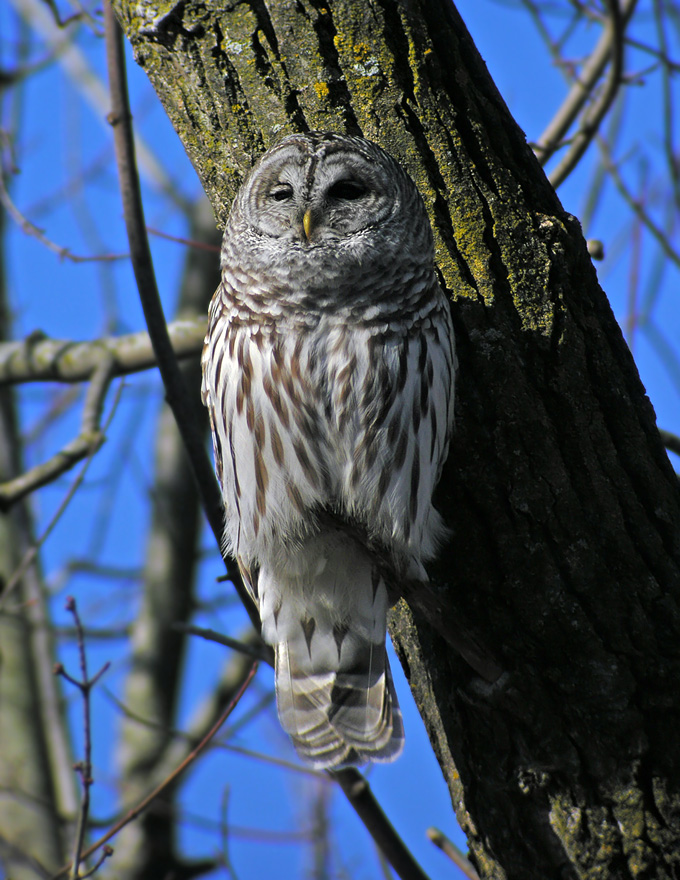
Barred Owl

From the prairie, I headed south into the woods and walked along the creek corridor trail where I came upon a roosting Barred Owl. Actually, I'm familiar with where most of the owls roost at Pheasant Branch, including this one, so I was merely checking up on it. I took a few photos of the owl, watching it open its eyes slightly whenever another person walked or jogged by. Only one couple stopped to ask what I was looking at; they were awed at the splendor of the large white and brown bird through my spotting scope. To me, sharing will always be an exhilarating and big part of my birding.


American Robin

Content with my owl images, I made my way across the bridge to where there is a small springs. Once there, I found several American Robins picking through leaves, watercress, and mud for whatever they could find to eat. This is a good spot to find a wide variety of wintering songbirds because there's food, water, and ample cover from predators. Also in the area were a few White-throated Sparrows, a Swamp Sparrow, lots of American Tree Sparrows and Dark-eyed Juncos. Further down the corridor trail I was happy to find a Winter Wren darting and chirping “dip-di-di-dip-dip” through the understory.

After spending four hours hiking and searching, I was satisfied I probably wasn't going to find more than 29 species. What did I miss? I was surprised not to see a single Cooper's Hawk. There were lots of Pine Siskins during the CBC week, but I didn't see or hear a single one during my outing. Also, I miss not having a Northern Shrike hunting at the prairie this winter. I wonder if clearing out the thicket and small trees along the northern edge made it less inviting for shrikes? All the better for the sparrows, I suppose!

Location: Pheasant Branch
Observation date: 1/9/11
Number of species: 29

Canada Goose
Mallard
Red-tailed Hawk
Killdeer
Rock Pigeon
Mourning Dove
Great Horned Owl
Barred Owl
Red-bellied Woodpecker
Downy Woodpecker
Hairy Woodpecker
Northern Flicker
Blue Jay
American Crow
Black-capped Chickadee
Tufted Titmouse
White-breasted Nuthatch
Brown Creeper
Winter Wren
American Robin
Cedar Waxwing
American Tree Sparrow
Swamp Sparrow
White-throated Sparrow
Dark-eyed Junco
Northern Cardinal
House Finch
American Goldfinch
House Sparrow

All images © 2011 Mike McDowell

Friday, January 7, 2011

Thanks Birders!


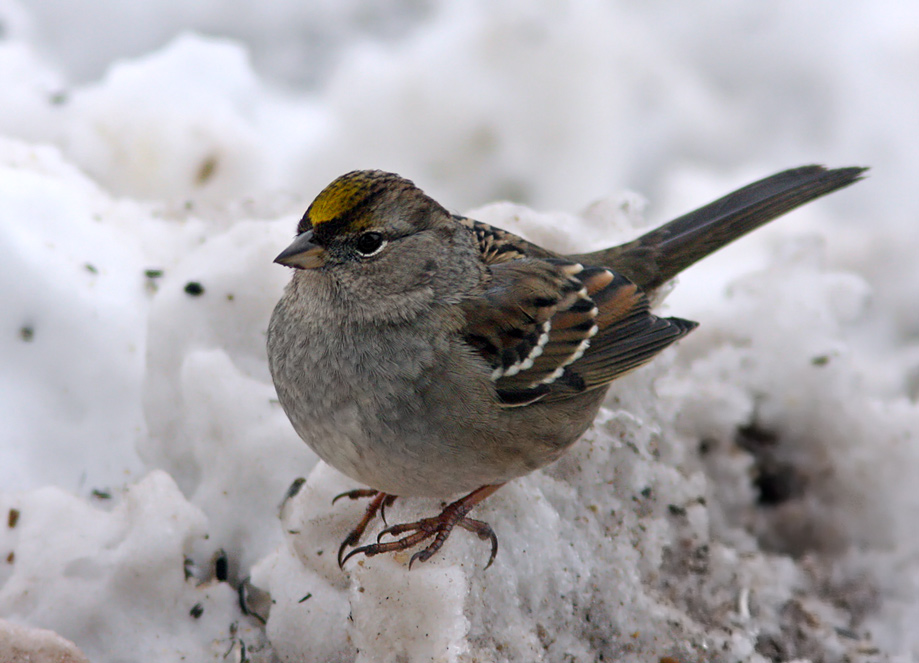
I would like to thank all the birders (and non-birders) who came to Eagle Optics to see the Golden-crowned Sparrow! I know it was a special experience for everyone involved. Over 200 people visited us to see the vagrant sparrow coming to our feeders since I discovered it on December 20th. It was ‘life bird’ or ’state bird’ for many, myself included (ABA # 442). Those who came to see the sparrow were excited, courteous, and patient as they waited to get a glimpse of it. On average, people had to wait awhile for the sparrow to show up, but others were luckier and saw it within a few minutes of arriving to our store. Some of my non-birding colleagues were unused to the excitement a bird like this generates within the birding community. Overwhelmingly, though, it was a positive experience for everyone.

I haven’t seen the sparrow since the evening of December 30th – nearly all of our ground cover snow melted during warmer temperatures and rain that night. With habitat opening up in the fields adjacent to our building, I anticipated the sparrow might now show up. Sure enough, it hasn’t been back, and neither have the American Tree Sparrows it was often seen with in the grassy area behind our building. Perhaps the sparrow will return with another deep snowfall. Or perhaps, as some have speculated, the sparrow became a meal for one of the Cooper’s Hawks. It’s a possibility, but we’ll probably never know.

The Golden-crowned Sparrow was the 73rd bird species for our store list. We’ve had feeders for a number of years and I often take a few minutes to inspect the birds coming to them every time I put out fresh birdseed - this is how I happened to discover the sparrow in the first place. It does seem ironic that such a rare avian occurrence would take place at birding optics store, but there really are coincidences and pleasant surprises. To make it a celebrity, all the sparrow needed was for someone to recognize it. Who knows what else is out there at bird feeders around Wisconsin?

© 2011 Mike McDowell
Thursday, January 6, 2011

Blackbirds Deaths and Reality


While the Arkansas blackbird tragedy is an unusual and sad story, what isn't unusual is that blackbirds and other songbirds die from a wide array of human activities. Reading comments on several websites, many people seem to actually want the blackbird deaths to be some kind of wackadoodle government conspiracy, but this draws attention away from real and serious threats that imperil our native songbirds; they perish by the hundreds of millions each year, primarily due to habitat loss. Window collisions account for over 500 million songbird deaths annually, but there are many other causes.

"But they're being found dead out in the open!" Birds do not always instantly die from injuries caused from flight collisions. A bone fracture might prove to be fatal minutes after impact, which is not uncommon when birds hit a window. Birds also fatally collide with power and telephone lines, which is why you might find them in the road. After an impact, an injured bird might have just enough strength left to fly for cover in nearby shrubs, hidden from view, only to die later from internal injuries. Because of this, you might find a dead songbird in the middle of your yard or in the street where there isn't an obvious structure it might have collided with.

The 5,000 or so dead Arkansas blackbirds were likely a small percentage of the roosting flock. During spring migration, it’s not uncommon to find tens of thousands of blackbirds in large flocks at Nine Springs in Madison. One birder I know once reported observing over 100,000 blackbirds there a few years ago. Imagine if that many birds panicked during the night and took off all at once. Would 5,000 impact deaths seem so implausible? Sad, but not serious: 5,000 Red-winged Blackbird deaths (about .0025% of their North American Population). Sad, and serious: 3 Whooping Crane deaths (about 3% of the Eastern Migratory Population).

That people were initially worried is probably justified, provided their concern was for the safety and health of our nation's wildlife and ecosystems. On the other hand, I can't help but feel that other individuals, behind their accusations of government conspiracies and apocalyptic plagues, are more worried about themselves.


Link: Why are birds falling from the skies?

Red-winged Blackbird © 2011 Mike McDowell
Monday, December 20, 2010

One for the Record Books!


Middleton Golden-crowned Sparrow

It was hop-scratching. That's what initially drew my attention to the large sparrow eating birdseed below our feeders at Eagle Optics. Foraging along with it were dozens of House Sparrows, Dark-eyed Juncos, a few American Tree Sparrows, and one Song Sparrow. Observing the big brown sparrow without binoculars, at first I thought I was looking at a juvenile White-crowned Sparrow, but something about it seemed different – its breast was very gray. I reached for a pair of binoculars and took another look at my mystery bird. Once I got a good view of its crown, I was reasonably certain it was my first-ever Golden-crowned Sparrow. A genuine life bird, right at work!

It's just a tad off course...


However, they are occasionally found well east of their typical wintering range. How does it happen? Was it weather related? Did it associate with a mixed-flock of other southbound sparrows that migrated more easterly from the Pacific Northwest? The how's and why's will never be known, but it's fun to ponder. What is known is that an extremely rare bird (for Wisconsin) has been discovered in Middleton. One glance at WSO's records for this species made it clear just how uncommon this particular sighting is:

1. fall, 1853 -- Racine; Philo R. Hoy
2. fall, 1854 -- Racine; Philo R. Hoy
3. spring, 1856 -- Racine; Philo R. Hoy
4. April, 1858 -- Racine; Philo R. Hoy
5. May 5 to June 5, 1963 -- Bayfield; Janet L. Koslowski
6. May 15 to June 2, 1964 -- Bayfield; Janet L. Koslowski
7. May 10 to May 17, 1965 -- Bayfield; Janet L. Koslowski
8. Nov. 26, 1992 to April 18, 1993 -- Sheboygan; Roger C. Reif

Once my colleagues and I were absolutely certain of the identification of our sparrow, I posted the sighting to Facebook:


A life bird for Tom Prestby, he was the first to arrive and was able to capture several photographs of the sparrow through the window. Eventually, a few other birders came to look at the rarity – it was a lifer for them as well. Given the snowy weather we're experiencing in south-central Wisconsin, I can't imagine that this bird is going to stray too far away from a reliable source of food.

Addendum 01/04/2011:

The Golden-crowned Sparrow has not been seen since Thursday, December 30th. Along with the majority of the American Tree Sparrows, I suspect it returned to the fields adjacent to the building when the snow melted.

Golden-crowned Sparrow © 2010 Tom Prestby

Pheasant Branch CBC (Madison)


Roosting Barred Owl

Madison's 61st annual Christmas Bird Count (CBC) was held over the weekend. My party of 3 birders endured Saturday's cold weather to find 29 bird species at Pheasant Branch Conservancy. We were very surprised to find 4 Blue-winged Teal hanging out with a group of Mallards at the open water near the big springs. Most songbirds were found along the trail adjacent to the conservancy condos due to the number of bird feeders there. Our list included Pine Siskin, Purple Finch, Swamp Sparrow, White-throated Sparrow, plus many of the expected winter species. We also found a few Red-tailed Hawks at the drumlin and a Bald Eagle flying over the prairie, making its way toward frozen Lake Mendota. Not seeing or hearing Barred Owls through November, it was nice to find one roosting for our CBC count.

Preliminary total for the entire Madison CBC was 82 bird species.


Location: Pheasant Branch
Observation date: 12/18/10
Number of species: 29

Canada Goose ~100
Mallard 24
Blue-winged Teal 4
Ruddy Duck 1
Bald Eagle 1
Cooper's Hawk 1
Red-tailed Hawk 3
Rock Pigeon 20
Mourning Dove 12
Barred Owl 1
Red-bellied Woodpecker 4
Downy Woodpecker 10
Hairy Woodpecker 4
Blue Jay 5
American Crow 12
Black-capped Chickadee 32
Tufted Titmouse 2
White-breasted Nuthatch 11
American Robin 1
European Starling 1
American Tree Sparrow 7
Swamp Sparrow 1
White-throated Sparrow 3
Dark-eyed Junco 15
Northern Cardinal 16
Purple Finch 1
House Finch 12
Pine Siskin 1
American Goldfinch 7
House Sparrow 32

All images © 2010 Mike McDowell
Thursday, December 2, 2010

2011 PBC Phenology Calendar!


The 2011 Pheasant Branch Conservancy Phenology Calendar is out!

Adorned with beautiful nature photographs taken right at the conservancy by local photographers, learn about nature and science topics each month, including checklists for seasonal animal and plant activities, weather data, nature notes, and more. The calendar also features the 2010 photo contest winners. Perhaps best of all, your dollars will support the Friends of Pheasant Branch and their ongoing efforts to restore and protect one of the best natural areas in Dane County!

Link: Purchase the 2011 Phenology Calendar here!

Tuesday, November 30, 2010

Late November Birding


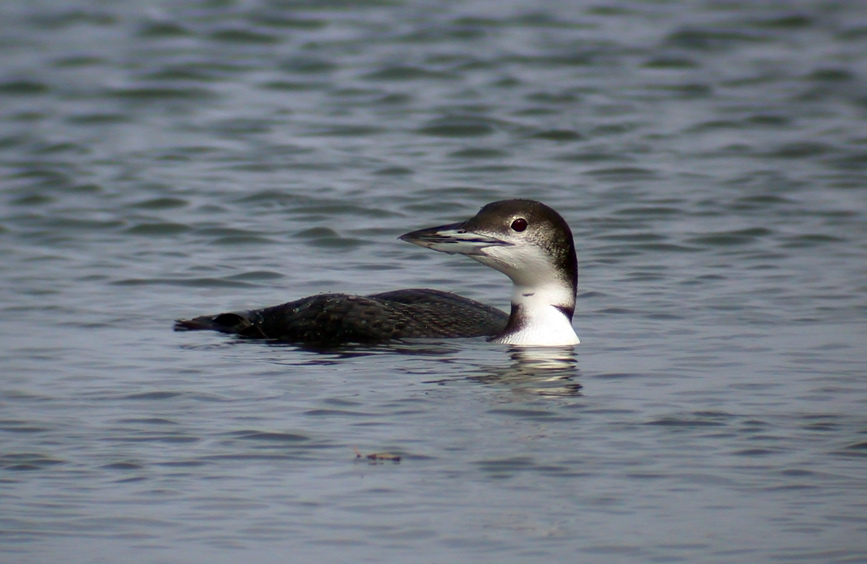
Common Loon on Lake Mendota

Check out this cool app showing migration of individual loons that currently have satellite transmitters on them:

Link: Common Loon Migration Study

Location: Pheasant Branch
Observation date: 11/27/10
Number of species: 41

Canada Goose
Tundra Swan
Mallard
Redhead
Ring-necked Duck
Bufflehead
Common Goldeneye
Hooded Merganser
Ruddy Duck
Ring-necked Pheasant
Common Loon
Bald Eagle
Northern Harrier
Red-tailed Hawk
Sandhill Crane
Ring-billed Gull
Herring Gull
Mourning Dove
Great Horned Owl
Red-bellied Woodpecker
Downy Woodpecker
Hairy Woodpecker
Northern Flicker
Blue Jay
American Crow
Black-capped Chickadee
Tufted Titmouse
White-breasted Nuthatch
Brown Creeper
European Starling
American Tree Sparrow
Fox Sparrow
Swamp Sparrow
White-throated Sparrow
Dark-eyed Junco
Northern Cardinal
Red-winged Blackbird
House Finch
Pine Siskin
American Goldfinch
House Sparrow

© 2010 Mike McDowell

Saturday, November 27, 2010

Old Owl


Docile in daylight
Fierce hunter during the night
All rodents beware!

Hunter's focus true
Winter flights above snow, ice
Talons leave a branch

Silent wings on air
Creates dancing moon shadows
On the forest floor

Old owl, I see you
Shining spirit of the night
Rest your wings today

© 2010 Mike McDowell
Thursday, November 11, 2010

The Color of November


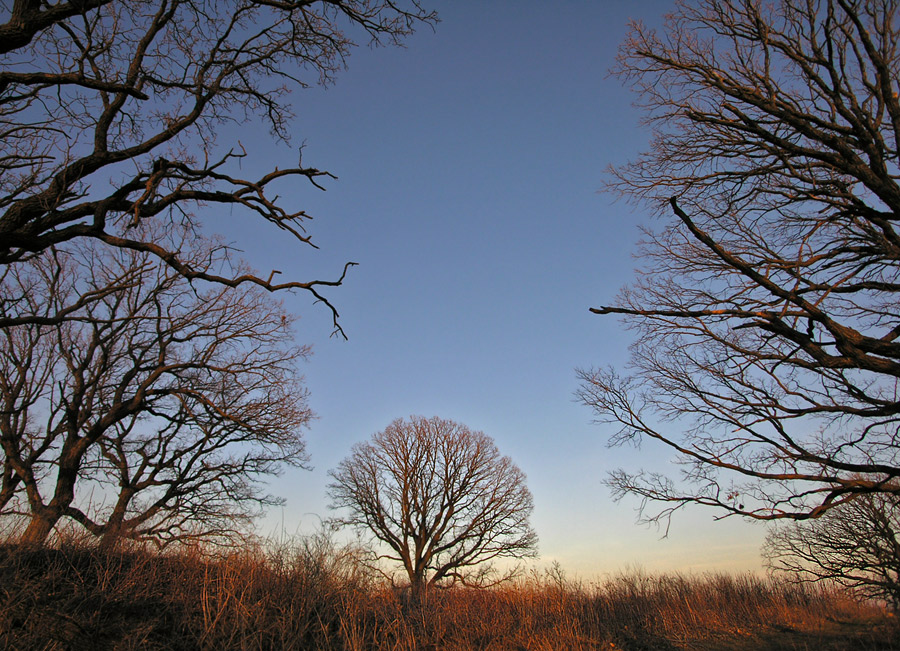
The drumlin oaks are bare. It's been too warm for snow, but November's paintbrush has finally overtaken summer’s colors; most everything on the prairie seems to have been brushed by bronze, including the birds that will spend the winter at Pheasant Branch.

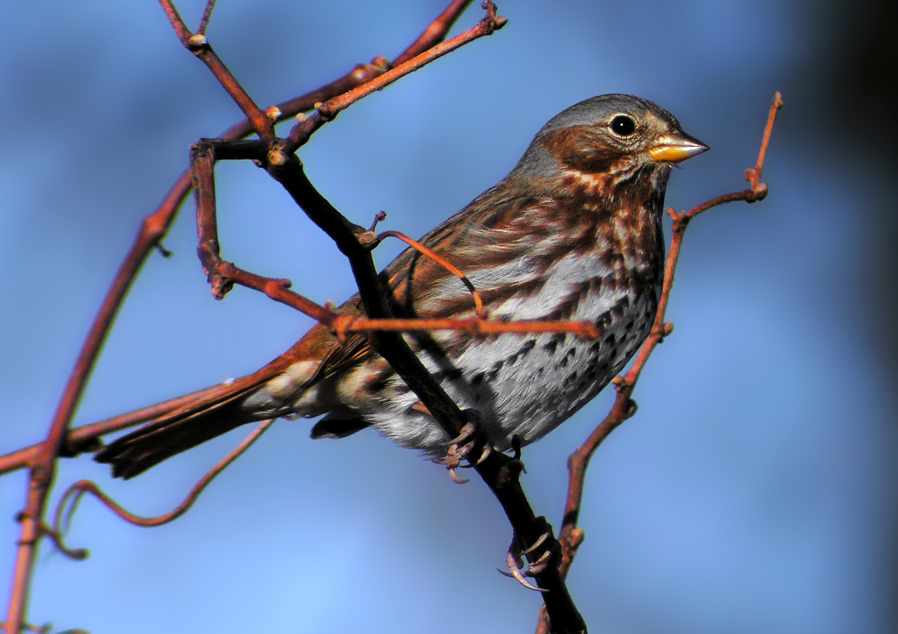
Fox Sparrow

While the majority of Fox Sparrows have moved on, I often find a few of them on the north side of the creek corridor near the small springs during winter – they remain close to the condominiums which have plenty of feeders. American Tree Sparrows are now the most numerous bird in the grasses and edges of the prairie. Fresh from the north, some are still singing fragments of their summer song, but these will eventually be replaced by trilly and diminutive calls. Even on the coldest days in January, they greet the morning sun with their cheerful voices.

American Tree Sparrow

There might be less to see during this particular time of year, but there are opportunities to learn more about general bird behavior. While I encourage people to appreciate and explore nature, I enjoy that fewer people are outside during late fall, winter, and early spring. I find myself in different mental modes; when people stop and ask me what I'm looking at or photographing, I'm more of a teacher, when I'm alone I'm a student, because there are infinite things to know about Nature.


All images © 2010 Mike McDowell